

More news on this day
Travelers moving through Thailand were hit by fresh disruption this week as three key flights operated by Jetstar Airways and Batik Air Malaysia were cancelled, interrupting air links to Melbourne, Sydney and Kuala Lumpur and leaving passengers scrambling for alternatives at the height of the region’s peak travel period.
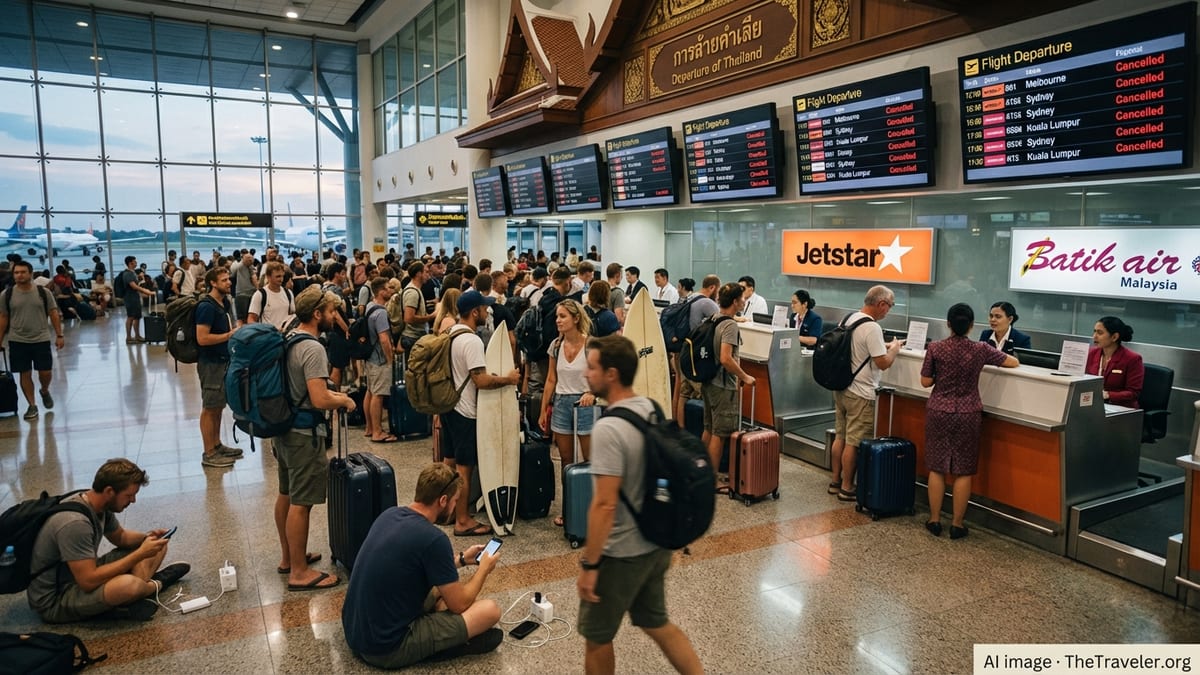
Three Cancellations Ripple Across Regional Networks
According to live schedule and status data reviewed on Friday and Saturday, Thai airports recorded a cluster of cancellations involving one Jetstar Airways departure to Melbourne, one Jetstar service to Sydney and a Batik Air Malaysia flight to Kuala Lumpur. While each cancellation represented a single rotation on paper, the timing and routings quickly created knock-on effects for passengers connecting across Southeast Asia and Australia.
Operational records show that the affected flights were removed from departure boards on short notice, in some cases after earlier services on the same routes had already been operating with extended delays in recent days. The cancellations came against a backdrop of wider disruption in the region, with multiple Asian hubs reporting dozens of scrapped flights and hundreds of delays attributed to a mix of operational and weather-related pressures.
For Thailand, where airports such as Bangkok and Phuket act as key connectors between Australia and the rest of Asia, the loss of single daily or near-daily low-cost options can significantly narrow choices for budget-conscious long-haul travelers. With Jetstar and Batik Air Malaysia both competing aggressively on price-sensitive routes, their sudden absence from select rotations left gaps that rival carriers were not always able to fill at short notice.
Industry analysts note that such targeted cancellations are often a sign of airlines fine-tuning their schedules in response to aircraft availability or demand patterns, but they can still cause outsized disruption where alternatives are limited or already heavily booked.
Australians in Thailand Face Scramble for Seats
The cancellation of Jetstar-operated services to Melbourne and Sydney was felt acutely by Australians concluding holidays in Thailand and attempting to return home before the end of the southern summer. With many families and backpackers timing trips around school breaks and long weekends, seats on remaining departures from Bangkok and Phuket were already in high demand.
Travel agents in both Thailand and Australia reported clients facing last-minute fare hikes on competing carriers and, in some cases, being forced to accept routings with additional stops via other Asian hubs. Some passengers opted to fly first to Singapore or Kuala Lumpur in order to secure long-haul connections back to Melbourne and Sydney, adding hours to what are normally relatively direct journeys.
For low-cost travelers, the disruption carried an added financial sting. Ancillary purchases such as prepaid seat selections, baggage and in-flight meals are typically tied to the original booking reference, and rebooking on a different airline often means paying again for the same extras. Several passengers posting on social media platforms described long waits to reach airline support channels and uncertainty over whether out-of-pocket expenses for accommodation or alternate flights would be reimbursed.
Aviation observers say Australia–Thailand links have been under persistent pressure this season, with a combination of strong pent-up demand, constrained capacity and periodic weather events leaving airlines little slack to recover when a rotation is pulled from the schedule.
Knock-On Effects for Kuala Lumpur and Intra-Asia Links
The Batik Air Malaysia cancellation on the Thailand–Kuala Lumpur corridor added further complexity for regional travelers. The route is a popular option for both Malaysian holidaymakers returning from Thai beach destinations and international passengers using Kuala Lumpur as a hub to connect onward to Indonesia, India and the Middle East.
On the day of the disruption, departures from Thai airports to Kuala Lumpur were already showing tight seat availability after a week marked by elevated delays and cancellations across several Asian countries. With one Batik Air Malaysia rotation removed, remaining flights on full-service and low-cost rivals quickly filled, leaving some passengers facing overnight stays and unplanned hotel costs.
Because Kuala Lumpur is also a stepping stone for Australian-bound itineraries, particularly on longer multi-stop journeys, the cancellation had indirect consequences for travelers ultimately headed to cities such as Perth, Sydney and Melbourne. Some passengers were forced to rework entire itineraries, swapping a same-day connection in Kuala Lumpur for a completely different routing via Singapore or Bangkok.
Regional travel specialists point out that the impact of a single cancelled flight can be amplified when it affects a hub used to connect multiple lower-frequency routes. When replacement options are scarce, even a relatively short Thailand–Kuala Lumpur sector can become a critical missing link in a much longer journey.
Airlines Cite Operational Pressures as Passengers Seek Clarity
While Jetstar Airways and Batik Air Malaysia did not immediately issue detailed public explanations for the specific cancellations in Thailand, recent patterns across the region suggest a mix of operational challenges. Airlines in Asia have been wrestling with aircraft maintenance requirements, crew rostering constraints and intermittent bouts of severe weather that complicate already tight schedules.
Data from recent days highlight how quickly conditions can deteriorate. Multiple regional reports have documented waves of disruptions involving dozens of cancellations and hundreds of delays across airports in Malaysia, Indonesia, Singapore, Thailand and beyond, affecting carriers from low-cost brands to major flag airlines. In that environment, airlines often make tactical decisions to cancel selected rotations rather than risk extended rolling delays across their networks.
For affected travelers, however, the rationale matters less than the response. Consumer advocates in Australia and Southeast Asia continue to push airlines to provide clearer, more proactive communication when flights are pulled, along with transparent information on rights to refunds, rebooking and care such as meals and accommodation. Passengers have increasingly turned to public forums to share experiences and warn others about slow refund processing and difficulties reaching customer service teams.
Regulatory frameworks vary between countries, and Thailand, Australia and Malaysia apply different standards when it comes to compensation. Travel lawyers advise passengers to carefully check the fare conditions and local consumer protections that apply to their ticket, particularly when journeys involve multiple carriers or separate bookings.
What Travellers Through Thailand Should Do Now
For travelers currently planning trips that involve Thailand gateways and connections to Melbourne, Sydney or Kuala Lumpur, industry experts recommend building additional flexibility into itineraries. That can include allowing longer layovers for self-connect journeys, avoiding the last flight of the day when possible and considering travel insurance policies that specifically cover missed connections and airline cancellations.
Monitoring flight status closely in the 24 to 48 hours before departure is also increasingly important. Many airlines now update their schedules dynamically as operational constraints evolve, and early awareness of potential changes can give passengers a better chance of securing acceptable alternatives before flights fill.
Travel advisers suggest that, when cancellations do occur, passengers should document all communication with airlines and keep receipts for any additional expenses such as hotels, meals or replacement flights. This paperwork can prove crucial when filing claims with airlines, credit card providers or insurers.
Despite the latest setbacks, Thailand remains one of the region’s most resilient aviation markets, and carriers are expected to maintain strong capacity on routes linking its resorts and cities with Australia and Malaysia. For now, though, the experience of Jetstar Airways and Batik Air Malaysia passengers caught up in this week’s cancellations is a timely reminder that even a handful of withdrawn flights can send shockwaves through tightly balanced regional travel networks.