

More news on this day
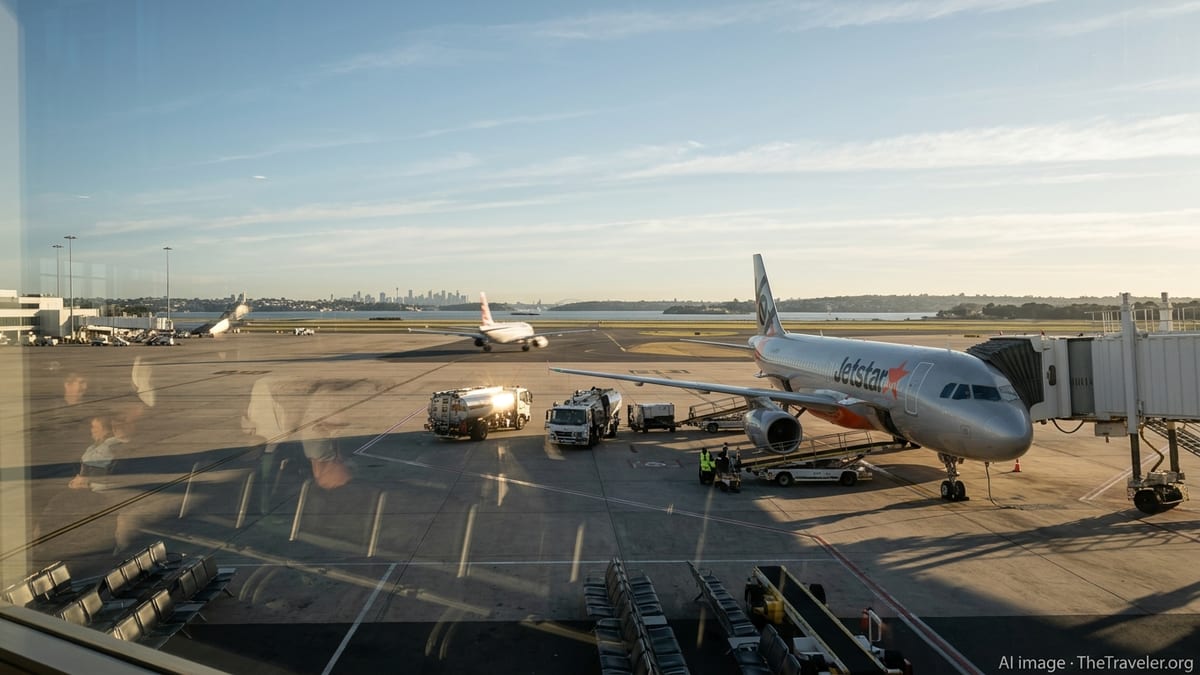
Jetstar is cutting around 12 percent of its trans-Tasman services as soaring jet fuel prices, turmoil in the Middle East and mounting operating costs ripple through aviation markets in Australia, New Zealand and beyond.
Get the latest news straight to your inbox!
Jet Fuel Spike Forces Capacity Cuts Across the Tasman
The decision to trim Jetstar’s Australia to New Zealand schedule highlights how quickly the latest global oil shock is translating into reduced connectivity for travellers. The airline has begun adjusting frequencies on a range of routes between major cities such as Sydney, Melbourne and Auckland, as well as select secondary links, in order to conserve fuel and protect margins on remaining services.
Publicly available industry data shows that jet fuel prices have surged in recent weeks following an escalation of conflict involving Iran, the United States and Israel, and a related disruption of tanker traffic around the Strait of Hormuz. International monitoring by aviation and energy analysts indicates that benchmark jet fuel prices have more than doubled compared with early 2026 levels, outpacing even the sharp rise in crude oil.
For low cost carriers such as Jetstar, fuel typically represents one of the largest single operating expenses. When prices move abruptly higher, airlines that have limited fuel hedging or operate a high proportion of price sensitive leisure routes can come under particular pressure. In that context, cutting less profitable trans-Tasman flights allows the airline to consolidate demand on remaining services while reassessing fares and capacity for the coming months.
The 12 percent reduction is being implemented progressively rather than as a single schedule overhaul, industry timetables indicate, allowing Jetstar to monitor booking trends and adjust further if fuel markets remain volatile. Travellers holding future bookings on affected services are being re-accommodated where possible on alternative flights on the same day or nearby dates, although some itineraries may require longer transit times or different departure airports.
Middle East Conflict and Global Oil Routes Drive New Shock
The latest spike in aviation fuel costs is closely tied to the widening geopolitical crisis involving Iran, Israeli forces and United States military operations. Reports from global energy observers describe a near halt to tanker movements through the Strait of Hormuz since late February 2026, a chokepoint that normally carries a significant portion of the world’s seaborne oil and refined products.
Coverage from economic research institutes and energy market specialists indicates that Brent crude recently surged well above 100 US dollars per barrel, with some assessments citing peaks above 120 dollars as traders priced in the risk of prolonged supply constraints. Jet fuel, which requires specialist refining capacity, has seen even more pronounced increases, with indices compiled by aviation groups showing weekly jumps of more than 50 percent as the conflict escalated.
Additional incidents, including reported strikes on Iranian gas and oil infrastructure and an attack on facilities at the South Pars gas field, have added to fears of a long running disruption. Analysts note that the resulting price shock is feeding through not only to aviation but also to electricity, shipping and household fuel bills across multiple regions, reviving concerns about inflation at a time when many economies were beginning to stabilise after earlier energy crises.
While some governments are drawing on strategic reserves or imposing temporary export controls to shield domestic markets, the global nature of jet fuel supply means aviation is particularly exposed. Airlines in North America, Europe and Asia Pacific are already reviewing schedules, fare structures and fuel surcharges, with several flag carriers signalling higher ticket prices on long haul routes through the northern summer.
Australia and New Zealand Face Higher Fares and Reduced Choice
The knock on effects of the fuel shock are being felt acutely in Australasia, where long distances and limited alternative transport options amplify the impact of aviation disruptions. Economic commentary from Australian and New Zealand institutions notes that local fuel inventories and contractual supply arrangements have delayed some of the immediate physical impacts, yet price pressures are increasingly evident at the pump and in airline cost bases.
Major carriers serving the Australia to Europe corridor, including those routing via Asia and the Middle East, are adjusting flight paths and schedules in response to changing risk assessments over regional airspace. Longer routings that avoid conflict zones increase fuel burn and crew costs, which in turn places added pressure on ticket prices even before the latest spike in jet fuel is fully absorbed.
Trans-Tasman routes, traditionally among the most competitive in the region, are beginning to show signs of capacity tightening as Jetstar’s cuts take effect and other airlines scrutinise underperforming services. Public fare tracking by travel platforms already suggests upward movement in average prices for popular city pairs such as Sydney to Auckland and Melbourne to Christchurch, with fewer ultra low promotional fares available compared with late 2025.
For travellers, the combination of reduced frequencies and higher base fares translates into less flexibility on departure times, fewer last minute deals and increased crowding on peak services that do operate. Tourism operators on both sides of the Tasman, who had been banking on a strong 2026 high season, now face the prospect of visitors trimming trip length or opting for domestic holidays as international travel budgets come under renewed strain.
Broader Aviation Disruptions and Cost Pressures Ahead
Beyond Jetstar’s specific cuts, the wider aviation sector is bracing for a period of turbulence as the economic impact of the Iran conflict and associated oil shock unfolds. Analyses distributed by global airline associations stress that it is not only the absolute price of fuel but the speed of the increase that challenges airlines, as hedging strategies and ticket pricing models struggle to keep pace with such rapid shifts.
Some carriers have begun to reintroduce or increase fuel surcharges on international tickets, particularly in markets where competitive and regulatory conditions allow separate line item charges. In other cases, airlines are embedding higher fuel costs into base fares, leading to visible jumps in advertised ticket prices. Business travel management firms are warning corporate clients to expect higher budgets for the remainder of 2026, especially on long haul and connecting journeys.
The situation also intersects with ongoing industry efforts to decarbonise. Sustainable aviation fuel, while critical for long term emissions reduction, remains significantly more expensive than conventional jet fuel in most markets. With overall fuel bills already surging, there is concern among sustainability advocates that airlines and policymakers may face difficult choices about the pace of green investment versus short term financial resilience.
Operationally, airlines are reviewing measures such as aircraft weight reduction, optimized flight planning and the deployment of newer, more fuel efficient fleets on routes with the strongest demand. However, these efficiency gains can only partially offset a shock of the current magnitude, leaving capacity reductions like Jetstar’s trans-Tasman cuts as one of the few immediate levers available.
Travellers Confront New Reality of Rising Travel Costs
For passengers in Australia, New Zealand and key long haul markets, the developing situation points to a new phase of rising travel costs after a brief period of relative stability. Travel industry commentary suggests that leisure travellers are likely to respond by booking further in advance, favouring shorter itineraries and being more selective about premium cabin upgrades as airfares trend higher.
Budget conscious travellers may increasingly turn to secondary airports, off peak travel days and shoulder season windows in search of more affordable fares, although the extent of capacity reductions could limit how much savings are possible. Families and students, who are particularly sensitive to price changes on trans-Tasman routes, may reconsider the frequency of trips or opt for longer stays to maximise value when they do fly.
At the same time, tourism boards and regional airports are monitoring booking patterns closely, aware that air access is a critical driver of visitor numbers and local employment. Any prolonged period of elevated fuel prices and constrained capacity could alter established travel flows, with destinations that rely heavily on long haul air links potentially at greater risk than those with strong domestic visitor bases.
With fuel markets, geopolitical risks and airline strategies all in flux, the only clear trend at present is uncertainty. Jetstar’s 12 percent trans-Tasman reduction stands as one of the earliest concrete signs of how the latest global energy shock is reshaping air travel in the Australia and New Zealand corridor, and many in the industry expect further adjustments as the year progresses.