

More news on this day
A heated dispute over whether a disabled American passenger should have been allowed to sit in an exit row on a Jetstar flight out of Adelaide is reverberating across the Pacific, prompting renewed scrutiny of how airlines in Australia and the United States apply long-standing safety rules to passengers with disabilities.
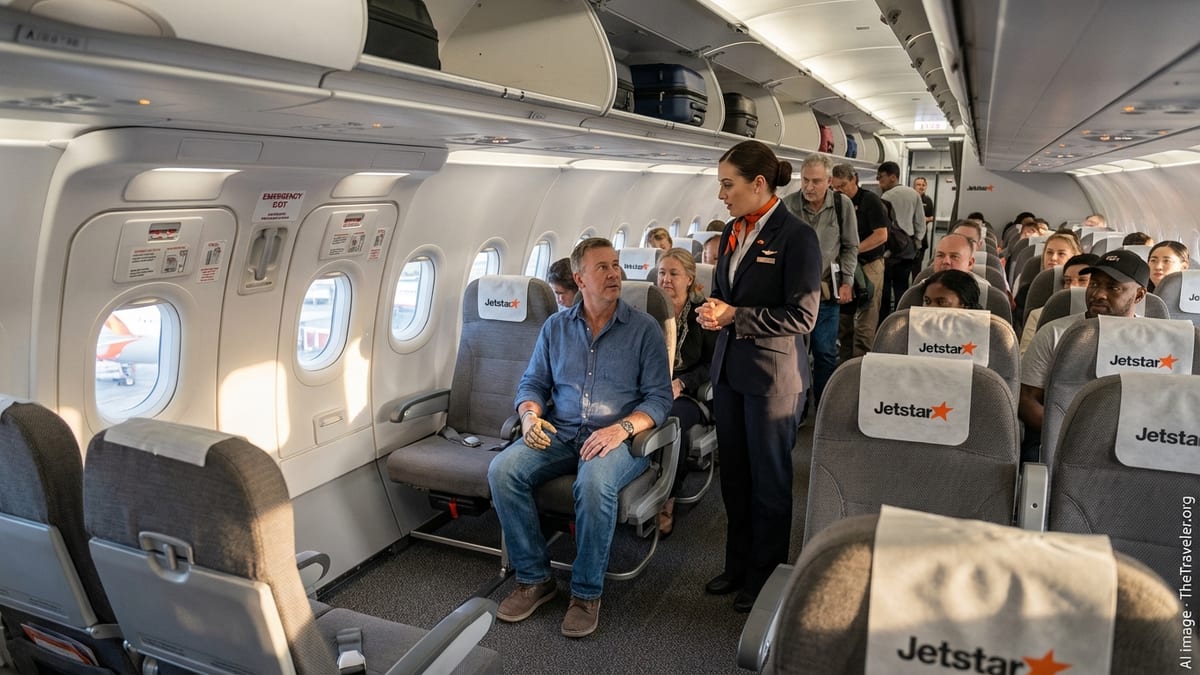
Adelaide Incident Sparks Global Debate
The controversy began when Matt Hubbard, an American television producer in Australia to cover a golf tournament, was reassigned from an exit row seat on a Jetstar service departing Adelaide. Hubbard, who has one hand, said a flight attendant insisted he move after questioning his ability to assist in an emergency. He later accused the crew member of discrimination in a social media post that quickly gained traction in both Australian and U.S. media.
Hubbard recounted that he had already confirmed his willingness and ability to assist during the standard preflight briefing required of exit row passengers, and that no concerns were raised at that point. The situation escalated when another crew member returned and ordered him to change seats, citing safety requirements for those occupying the emergency exits.
In his online complaint, Hubbard contrasted his treatment with that of other passengers on the flight whom he considered less suited to the role, including an older traveler he described as appearing less physically capable. That comparison struck a nerve, feeding a wider conversation about how airlines and regulators decide who is “fit” to sit in a row that carries extra responsibilities in the unlikely event of an evacuation.
As the story spread, it became clear that the incident was not simply about one passenger and one crew member, but about how rules written in technical aviation language are interpreted in fast-moving, real-world cabin situations.
Jetstar and Regulators Defend Strict Exit Row Criteria
Jetstar quickly acknowledged the dispute but stood firmly behind its crew. The low-cost carrier stressed that emergency exit rows are designated “self-help” exits, meaning passengers seated there must be able to open heavy doors, operate complex mechanisms and assist others without relying on crew members or neighboring travelers.
The airline pointed to Civil Aviation Safety Authority regulations that set out who may occupy these rows on Australian-operated aircraft. Those rules require that passengers be at least 15 years old, in good health, able to understand instructions, willing to assist and physically capable of operating the exit and moving quickly through it. Airlines are required to remove anyone who is not clearly able to perform those tasks, and cabin crew are trained to err on the side of caution.
Industry experts note that Australian guidance has long discouraged or prohibited exit row seating for passengers with certain mobility limitations, including those using mobility aids, those who might need a seatbelt extender and some people with prosthetic or amputated limbs. While those rules are framed in terms of physical capability rather than disability status, their impact is often felt most acutely by travelers with disabilities who otherwise consider themselves capable.
For Jetstar, the public message was unambiguous: safety must override personal preference, even when that means disappointing or angering individual customers. The carrier also condemned the online targeting of its employee, warning that it would not tolerate harassment of frontline staff who were following mandatory safety procedures.
Passengers React as Social Media Weighs Capability Against Rights
Public reaction to the Adelaide incident revealed sharp divisions in how travelers view exit row responsibilities. Many Australian commenters defended the flight attendant, arguing that regulations exist precisely because cabin crew cannot conduct full fitness assessments for each passenger. In their view, if there is any doubt, the safer course is to move the person out of the exit row, regardless of how unfair that might feel in the moment.
Others focused on Hubbard’s perspective, arguing that lived experience should carry weight in such decisions. People with disabilities who travel frequently say they are used to self-assessing what they can and cannot do, and object to blanket assumptions that a visible difference equates to an inability to help in an emergency. For them, being denied an exit row can feel like yet another instance of being judged on appearance rather than ability.
Disability advocates say the case exposes tension between safety rules and non-discrimination principles. While aviation regulators emphasize that eligibility decisions must be grounded in physical capability, not prejudice, in practice those calls are often made in seconds by busy crew members under pressure to depart on time. The Adelaide episode has therefore become a lightning rod for broader questions about how airlines train staff to balance safety, judgment and the dignity of passengers with disabilities.
The social media firestorm has also highlighted the risks for frontline workers whose actions are amplified online. Photos and names of crew shared without context can inflame opinion and lead to harassment, even when employees are enforcing policies they have no discretion to ignore.
How Exit Row Rules Work in Australia and the United States
While the Jetstar dispute unfolded in Australia, it has quickly drawn comparisons with practices in the United States, where the Federal Aviation Administration sets its own exit row standards. At their core, both systems share the same premise: passengers seated next to emergency exits must be able and willing to operate them and assist others if a rapid evacuation is needed.
In the U.S., airlines must ensure exit row occupants meet criteria such as being able to understand safety instructions, see and hear well enough to follow them, and perform physical tasks like lifting and pushing the exit, securing it and moving quickly out of the aircraft. Carriers are obliged to reseat anyone who cannot credibly fulfill those requirements, whether due to limited mobility, language barriers or other factors.
Australian rules, enforced by the Civil Aviation Safety Authority, similarly emphasize self-help exits and the need for passengers who can act without assistance. Over time, this has evolved into airlines using check-in prompts, warning labels and cabin announcements to secure verbal confirmation that exit row passengers meet the criteria. Despite these measures, real-world enforcement can be uneven, with some flights seeing very detailed questioning and others only brief, formulaic announcements.
Travelers who frequently book extra-legroom seats in both countries say that, in practice, much depends on the attentiveness and confidence of individual crew members. Some flight attendants are quick to challenge passengers using mobility aids, parents with small children or those appearing frail or distracted, while others apply a lighter touch until an obvious concern emerges.
Disability Protections and Allegations of Discrimination
The Adelaide case sits at the intersection of hard safety rules and broad anti-discrimination protections. In Australia, disability rights are framed by federal laws that generally prohibit discriminatory treatment in the provision of services, including air travel. However, those same laws carve out space for safety-based decisions where operators can justify differential treatment as reasonably necessary to protect passengers.
In the United States, the Air Carrier Access Act and Department of Transportation regulations explicitly bar airlines from denying transportation solely on the basis of disability. Still, U.S. rules make clear that safety-related seating restrictions are permissible when they are directly tied to the duties required of a particular seat, such as an exit row. Airlines must be able to show that any restrictions are applied consistently and based on objective capability, not stereotypes.
Legal specialists note that disputes over exit row seating are rarely litigated, in part because airlines typically offer alternative seats rather than deny boarding. Instead, conflicts tend to play out informally, through complaints to regulators, on social media or in the court of public opinion. The Jetstar incident fits that pattern, with the passenger expressing frustration online and the airline responding publicly to defend its policies.
Advocacy organizations argue that the solution lies in more nuanced training and communication, not looser safety standards. They say crew should be equipped to ask focused, respectful questions about what a passenger can do rather than relying solely on visual impressions or sweeping exclusions based on disability labels.
Airlines Review Training and Communication Practices
Behind the scenes, the Adelaide controversy is prompting airlines to revisit how they train staff to manage sensitive exit row conversations. Safety trainers say that scenarios involving passengers with disabilities, older travelers or those using mobility aids are already a standard part of recurrent cabin crew instruction. However, the Jetstar case suggests that even well-trained staff can find themselves in highly charged confrontations when passengers feel singled out or humiliated.
Some carriers are looking at whether their check-in and seat selection systems can do more of the work upfront by clearly presenting exit row criteria before seats are assigned. This includes prominent reminders that travelers must be able to lift and maneuver exit doors, move quickly through the opening and help others without putting themselves at undue risk. Clear messaging before departure could reduce last-minute reseatings at the gate or on board.
Cabin crew unions, for their part, have long pushed for unambiguous backing when members enforce safety rules, arguing that inconsistent support from management can leave staff exposed to both passenger anger and online backlash. The current debate has reinforced calls for airlines to publicly reaffirm that crew members have authority to act when they believe exit row safety could be compromised.
At the same time, there is growing recognition that tone and approach matter. Industry consultants say training that emphasizes de-escalation, empathy and clear, nonjudgmental language can help avoid situations in which passengers feel they are being publicly shamed for a disability or age-related limitation.
What Travelers With Disabilities Should Expect Around Exit Rows
The Adelaide story has prompted many travelers with disabilities to reconsider how they book and use extra-legroom seats. Specialist travel agents and disability advocates advise that passengers who may fall into gray areas under exit row rules should be prepared for closer questioning, even if they routinely perform physically demanding tasks in daily life.
Experts suggest that when in doubt, travelers should proactively ask airline staff whether an exit row is appropriate, and be ready to describe in concrete terms what they can do, such as lifting specific weights or moving quickly without assistance. While that level of self-disclosure can be uncomfortable, it may help avoid confusion and last-minute seat changes once on board.
They also note that extra-legroom seating is increasingly available in non-exit rows on many carriers, giving passengers with disabilities an alternative that offers comfort without the extra responsibilities or eligibility tests of an emergency row. Booking those seats, where possible, can reduce the likelihood of disputes while still meeting accessibility needs.
Nevertheless, many advocates maintain that passengers who genuinely can meet the physical requirements should not be automatically excluded from exit rows because of a visible disability. They argue that airlines and regulators should revisit blanket prohibitions that may no longer reflect modern assistive technology, rehabilitation outcomes or the diverse capabilities of people with disabilities.
Policy Reviews Loom as Aviation Balances Safety and Inclusion
As the fallout from the Jetstar incident continues, there are early signs that regulators and airlines in both Australia and the United States may revisit how exit row rules are communicated and applied. No one is suggesting that the fundamental safety rationale be watered down; rapid, effective evacuations depend on physically capable passengers in those critical seats. But there is growing pressure to ensure that decisions are rooted in individualized assessments rather than assumptions tied to disability or age.
Policy analysts say one likely avenue for change is in the guidance and training materials that regulators provide to airlines. Clearer examples of acceptable and unacceptable practices, along with model scripts for engaging passengers in sensitive discussions, could help cabin crew enforce rules with more consistency and tact across different carriers and routes.
For now, the Adelaide dispute serves as a cautionary tale for both travelers and airlines. Passengers are being reminded that choosing an exit row is not simply a comfort upgrade but an agreement to shoulder extra responsibilities and scrutiny. Airlines, meanwhile, are grappling with how to uphold strict safety mandates without alienating or stigmatizing customers with disabilities whose capabilities do not fit neatly into check-box categories.
With air travel volumes rising and social media amplifying every onboard confrontation, the balance between safety, service and inclusion around exit rows is likely to remain under the spotlight well beyond this single flight out of Adelaide.