

More news on this day
Jetstar is reshaping its long-haul product, with reports indicating the low-cost carrier is doubling the number of business class seats on its Boeing 787 Dreamliners and rolling out an upgrade bidding system that can start from about 180 dollars on selected routes, positioning Australia as an early mover in making lie-flat comfort more accessible to leisure travellers.
Get the latest news straight to your inbox!
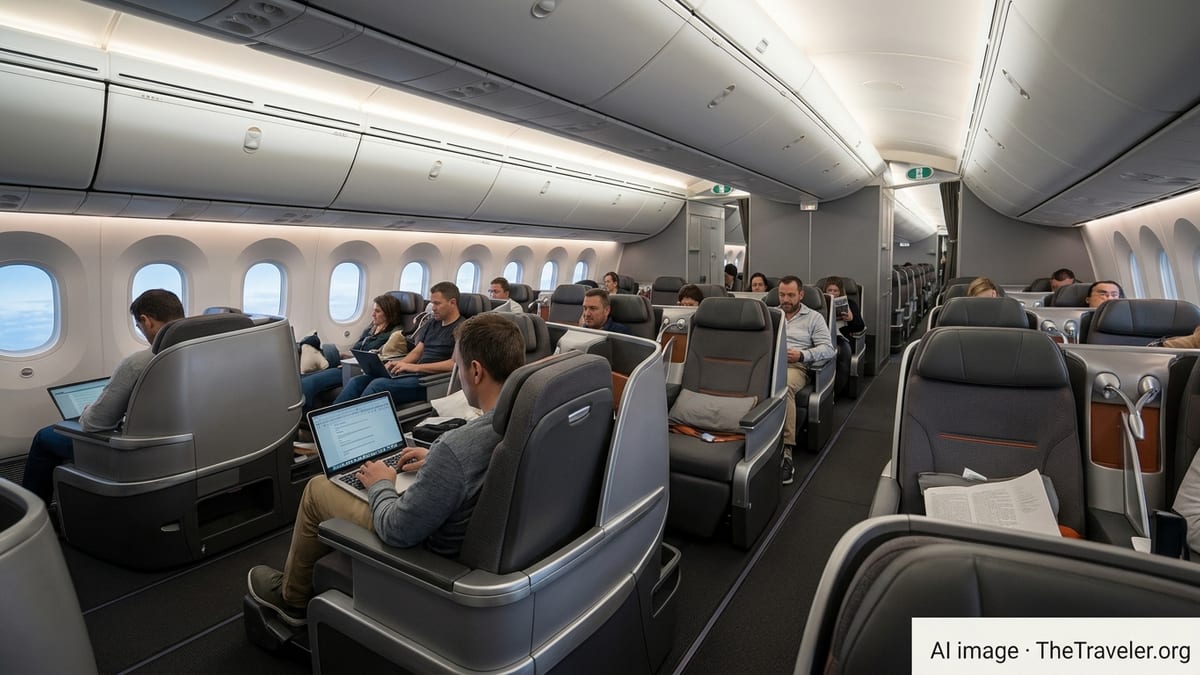
More Business Class Seats on Jetstar’s 787 Fleet
Publicly available fleet and sales material show that Jetstar is shifting the balance of its Boeing 787-8 cabin layouts toward premium seating, significantly increasing the number of business class seats on key international services. While exact configurations can vary by aircraft and route, the changes represent a clear move to capture higher-yield demand on leisure-heavy long-haul flights linking Australia with Asia and North America.
The expanded cabins are expected to feature Jetstar’s familiar recliner-style or lie-flat style business seats, depending on configuration, with added focus on privacy, adjustable leg rests or full-flat beds, and upgraded dining. For many budget-conscious passengers who previously viewed business class as out of reach, the prospect of more available seats opens the door to occasional premium travel, especially when combined with opportunistic upgrades.
Industry analysts note that increasing business class capacity on a low-cost carrier’s widebody fleet also helps smooth revenue management. More seats in the premium cabin give the airline greater flexibility to mix outright business class fares with discounted upgrades and dynamic offers to fill unsold inventory closer to departure.
The move underlines how Australia’s aviation market, long dominated by traditional full-service carriers on long-haul routes, is seeing sharper competition at the top end of the cabin as low-cost operators refine their premium propositions.
Upgrade Bidding From Around 180 Dollars
Alongside the cabin reconfiguration, Jetstar is introducing a bidding-style upgrade mechanism on selected Boeing 787 routes, with minimum offers reported from about 180 dollars for a move into business class. The system invites eligible economy or premium economy passengers to place an offer within a specified price band in the days leading up to departure, with successful bids clearing as the airline finalises cabin loads.
According to published guidance and traveller reports, the bid amount is typically per passenger and per flight segment, and payment is only taken if the upgrade is confirmed. The system is designed to monetise last-minute premium seat availability that might otherwise depart empty, while giving passengers a structured way to access a significantly better onboard experience without paying full business class fares.
Observers point out that upgrade bidding aligns with broader global trends in airline revenue management, where carriers increasingly use algorithms to weigh bid value, existing fare class, loyalty factors, and real-time seat availability. For Jetstar, operating in a price-sensitive market, a floor starting around 180 dollars allows the airline to protect core business yields while still offering headline-grabbing upgrade opportunities.
For travellers, the appeal lies in the possibility of moving from a standard economy seat into a far more spacious business cabin for a relatively modest incremental outlay, particularly on overnight or longer flights where additional comfort is most valuable.
How the New System Changes the Passenger Experience
The combination of more business class seats and a structured bidding system is set to change how passengers think about cabin choice on Jetstar’s long-haul 787 services. Instead of deciding at booking whether to commit to a full business fare, travellers may increasingly adopt a two-step strategy: secure a competitively priced economy ticket, then monitor upgrade options and submit a bid if the price feels right.
Travel forums already suggest that some passengers are calibrating their offers based on flight length, departure time, and perceived demand. On routes and dates where business class appears lightly booked, minimum or near-minimum bids may have a better chance of success. On peak holiday dates or heavily trafficked corridors, travellers may need to bid closer to the upper end of the suggested range to stand out.
The expanded business cabin should also help alleviate one of the common frustrations with upgrade schemes: limited availability. With more seats to distribute between outright buyers and successful bidders, the odds of clearing an upgrade on certain flights may improve, though results will still vary by departure and season.
At the same time, passengers are being reminded through public information and airline conditions that upgrades issued via bidding are typically non-refundable and may carry different rules around lounge access, baggage allowances, and frequent flyer accrual than standard business fares, depending on the underlying ticket and program partnerships.
Strategic Implications for Australia’s Long-Haul Market
Jetstar’s shift sits within a broader recalibration of Australia’s long-haul market, where competition from Middle Eastern, Asian, and North American carriers has pushed local operators to refine both economy and premium offerings. By using its Boeing 787 fleet to support a larger business cabin and feeding that cabin with a mix of traditional sales and revenue-managed upgrades, Jetstar is attempting to capture premium leisure and small-business demand that might otherwise choose a rival full-service airline.
The strategy also reinforces the role of the Boeing 787 as a flexible workhorse for point-to-point flying from Australian hubs. With fuel-efficient operations and a cabin well suited to both dense economy layouts and attractive premium products, the aircraft allows Jetstar to adjust its mix of seats and fares in response to shifting market conditions without introducing a new fleet type.
Analysts suggest competitors will be watching closely to see whether the combination of extra business class capacity and high-visibility upgrade offers draws more travellers who are willing to trade schedule or brand loyalty for the chance of an affordable step up in comfort. If the approach proves successful, similar bid-based systems and cabin rebalances could appear on more routes and aircraft types across the region.
For now, the changes position Jetstar as one of the more aggressive adopters of hybrid low-cost and premium strategies in the South Pacific, leveraging technology-driven pricing and the appeal of the Dreamliner cabin to broaden its reach far beyond the traditional budget segment.
What Passengers Should Know Before Bidding
Travel experts caution that, while the headline figures around 180 dollars for an upgrade can be attractive, passengers should consider a few key points before placing a bid. The first is that no offer is guaranteed to clear; even strong bids may be unsuccessful if high-paying business class demand materialises late or if flights are heavily booked.
Second, travellers need to evaluate the true value of the upgrade for their specific journey. On a short daytime hop, more legroom and a premium meal may be pleasant but not essential. On a longer overnight sector, the ability to rest more comfortably can justify a higher bid, especially for those travelling straight into work or onward connections.
Finally, passengers are encouraged to review the conditions attached to upgrade offers, including whether changes or cancellations remain permitted on the underlying ticket, and how the upgrade interacts with loyalty benefits. In some cases, an accepted bid may not earn the same mileage or status credits as a full business fare, and benefits such as lounge entry may depend on fare type or frequent flyer tier.
As Jetstar’s enhanced 787 business cabins and upgrade bidding program roll out across more routes, the airline’s experience is likely to inform how other carriers in the region experiment with similar tools. For travellers, it adds a new layer of choice and strategy to booking long-haul journeys, blending low-cost fares with a realistic pathway to a premium seat.