

More news on this day
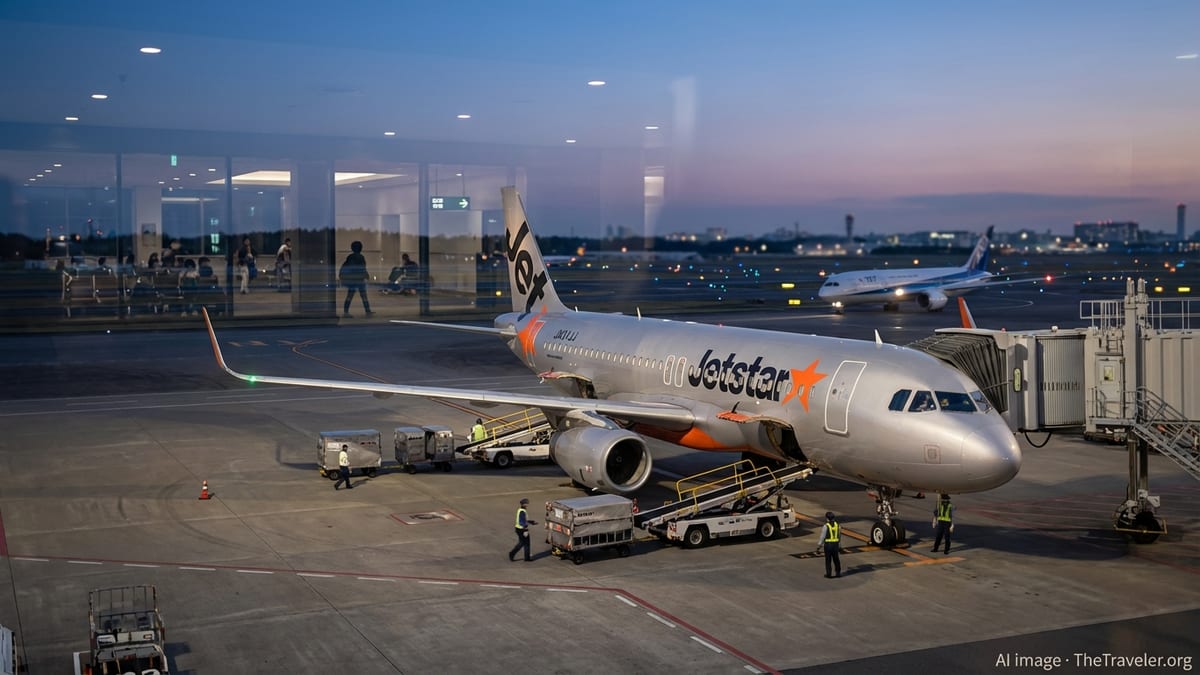
Jetstar Japan has staged a high-profile return to one of Asia’s busiest air corridors, relaunching daily Tokyo–Hong Kong flights from Narita after a six-year hiatus and signaling a renewed push into international low-cost travel.
A Long-Awaited Return After Six Years Grounded
Jetstar Japan’s first Tokyo–Hong Kong service in about six years took off on 13 February 2026, restoring a route that disappeared from the airline’s network in the early months of the pandemic. The inaugural GK27 flight from Narita to Hong Kong departed with load factors close to capacity, underscoring pent-up demand between two of Asia’s most popular short-haul city pairs.
The daily service connects Tokyo Narita and Hong Kong International using single-class Airbus A320 aircraft, with a scheduled block time of around five hours. The return leg, GK28, slots into the early-morning wave out of Hong Kong, arriving into Narita in time for domestic and regional connections. For Japan’s largest low-cost carrier by domestic network, the move marks a decisive step back onto the regional stage.
Jetstar Japan originally entered the Hong Kong market in 2015, when it made the city its second international destination from Narita. Operations were later suspended amid shifting regulatory conditions and then halted entirely during the COVID-19 crisis. The 2026 restart not only revives a proven route but also signals confidence that leisure and visiting-friends-and-relatives traffic between Japan and greater China has entered a more stable, growth-oriented phase.
The relaunch also comes at a moment when passenger volumes between Hong Kong and Tokyo have rebounded sharply. Multiple full-service and low-cost competitors now operate more than a hundred flights per week on the city pair, but Jetstar Japan is betting that its stripped-back, low-fare model and Narita-focused network will resonate with price-sensitive travelers on both sides.
New Schedule Aims at Night Owls and Weekend Warriors
Jetstar Japan’s new timetable is tailored around late-evening departures from Tokyo and overnight returns from Hong Kong, a pattern that maximizes aircraft utilization while offering travelers more time in both cities. Through 28 March 2026, flight GK27 leaves Narita at 20:20, touching down in Hong Kong at 00:35 the following day. From the start of the northern summer schedule on 29 March, the Narita departure shifts slightly earlier to 20:10, arriving in Hong Kong before midnight.
The return leg, GK28, currently pushes back from Hong Kong at 02:00 and arrives in Narita at 07:10. From 30 March, the departure is set to move to 00:55, with arrival in Tokyo at 06:15. For travelers based in Hong Kong, the overnight timing enables a full evening in the city before heading to the airport, while Tokyo-bound passengers land early enough to connect onward to domestic services or head straight into the capital for a full first day.
Flight time between Narita and Hong Kong is listed at just under five hours, comparable with rival carriers. The choice of Airbus A320s aligns with Jetstar Japan’s all-narrowbody fleet strategy and helps keep operating costs low. While the aircraft do not offer lie-flat seats or premium cabins, the cabin configuration is optimized for dense leisure traffic, and ancillary options such as extra-legroom seats and pre-ordered meals cater to those seeking a bit more comfort without full-service fares.
Operationally, the airline has flagged that check-in cut-off times for flights departing Hong Kong are stricter than at some other airports. Passengers on Jetstar Japan services out of Hong Kong must now complete check-in at least one hour before scheduled departure, an adjustment the carrier says is designed to protect on-time performance during busy late-night departure banks.
Fares From 2,026 Yen: Aggressive Pricing on a Key Leisure Route
To mark the relaunch, Jetstar Japan rolled the Tokyo–Hong Kong route into its New Year Sale, advertising headline fares from 2,026 yen one way for travel between 13 February and 24 June 2026. While seats at the lowest promotional level are limited and subject to blackout dates, the pricing sets a clear tone in a market where competition has intensified and travelers have become more price-conscious.
Beyond the loss-leading sale fares, the airline is positioning Tokyo–Hong Kong as a core value route in its international portfolio. Typical one-way base fares during peak spring dates sit well below many full-service rivals, with customers able to bolt on baggage, seat selection and in-flight meals as paid extras. For weekend city-breakers, the structure allows a small-bag, no-frills hop that keeps total trip costs down, particularly when paired with budget accommodation in either city.
For Hong Kong residents, the timing is also favorable. A growing number of visitors are using low-cost services to build multi-stop itineraries through Japan, combining a first night in Tokyo with onward travel to secondary cities. Jetstar Japan’s domestic network from Narita, which reaches destinations such as Fukuoka, Kagoshima, and Miyazaki, helps make this possible on a single low-cost platform, with occasional sale fares creating eye-catching combinations.
At the same time, the carrier is positioning itself as an accessible entry point to Hong Kong for Japan-based travelers who may have been priced out of the market in previous years. The city’s reputation for dining, shopping and nightlife is a strong pull, but the addition of competitively priced low-cost capacity makes short trips and repeat visits more feasible for younger and budget-conscious passengers.
Strategic Boost to Jetstar Japan’s International Network
The reopening of the Narita–Hong Kong corridor lifts Jetstar Japan’s international network to seven routes, including existing services from Narita to Shanghai Pudong, Taipei Taoyuan, Manila and Kaohsiung, as well as Osaka Kansai links to Taipei and Manila. It also gives Narita Airport its highest-ever number of Jetstar-operated international connections, underscoring the airport’s role as the low-cost carrier’s main hub.
For Jetstar Japan, the move dovetails with a broader recalibration of its business as it prepares for a change in ownership structure. Qantas and Japan Airlines, the airline’s founding shareholders, have signaled plans to transition Jetstar Japan to a new, Japan-led ownership group by mid-2027, a process that will eventually see the carrier rebrand under a new name. In the interim, the carrier is leaning on its established Jetstar identity and a sharpened international schedule to strengthen its position in Japan’s crowded low-cost space.
Adding Hong Kong back to the map also reinforces Jetstar Japan’s focus on high-density, short- to medium-haul markets with strong leisure and ethnic traffic. Rather than venturing into long-haul territory, the airline is concentrating on routes where its single-aisle Airbus fleet and unbundled fare model can deliver consistent returns, supported by quick turnarounds and high aircraft utilization.
The competitive landscape remains intense. The Tokyo–Hong Kong market features multiple daily services from Cathay Pacific, Hong Kong Express, Japan Airlines, All Nippon Airways and several newer entrants. Jetstar Japan’s gambit is that there is still room for a pure-play low-cost operator to grow, particularly among passengers who prioritize schedule and price over loyalty program accrual or full-service frills.
What Travelers Can Expect Onboard and On the Ground
On board the Tokyo–Hong Kong flights, travelers will find Jetstar Japan’s familiar all-economy A320 cabin. Seating is in a standard three-three configuration, with a limited number of extra-legroom seats near the front and by the emergency exits available for an additional fee. There is no built-in seatback entertainment, so passengers are encouraged to bring their own devices, with in-flight Wi-Fi availability varying by aircraft and route.
Catering follows the low-cost model: water is provided, while snacks, hot meals and alcoholic beverages can be purchased from the in-flight menu. On overnight sectors, simple meal options and hot drinks appeal to travelers looking to rest quickly. To keep costs low, the airline sells checked baggage as an add-on, which means passengers traveling with only a cabin bag enjoy the most competitive total trip price.
On the ground at Narita, Jetstar Japan operates from Terminal 3, the airport’s budget-carrier-focused facility. The terminal layout is designed for efficient transfers and quick walking connections to Terminal 2’s rail station, making it practical for travelers connecting to central Tokyo via rail. In Hong Kong, the airline uses the main passenger terminal alongside full-service competitors, enabling easy access to airport express trains and buses into the city.
Operational updates ahead of the route launch have emphasized punctuality. In addition to the earlier check-in closure at Hong Kong, Jetstar Japan is urging passengers on both ends to allow extra time for security and border formalities, particularly on peak weekends and during regional holidays. The airline argues that reliable on-time performance is a crucial differentiator for low-cost carriers operating in slot-constrained airports such as Narita and Hong Kong.
Why Hong Kong Is Back on the Map for Japanese Travelers
For many Japanese travelers, Hong Kong occupies a sweet spot between the familiar and the exotic. The city offers a dense concentration of experiences within a compact geography, from skyline views atop Victoria Peak to chaotic night markets, harborfront promenades and a dining scene that runs from street stalls to Michelin-starred restaurants. As travel restrictions have eased and airline schedules normalized, demand from Japan has rebounded strongly.
Recent promotion efforts by tourism bodies have emphasized not only classic attractions but also Hong Kong’s expanding art and culture offerings. New museums, such as the contemporary-focused M+ in the West Kowloon Cultural District, and a growing roster of galleries and street art locations have broadened the city’s appeal beyond shopping and dining. For younger Japanese visitors in particular, the mix of pop culture, design and food is proving compelling.
Nature is another selling point often overlooked by first-time visitors. Within a short ferry or train ride of central Hong Kong, travelers can reach hiking trails, outlying islands and beaches on Lantau and beyond. For residents of urban Japan who are already accustomed to big-city life, the ability to pair high-density urban exploration with accessible escapes to the hills or sea can make a three- or four-day break feel longer and more varied.
With the return of low-cost capacity from Tokyo, Hong Kong is again positioning itself as a practical weekend getaway or shoulder-season trip. For travelers who have already ticked off domestic favorites such as Kyoto, Osaka or Hokkaido, the revived Jetstar Japan route lowers the barrier to sampling a different but still relatively close-knit slice of Asia.
New Options for Hong Kong Travelers Heading to Japan
The relaunched flights are not just about taking Japanese tourists to Hong Kong. They also provide another affordable gateway for Hong Kong residents bound for Japan, at a time when interest in Japanese food, culture and seasonal travel remains high. From cherry blossom trips in March and April to autumn foliage tours and winter ski getaways, Japan continues to rank as one of Hong Kong’s top outbound destinations.
Routing via Narita gives passengers easy onward access to Jetstar Japan’s domestic network, allowing them to bypass higher-priced itineraries on traditional carriers. A traveler might fly overnight from Hong Kong to Narita, arrive early in the morning, then connect to a low-cost domestic service to Kyushu or Shikoku the same day. For budget-conscious families and younger travelers, the ability to string together multiple segments on a single low-cost platform is a powerful draw.
There is also a growing segment of repeat visitors who want to explore beyond Tokyo and Osaka. Secondary cities such as Fukuoka, Kagoshima and Asahikawa have benefited from new low-cost links in recent years, and the return of Hong Kong services adds another feeder market for these destinations. With competition intensifying on the Hong Kong–Tokyo trunk, regional Japanese tourism bodies are likely to court Jetstar Japan customers with targeted campaigns.
For business travelers and small traders, the new flights offer a no-frills but time-efficient option, particularly on the overnight Hong Kong–Tokyo leg. While the experience lacks some of the comforts of full-service cabins, the schedule and pricing can make sense for frequent travelers who value flexibility and cost savings over lounge access or inflight amenities.
What Jetstar Japan’s Comeback Says About Asia’s Low-Cost Future
Jetstar Japan’s decision to bring back Tokyo–Hong Kong now offers a glimpse into how the low-cost segment in North Asia is evolving. After a period of consolidation and uncertainty, carriers are once again willing to place capacity on dense, competitive routes, betting that demand for affordable regional travel will continue to grow alongside traditional business and premium traffic.
The timing of the relaunch, coupled with deep promotional pricing and a renewed emphasis on punctual, no-frills service, suggests that Jetstar Japan sees the route as a cornerstone of its international identity under and beyond the Jetstar brand. As ownership transitions toward a new Japanese-led structure and eventual rebranding, successful flag routes such as Tokyo–Hong Kong will be critical reference points for investors and regulators assessing the airline’s long-term viability.
For travelers, the message is simple: more choice, sharper prices and additional flexibility on one of Asia’s most popular short-haul links. With daily late-night departures, competitive fares and easy connections to domestic Japanese destinations, Jetstar Japan’s revived Tokyo–Hong Kong flights are poised to become a key option for budget-minded passengers shuttling between two of the region’s most dynamic cities.
As the first wave of passengers test the new schedule and service, performance on punctuality, customer satisfaction and load factors will determine whether Jetstar Japan ramps up capacity or adds complementary frequencies. For now, the airline’s return to Hong Kong marks a notable chapter in the broader story of Asia’s low-cost recovery, and a timely opportunity for travelers eager to cross the East China Sea without breaking the bank.