

More news on this day
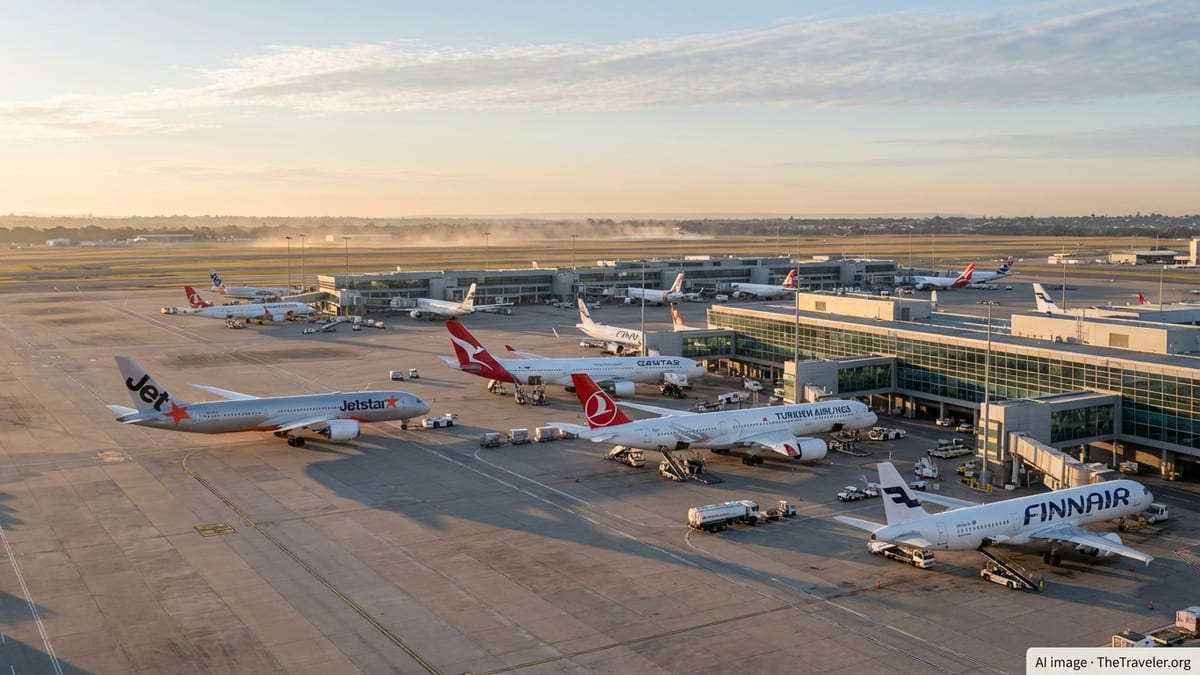
Major carriers Jetstar, Qantas, Turkish Airlines and Finnair are betting big on 2026, unveiling new routes and capacity boosts that will redraw long-haul maps for leisure and business travelers alike.
Jetstar Steps Up With New Trans‑Tasman and Seasonal Growth
Low cost carrier Jetstar is moving in lockstep with parent company Qantas by adding fresh capacity across the Tasman Sea in 2026, targeting one of the region’s most competitive leisure markets. A centrepiece of the expansion is Jetstar’s new nonstop service between Brisbane and Queenstown, due to launch in June 2026 and designed squarely around Australia’s winter ski season. The route will operate three times a week during the snow period from June to October using the airline’s latest generation A320neo aircraft, adding more than 17,000 seats a year into one of New Zealand’s most in‑demand resort towns.
The Brisbane–Queenstown link complements a broader Jetstar push between major east coast Australian cities and New Zealand. The airline is lifting Brisbane–Auckland frequencies sharply, moving to twice daily services that will add close to 100,000 extra seats a year. Melbourne–Christchurch will move to daily year‑round flying, while Sydney–Auckland will climb to as many as 12 flights per week. Together, the changes position Jetstar as a volume player on the Tasman, with a clear focus on budget‑conscious holidaymakers and visiting friends and relatives traffic.
Industry analysts note that the 2026 schedule is as much a competitive statement as it is a tourism play. Extra Jetstar capacity puts pressure on rivals that have used the post‑pandemic period to rebuild market share and yields on Tasman routes. With more seats and modern, fuel‑efficient aircraft, Jetstar aims to defend and grow its share, while also feeding passengers into Qantas Group domestic and long‑haul networks via Brisbane, Sydney and Melbourne.
Qantas Uses 2026 to Deepen International Network Reach
For Qantas, 2026 is shaping up as a year of consolidation and strategic extension rather than pure experimentation. On the trans‑Tasman, the flag carrier will operate its first international A220 route between Brisbane and Wellington from February 2026, marking a milestone for the type beyond Australian shores. The next‑generation narrowbody will initially fly up to three times a week, gradually replacing older E190 and some Boeing 737 services while offering passengers a quieter cabin, larger windows and improved fuel efficiency.
Qantas will also lift capacity on its Perth–Rome corridor, a route that has quickly become a flagship of its ultra‑long‑haul ambitions. Seasonal nonstop services will run for eight additional weeks in 2026, from early May to late October, and frequency during peak northern summer will rise from three to four flights a week. The move will add more than 40 extra services and close to 10,000 seats, giving Australians additional options into continental Europe while strengthening Perth’s position as a true long‑haul gateway.
These changes sit alongside earlier announcements that the Qantas Group will add nearly 800,000 seats between Australia and New Zealand in the 2026 financial year compared with the previous year. When combined with new and returning long‑haul links from Perth to London, Paris and Rome, and forthcoming nonstop services to Johannesburg and Auckland, Qantas is clearly using fleet renewal and restored demand to thicken its international network rather than simply restore pre‑pandemic patterns.
Turkish Airlines Builds a Denser Global Hub With New UK Service
Turkish Airlines is also using 2026 to sharpen its role as a global connector, adding a new UK spoke into its extensive Istanbul hub. From March 18, 2026, the airline will begin operating services from London Stansted to Istanbul, marking its first scheduled presence at the Essex airport. The route will ramp up to as many as 15 flights a week, providing a new option for passengers in north and east London as well as surrounding counties who previously relied on Heathrow or Gatwick for access to Turkish’s network.
The Stansted addition comes on top of Turkish Airlines’ existing operations into the UK and underlines Istanbul’s status as a fast‑growing European hub for travel to Asia, Africa and the Middle East. Travelers connecting via the airline’s main base gain one‑stop access to more than 350 destinations worldwide, including increasing frequencies into Australia through one‑stop itineraries using partners and fifth freedom services. For UK‑based passengers, the new service shortens surface journeys to the airport and broadens competition on Europe‑to‑Asia flows.
Industry observers point out that the choice of Stansted also reflects a wider trend of full‑service carriers probing secondary or low‑cost focused airports for incremental growth. With runway slots at some of Europe’s largest hubs constrained and often expensive, adding capacity from an alternative London gateway allows Turkish Airlines to tap new catchment areas while maintaining premium connectivity through its home hub in Istanbul.
Finnair Enters the Australia Market With Bangkok–Melbourne Link
Finnair’s 2026 plans represent one of the year’s most eye‑catching network moves: the Finnish carrier will enter the Australian market for the first time with a new service connecting Helsinki, Bangkok and Melbourne. Beginning October 26, 2026, Finnair will operate daily flights on the Helsinki–Bangkok–Melbourne routing using Airbus A350‑900 aircraft configured with 278 seats. The service will carry local traffic on each leg, thanks to rights to sell seats between Bangkok and Melbourne as well as on the full journey between Finland and Australia.
The move positions Finnair as only the third European airline to operate regular services into Australia, joining British Airways and Turkish Airlines. For passengers in the Nordic and Baltic regions, the flight offers a new one‑stop option to Melbourne via an overnight sector to Bangkok and a daylight continuation into Australia. For travelers in Southeast Asia, the Bangkok–Melbourne leg introduces another full‑service competitor on a route that has seen strong post‑pandemic demand, especially for leisure travel and visiting friends and relatives.
Finnair’s strategy leans on its experience operating long‑haul services over Asia and using Helsinki as a niche, high‑efficiency hub. While the carrier has faced headwinds in recent years due to airspace restrictions over Russia, the pivot toward Southeast Asia and Oceania allows it to redeploy long‑haul aircraft on flows where demand remains robust. The selection of Melbourne, rather than Sydney, also spreads European capacity more evenly across Australia’s two largest cities and creates new one‑stop combinations for Victorian travelers heading to Northern Europe.
How These Moves Reshape Options for Australian Travelers
For Australian travelers, the combined changes from Jetstar, Qantas, Turkish Airlines and Finnair translate into more choice on both regional and long‑haul journeys. On the Tasman, extra Jetstar and Qantas capacity means a greater spread of departure times and fare levels between major Australian cities and New Zealand gateways such as Auckland, Christchurch, Wellington and Queenstown. The seasonal Brisbane–Queenstown route, timed for the ski season, underscores airlines’ confidence that demand for short‑haul, experience‑driven travel will stay strong into 2026.
On long‑haul sectors, the extended Perth–Rome season and Finnair’s Bangkok–Melbourne link significantly expand the range of one‑stop and nonstop European options. Passengers in Perth will have more dates and frequencies for direct travel into Italy, while those in Melbourne gain a new European connection that bypasses traditional mega‑hubs such as Singapore, Doha or Dubai. For price‑sensitive travelers, the added capacity tends to put downward pressure on average fares, at least outside peak holiday periods, even as airlines seek to protect yields with premium cabins and ancillary services.
The Turkish Airlines expansion at London Stansted may also indirectly benefit Australian passengers using Europe as a staging point. With more capacity into Istanbul from the UK and a web of connections onward to Asia and Oceania partner destinations, travelers can build multi‑stop itineraries that combine European city breaks with trips to destinations like Southeast Asia or, via partner links, Australia. As these 2026 schedules firm up, travel agents and online booking platforms are beginning to highlight new round‑the‑world and multi‑city combinations that leverage the extra connectivity.
What Matters for Business Travelers and Premium Passengers
While much of the 2026 capacity is clearly aimed at leisure travelers, business and premium flyers stand to gain from more tailored schedules and upgraded aircraft. Qantas’s use of the A220 on Brisbane–Wellington introduces a modern cabin with improved seating, larger overhead bins and advanced inflight connectivity on a route that carries a mix of government, corporate and small business traffic. On the Perth–Rome service, the additional weekly frequency during northern summer provides more flexibility for business trips into Italy and onward connections across continental Europe.
Finnair’s deployment of the A350‑900 on the Helsinki–Bangkok–Melbourne route highlights a focus on comfort for ultra‑long‑haul passengers. The widebody offers quiet cabins, modern business class seating and premium economy options, aligning with the carrier’s reputation in Northern Europe for service consistency. For corporate travelers based in Melbourne with links to Nordic and Baltic markets, the route creates a new one‑stop alternative that avoids backtracking through traditional Western European hubs.
Turkish Airlines, for its part, continues to market Istanbul as a premium transfer experience, with upgraded lounges and a wide slate of connections for high‑value travelers. The move into London Stansted will not match the scale or premium focus of its Heathrow operations, but it does expand the airline’s footprint among small and medium‑sized enterprises and tech firms clustered around north and east London who value time savings to the airport as much as inflight product.
What Passengers Should Watch as 2026 Approaches
With launch dates stretching throughout 2026, passengers will need to keep a close eye on booking windows, introductory fares and schedule refinements. Jetstar’s Brisbane–Queenstown flights, for example, are targeted at a specific seasonal window and are likely to attract early bookings from ski enthusiasts and tour operators packaging Australian winter holidays. Qantas’s extended Perth–Rome season creates more shoulder‑season opportunities, when fares are often lower but weather in Europe remains favourable.
Travelers considering new routes operated with next‑generation aircraft, such as Qantas’s A220 international services or Finnair’s A350‑900 flights into Melbourne, may also want to pay attention to seat maps and cabin layouts as airlines finalise configurations. These details can make a significant difference on long sectors, particularly for those weighing the cost of upgrading to premium economy or business class. Meanwhile, passengers using Turkish Airlines’ new Stansted service should monitor how quickly frequencies ramp up and how schedules align with onward connections through Istanbul.
Across all four airlines, the clear message from 2026 network plans is that carriers are ready to invest in new links and higher capacity where they see sustained demand. For frequent flyers and occasional vacationers alike, the changes promise a busier, more competitive global network, with Australia and its neighbours firmly in focus.