

More news on this day
Australia’s cut-throat battle for trans-Tasman travellers has exploded into a full-scale fare war, with Jetstar’s latest New Zealand sale ramping up pressure on Qantas, Virgin Australia and Air New Zealand and resetting expectations on how little it can now cost to cross the Tasman Sea.
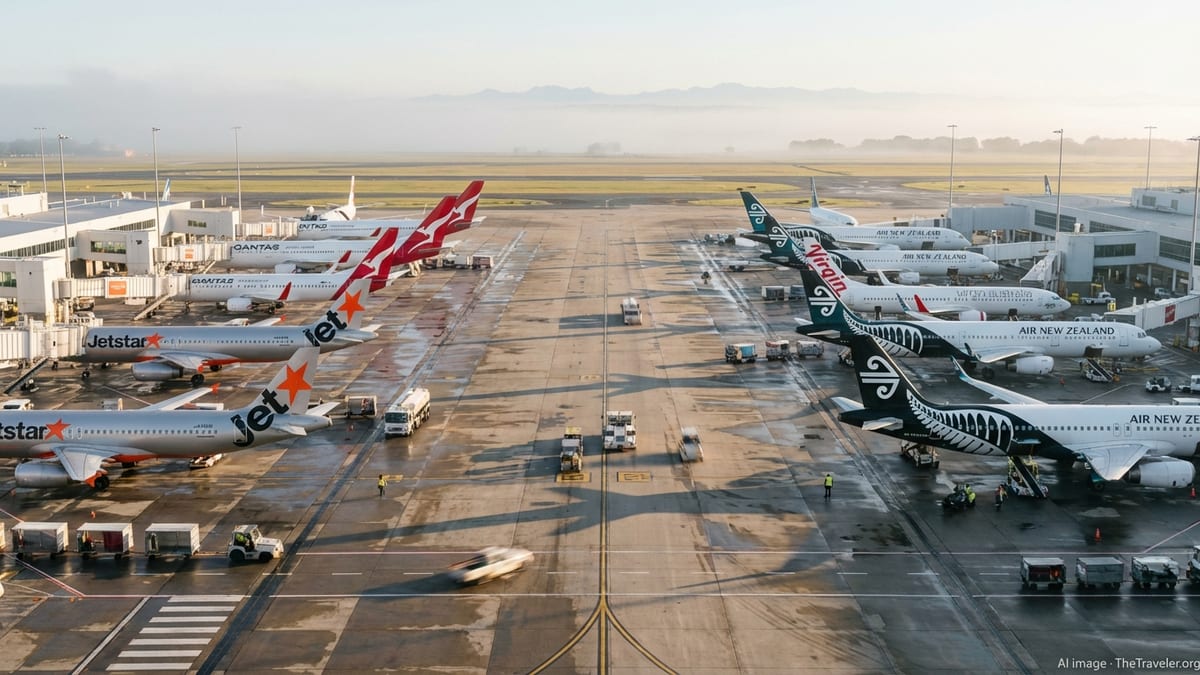
Jetstar Lights the Fuse With 20,000 Cut-Price Seats
Jetstar has thrown down the gauntlet with a four-day New Zealand sale offering 20,000 one-way fares from just $164 between Australia and a string of Kiwi destinations. Launched on 17 February 2026 and running until late on 20 February, the promotion targets shoulder and off-peak travel from mid March through late September, a critical period for both ski tourism and short-break leisure travel across the Tasman.
Sale fares cover a broad sweep of routes including Sydney to Hamilton from $164 one way, Sunshine Coast to Auckland from $179, Cairns to Christchurch from $199, Gold Coast to Wellington from $174 and Brisbane to Queenstown from $214. The pricing undercuts many standard sale levels seen just a year ago and is clearly calibrated to grab attention from price-sensitive travellers weighing up whether to book now or wait for the southern winter.
The move caps more than a year of Jetstar expansion in New Zealand, following the launch of new routes such as Auckland to Sunshine Coast and additional trans-Tasman links from Cairns, Sydney and the Gold Coast. With the airline already positioning itself as the low-fares leader in the market, this latest push is designed to convert added capacity into full aircraft and squeeze rivals on key leisure corridors.
Capacity growth is also accelerating. From June to October 2026 Jetstar will operate new Brisbane to Queenstown services three times weekly using Airbus A320 aircraft, adding around 17,000 extra seats on that route alone. That service, one of at least five trans-Tasman links launched or announced since 2025, gives the carrier a powerful platform to support aggressive pricing into New Zealand’s most famous ski gateway.
Qantas Answers With a Massive Global and Tasman Sale
Jetstar’s push comes just days after full-service parent Qantas opened its own global sale that includes sharp fares on key New Zealand routes. From early February Qantas has been marketing return economy fares for Kiwis flying to Sydney, Melbourne and Brisbane starting from around the low five hundreds in local currency, for travel stretching from early March right through to the end of 2026 on many sectors.
The campaign, which also covers long haul destinations in Asia, North America and South Africa, is framed as a broad-based push to “get the year off to a flying start” for travellers on both sides of the Tasman. However, the most immediate competitive shock is being felt between Australia and New Zealand, where Qantas is clearly intent on defending share against increasingly muscular low-cost competition.
The airline is simultaneously sharpening its product proposition on the Tasman. From February 2026 Qantas is rolling out its new Airbus A220 aircraft on flights between Wellington and Brisbane up to three times per week, the first time the type has been used on an international route by the carrier. The A220 offers a quieter, more fuel-efficient ride and a lighter cabin environment, giving Qantas a premium edge even as it competes against deeply discounted fares in the same market.
By combining low headline prices with newer aircraft and an expansive network, Qantas is trying to straddle two fronts at once: protecting yield on key business and visiting-friends-and-relatives traffic while refusing to cede the value-conscious leisure segment entirely to Jetstar and its rivals.
Virgin Australia and Air New Zealand Tighten Their Alliance
On the other flank, Virgin Australia and Air New Zealand are quietly tightening their partnership to respond to the same pressures. Following competition regulator approval in 2024 for expanded unilateral code sharing across the Tasman, Virgin has gained greater flexibility to place its code on Air New Zealand-operated flights sold in Australia, broadening the range of itineraries and fare types it can offer to price-conscious Australian travellers.
That arrangement has made it easier for Virgin to publish competitive fares on popular city pairs such as Sydney to Auckland or Brisbane to Wellington, even when Air New Zealand is operating the flight. For consumers, the practical effect is more options in the booking engine, often at overlapping or closely matched price points as the two brands move in lockstep during promotional periods.
Both airlines have been drawn into the current discount cycle. Air New Zealand continues to deploy periodic sales focusing on outbound New Zealand demand for Australian city breaks, while Virgin has been running a series of short, high-impact international promotions from Australian gateways. These include targeted deals into Queenstown and other New Zealand destinations timed to capture shoulder-season ski and adventure traffic.
The result is a crowded field where four brands are now chasing roughly the same pool of leisure travellers with increasingly similar price points. With Jetstar’s latest salvo narrowing the visible gap between low-cost and full-service carriers on some routes to less than the cost of a checked bag, Virgin and Air New Zealand face mounting pressure to decide when to match, when to quietly undercut, and when to hold their nerve on price.
How the Fare War Is Reshaping the Trans-Tasman Market
The immediate impact of this fare war is brutally simple: lower prices and more choice for passengers on one of the world’s most heavily trafficked short-haul international corridors. Flights such as Sydney to Auckland, Brisbane to Queenstown and Melbourne to Christchurch are seeing a proliferation of discounted seats, many of them marketed under short booking windows but covering months of travel dates.
Behind the promotional flash, however, the economic forces are more complex. Airlines across the region are still grappling with higher fuel costs, wage inflation and aircraft leasing expenses, even as they seek to rebuild profitability after pandemic-era losses. The current sales are made possible partly by new, more efficient aircraft, better fleet utilisation and a strategic calculation that full planes at lower average fares are preferable to lightly loaded services with higher prices.
Analysts note that the Tasman has historically been a bellwether for competition in Australasian aviation. The corridor is short enough for low-cost carriers to operate efficiently, yet high-yield enough to attract full-service players. When one airline moves aggressively on price, rivals tend to follow quickly to avoid losing visibility on comparison sites and in travel agency systems. The recent cascade of overlapping sales by Jetstar, Qantas, Virgin Australia and Air New Zealand illustrates this dynamic in real time.
There are also strategic considerations around network feed. Discounted trans-Tasman fares help funnel passengers into long haul networks and domestic systems on both sides of the water. A traveller who books a cut-price Brisbane to Auckland ticket today might later connect onto a higher-margin US or Asia service with the same airline group, or buy onward domestic segments that improve overall revenue per customer.
Winners, Losers and Risks in a Race to the Bottom
For now, leisure travellers and families are the clear winners. It has rarely been cheaper, in real terms, to plan a New Zealand ski holiday from Brisbane or Melbourne, or to hop across the ditch for a long weekend in Sydney, Auckland or Wellington. Travel periods built into the current sales stretch across autumn, much of the winter and into early spring, offering flexibility not just on price but on timing and weather preferences.
Tourism operators are also applauding the surge in discounted capacity. Regional destinations such as Queenstown, Hamilton, Dunedin and the Sunshine Coast stand to benefit from increased visitor numbers as lower airfares make secondary airports more accessible. Hotels, ski resorts, adventure operators and hospitality businesses are already gearing up for a stronger than usual 2026 season, banking on airlines filling the extra seats they have added.
The risks lie largely with the airlines themselves. A sustained price war can erode yields and compress margins, especially if competitors are prepared to match discounts more aggressively than expected. If high input costs persist or demand softens later in the year, carriers may find themselves locked into a cycle of promotional activity from which it is difficult to retreat without losing market share or provoking customer backlash.
Frequent flyers could also see some side effects, including tighter controls on reward seat inventory or incremental fees on extras such as seat selection and baggage. These ancillary revenues help subsidise headline fares but can also generate frustration if customers feel that cheap tickets come with too many trade-offs.
Capacity Growth and Fleet Moves Behind the Price Cuts
At the heart of the current fare battle is a significant build-up of capacity across the Tasman. Jetstar’s multi-year New Zealand expansion adds hundreds of thousands of low-cost seats annually through new routes and additional frequencies on existing services. Qantas is deploying new-generation jets like the Airbus A220 on select Tasman routes, betting that lower operating costs and a more attractive product will justify sharper pricing without sacrificing profitability.
Air New Zealand has been steadily rebuilding its international network and adding capacity between major centres such as Auckland, Christchurch and Queenstown and key Australian gateways. Virgin Australia, for its part, is using its partnership and code share arrangements to punch above its weight in terms of schedule presence, leveraging Air New Zealand-operated flights to deepen its reach without matching fleet growth one-for-one.
These moves intersect with broader fleet reshaping within the Qantas Group, including the gradual retirement of older narrow-body aircraft and the introduction of more fuel-efficient types. While some of the headlines around Qantas have focused on divesting interests in overseas subsidiaries, the immediate story for trans-Tasman travellers is one of more seats, more modern aircraft and more aggressive discounting.
Industry observers say that as long as capacity continues to outpace underlying demand on certain city pairs, airlines will have every incentive to keep fare sales flowing. Empty seats on short-haul international flights represent lost revenue that cannot be recovered once a flight departs, making tactical price cuts an attractive tool to stimulate demand at relatively short notice.
What Travellers Need to Know Before They Book
For consumers trying to make sense of the barrage of offers, timing and fine print are crucial. Many of the lowest Jetstar fares are one way and exclude checked baggage, seat selection and in-flight extras, costs that can quickly add up for families or travellers carrying sports equipment such as skis or surfboards. Qantas and Air New Zealand may advertise higher base fares but bundle in more inclusions, while Virgin often sits somewhere between the two models.
Travel periods attached to the current sales are carefully targeted. Jetstar’s latest Tasman promotion focuses on autumn, winter and early spring 2026, avoiding the most in-demand summer school holidays but capturing lucrative ski and city-break demand. Qantas’s global sale stretches across most of the year from early March, while other carriers are staggering their discounts to target quieter travel weeks and avoid head-on clashes over peak dates.
Travel agents and comparison sites report a surge of interest following each new sale announcement, with many customers actively cross-checking fares between airlines and even between brands within the same group. Some are choosing to mix and match, booking a low-cost outbound flight with a budget carrier and a full-service return with a legacy airline if schedules and prices line up.
Travel experts advise that travellers with fixed dates or school holiday constraints should book as early as possible, while those with flexible schedules can afford to watch for short, sharp sales such as Jetstar’s current four-day blitz. In such a fluid environment, waiting for the absolute lowest possible fare is a gamble: prices may fall further, but popular routes and dates can sell out quickly when multiple carriers are locked in an arms race on price.
What Comes Next for the Trans-Tasman Aviation Landscape
The current wave of discounting raises a broader question: is this a temporary skirmish or the start of a structurally cheaper era for trans-Tasman travel? Much depends on how long airlines sustain elevated capacity and whether economic conditions in Australia and New Zealand support continued leisure and discretionary travel at today’s levels.
If demand holds up and fuel prices remain manageable, carriers may choose to keep fares relatively low to secure loyalty and stimulate repeat travel, especially to regional centres that depend heavily on tourism. In that scenario, the Tasman could remain one of the most competitive and affordable international markets in the world for years to come.
If conditions deteriorate, however, a shakeout is possible. Airlines might trim frequencies, redeploy aircraft to higher-yield routes or scale back the most aggressive promotions. Partnerships and alliances, such as the strengthened ties between Virgin Australia and Air New Zealand, will play a key role in how capacity is rationalised without visibly retreating from the market.
For now, though, the message to travellers is clear: the battle for trans-Tasman passengers is in full swing, the deals are real and the window to lock in some of the cheapest fares in years is open. How long this extraordinary phase will last is the question keeping airline executives, tourism chiefs and frequent flyers watching the skies very closely indeed.