

More news on this day
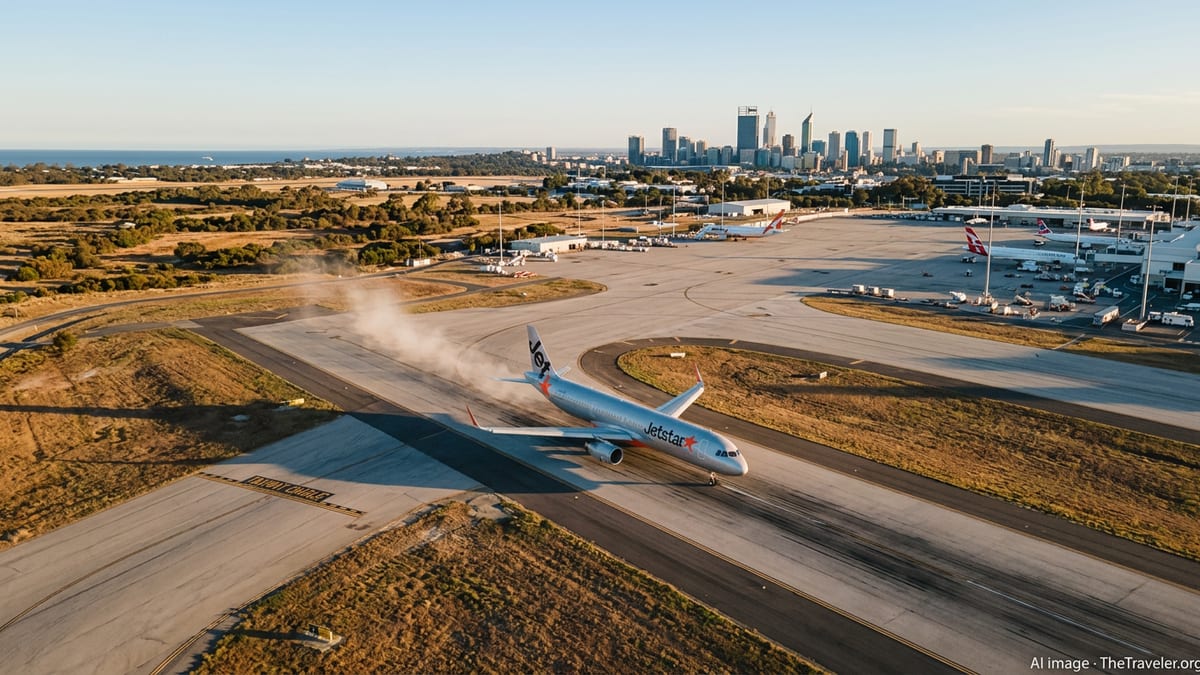
Jetstar is set to launch a new seasonal nonstop route between Christchurch and Perth from October 2026, a move expected to strengthen tourism flows and support job creation in Western Australia’s visitor economy.
New Trans-Tasman Link Timed for Peak Travel Season
The low-cost carrier has confirmed it will operate three weekly return services between Christchurch and Perth from 27 October 2026 through 27 March 2027, aligning the new link with the southern hemisphere summer and key holiday periods. The flights will run on Tuesdays, Thursdays and Saturdays, targeting strong leisure demand in both directions across the Tasman.
The route, which is subject to final government and regulatory approvals, will be flown by Jetstar’s Perth-based Airbus A321LR aircraft. The narrowbody jets, configured in an all-economy layout, will complete the westbound journey from Christchurch in just over seven hours, with the eastbound leg benefiting from prevailing winds to cut flying time by around an hour.
Jetstar and Christchurch Airport estimate the service will add more than 30,000 low-fare seats over the 2026–27 summer season, positioning it as a significant new corridor for South Island travellers and Australian visitors alike. It will be the first direct Christchurch–Perth connection from the low-cost carrier and the only budget nonstop option between the two cities.
Boost for Western Australia’s Tourism and Jobs
Tourism and aviation officials in Western Australia have welcomed the new route as a timely boost for the state’s visitor economy. Perth and the surrounding region have seen robust post-pandemic recovery, with demand from New Zealand regarded as particularly resilient and high-yield for local operators.
Western Australia’s tourism agencies expect the nonstop flights to stimulate longer stays and higher on-ground spending, as South Island visitors gain easier access to Perth’s beaches, wine regions and outdoor attractions. Travel planners say the route is likely to prove especially attractive for families and adventure travellers drawn to Western Australia’s coastal lifestyle and national parks.
Industry observers note that additional services such as this typically support jobs not only at Perth Airport, but also across hotels, hospitality, tour operations and retail. With Jetstar basing an expanded A321LR fleet in Perth and opening a new cabin crew base, the airline’s broader growth strategy is expected to generate new employment opportunities around ground handling, maintenance and customer service.
Christchurch Strengthens Its Role as South Island Gateway
For Christchurch, the new service further consolidates its position as the primary international gateway for New Zealand’s South Island. The airport has been steadily rebuilding and expanding its Australian network, with recent additions including direct links to Cairns and Adelaide, alongside increased capacity to Sydney, Melbourne, Brisbane and the Gold Coast.
The Perth route will become Christchurch’s seventh direct Australian connection, reinforcing its strategy of offering more point-to-point options that bypass larger hub airports. Airport executives argue that such links reduce travel time for South Island residents and make it easier for Australian visitors to access the region’s alpine resorts, coastal drives and wine country.
Air connectivity experts say the Christchurch–Perth service is likely to drive further development in the South Island tourism sector, especially among operators catering to long-stay Australian visitors. Easier access from Western Australia could encourage more self-drive holidays, regional touring and repeat visits to destinations such as Queenstown, Wanaka and Kaikōura.
Connectivity Beyond Perth and Competitive Fares
The new nonstop link also opens up additional long-haul options for South Island residents via Perth. As part of the wider Qantas Group network, passengers will be able to connect in Western Australia to onward services to destinations including Bali, London, Paris, Johannesburg, Delhi and Rome, creating a one-stop alternative to flying via east coast hubs.
Travel agents say these new itineraries could appeal to price-sensitive travellers looking to combine a stopover in Western Australia with long-haul journeys to Europe, Africa or Asia. The seasonal timing of the route means many of these connections will coincide with peak demand periods for both northern and southern hemisphere travel.
Jetstar is positioning the Christchurch–Perth flights squarely in the low-fare segment, with launch promotions highlighting budget-friendly one-way prices. The airline has reported carrying more than 700,000 trans-Tasman passengers in 2025, and its growing New Zealand network suggests it is targeting continued volume growth by linking secondary cities with major Australian gateways.
Strategic Step in Jetstar’s Trans-Tasman Expansion
Aviation analysts view the Christchurch–Perth announcement as part of a broader push by Jetstar to deepen its presence on trans-Tasman routes outside the traditional trunk corridors. Over the past two years, the carrier has rolled out new links connecting regional centres and leisure destinations, including Hamilton and Dunedin, directly with Australian cities.
The decision to deploy fuel-efficient A321LR aircraft on the Christchurch–Perth route reflects Jetstar’s strategy of using longer-range narrowbodies to open new point-to-point markets that previously would have required larger widebody jets. The aircraft’s lower operating costs and improved passenger amenities, such as in-seat power and larger overhead bins, are seen as key to sustaining low fares on flights of more than six hours.
With the new route scheduled through to late March 2027, airport and tourism stakeholders on both sides of the Tasman will be closely watching booking patterns and load factors over the first season. Strong performance could pave the way for an extended operating window in future years, reinforcing the Christchurch–Perth corridor as a permanent feature of the trans-Tasman network and a continuing source of tourism growth and job creation across Western Australia.