

More news on this day
Jetstar is positioning its overhauled Boeing 787 Dreamliners as a new kind of low-cost long-haul experience, with a forthcoming BidCash upgrade option set to let economy passengers compete for premium seats without paying traditional business class prices.
Get the latest news straight to your inbox!
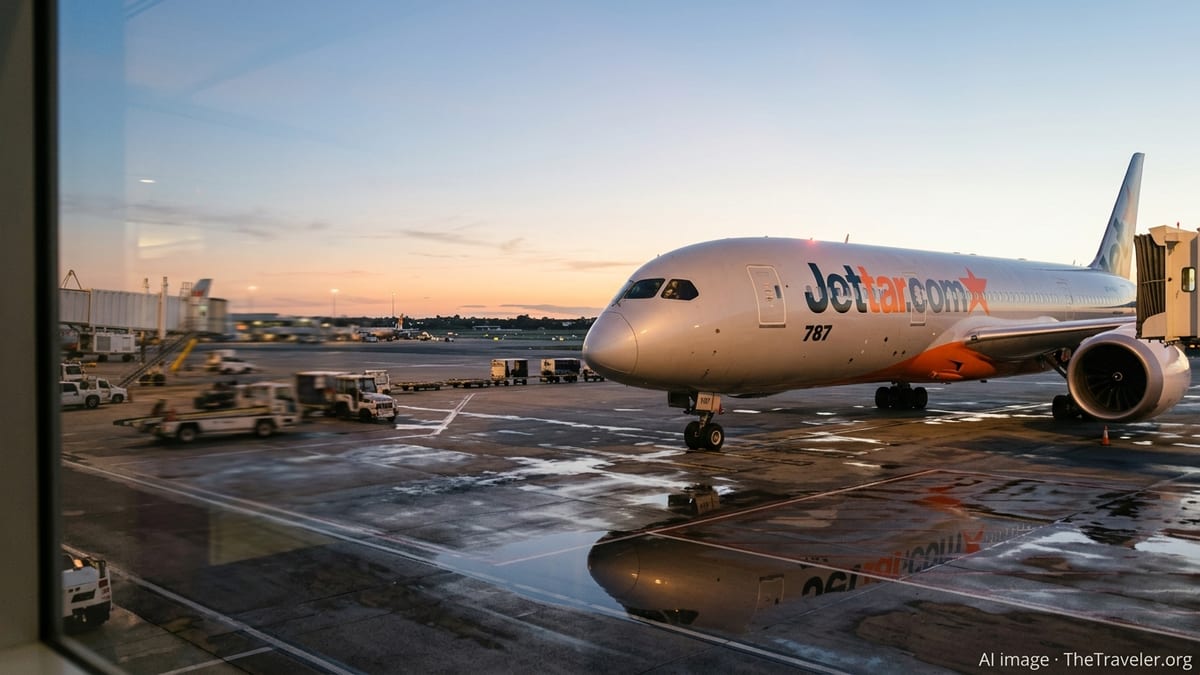
Auction-Style Upgrades Meet a Revamped Dreamliner Fleet
Publicly available information about Jetstar’s 787 fleet renewal shows the airline is investing heavily in a more premium cabin mix, while still marketing itself as a low-cost carrier on long-haul routes. The refit program, which began with aircraft heading to overhaul in late 2025 and upgraded jets returning to service from early 2026, introduces new seating, inflight Wi-Fi and longer-range capability on its Boeing 787 Dreamliners.
The refreshed layout more than doubles the number of business class seats on each 787, creating a significantly larger premium cabin than Jetstar has previously offered. Industry coverage indicates this expanded capacity is central to a wider strategy of monetising premium demand without abandoning the airline’s budget positioning on leisure-heavy routes such as Bali, Honolulu, Tokyo, Seoul and new South Asia services.
Within this context, Jetstar’s planned BidCash upgrade model is emerging as a key commercial lever. By inviting economy travellers to place cash offers for unsold business seats on select 787 flights, the airline can improve cabin load factors while giving cost‑conscious passengers a pathway into the upgraded premium product at below published business fares.
The move mirrors auction-style upgrade systems already in use at full-service brands within the Qantas Group and other global carriers, but its application to a low-cost long-haul operation on newly refurbished Dreamliners is drawing particular attention from frequent flyers and fare watchers.
How BidCash Is Expected to Work for Long-Haul Flyers
According to descriptions of similar upgrade products across the industry, auction-style systems typically allow eligible ticket holders to submit a bid within a preset range, either in pure cash or a cash-and-points combination. Offers are usually assessed in the hours or days before departure, with successful bidders charged only if the upgrade clears and remaining in their original cabin if it does not.
Reports on Qantas Group upgrade practices suggest that bid-based cash upgrades sit behind frequent-flyer point upgrades in processing priority, meaning loyalty members using points are often confirmed before any cash bidding is finalised. For Jetstar’s BidCash proposition on its 787s, observers expect a similar hierarchy, where loyalty-linked upgrades clear first and BidCash then helps fill remaining premium inventory.
On routes where Jetstar’s refurbished Dreamliners operate alongside older 787 interiors during the transition period, BidCash may become a way to steer demand toward the newest cabins. Travel industry commentary notes that airlines commonly use dynamic upgrade pricing to shift passengers into particular aircraft variants or departure times, especially when showcasing new seats and inflight connectivity.
For travellers, the practical impact is likely to be a sliding scale of opportunity rather than a guaranteed bargain. Minimum bids are expected to vary by route, season and the real-time availability of business class seats, with some flights seeing competitive offers close to the fare difference and others leaving room for relatively modest bids to succeed when demand is softer.
Premium Without the Full Price Tag on New 787 Cabins
The centrepiece of Jetstar’s 787 revamp is a substantially enlarged business class, designed to capture a growing segment of leisure and small-business travellers willing to pay more for comfort on flights that can stretch towards 16 hours. Industry coverage highlights new-generation recliner or lie-flat style seats, refreshed cabin finishes and the addition of Wi-Fi to support streaming and connectivity across the cabin.
BidCash upgrades are being framed by analysts as a way to democratise access to that experience. Instead of restricting the new business cabin to travellers paying the full published premium, the auction model opens the door to passengers starting in economy who are prepared to pay a supplemental amount if the price feels right. For some, that could mean an opportunistic upgrade on the day; for others, a carefully calculated bid placed well before departure.
For Jetstar, this blended strategy helps protect the value of upfront business fares while still monetising seats that might otherwise fly empty. Travel trade reports point out that last-minute discounting of premium cabins can undercut direct business sales, whereas opaque bidding systems preserve headline pricing by keeping the final upgrade amounts off standard fare displays.
As more of Jetstar’s 787s complete refurbishment through 2026, observers expect the proportion of flights with sizable premium cabins and BidCash eligibility to steadily grow. That could make long-haul business class on a low-cost brand a more common experience for travellers who are flexible on timing and prepared to engage with the bidding process.
What Travellers Can Expect on Board the Refitted Dreamliners
Seat maps and refurbishment outlines published in industry channels describe a 787 interior focused on balancing density with upgraded comfort. Economy cabins are being refreshed with new slimline seating and improved personal device support, while the enlarged business section promises more personal space, larger screens and modernised storage solutions.
Inflight Wi-Fi is another major pillar of the refit. Coverage indicates that Jetstar intends to support streaming to passengers’ own devices, a significant step for a low-cost carrier traditionally known for pared-back service. For business class passengers in particular, connectivity is likely to be a defining feature, with some reports suggesting differentiated access or allowances at the front of the aircraft.
Jetstar’s 787 network spans a mix of holiday and increasingly long-range routes, and the cabin changes are designed to support both. A new lie-flat crew rest area, for example, enables extended sectors of up to around 16 hours, opening the prospect of additional ultra-long routes if demand and economics align. Analysts note that this capability gives Jetstar and its parent group more flexibility in how they deploy the Dreamliner fleet across Asia-Pacific and beyond.
For travellers who secure a BidCash upgrade into business class on these aircraft, the onboard experience is expected to offer a noticeable step up from economy while still reflecting Jetstar’s low-cost DNA, with paid extras and simplified service compared to traditional full-service competitors.
A New Competitive Front in Low-Cost Long-Haul
The combination of a refreshed 787 product and cash-based bidding for premium seats positions Jetstar in a growing competitive field where low-cost airlines are pushing deeper into traditionally full-service territory. Other carriers operating Boeing 787s and similar upgrade auctions have demonstrated that travellers will pay to move into premium economy or business if the price is framed as a value opportunity rather than a luxury splurge.
For Jetstar, BidCash on the Dreamliner fleet adds another lever alongside frequent-flyer redemptions and promotional fares, giving the airline more tools to respond to seasonal swings and route-specific trends. Aviation analysts note that as more 787s return from refurbishment, the data generated by BidCash offers will also inform pricing decisions and route planning, signalling where premium appetite is strongest.
Travellers, meanwhile, are watching closely to see how aggressively the airline sets its upgrade ranges and how often low or mid-range bids succeed. Early outcomes are likely to shape perceptions of whether BidCash is a genuine pathway to affordable premium travel or primarily a revenue-maximisation tool with limited wins for budget-focused flyers.
What is clear from current fleet and product plans is that Jetstar’s new-look 787s, paired with a more sophisticated approach to upgrades, are set to play a central role in the next phase of competition on long-haul routes out of Australia and across the wider Asia-Pacific region.