

More news on this day
New York’s John F. Kennedy International Airport is rapidly turning into a live testbed for the future of global travel, showcasing new terminals, biometric systems, and digital services that promise a more streamlined experience for millions of international visitors expected over the next several years.
Get the latest news straight to your inbox!
New Terminals Anchor a Reimagined Global Gateway
Major construction projects at JFK are reshaping how international passengers will arrive and depart from New York in the coming decade. The multibillion-dollar redevelopment program centers on two next generation facilities, the New Terminal One on the airport’s south side and a rebuilt Terminal 6 on the north side, both scheduled to begin phased openings in 2026. Publicly available planning documents describe these projects as critical to transforming JFK into a world-class global gateway, with new layouts designed around smoother international flows, natural light, and expanded border control areas tailored to modern screening technology.
The New Terminal One, rising on the former sites of Terminals 1 and 2, is positioned as JFK’s flagship international hub. Industry coverage indicates that the terminal will feature larger gate areas for widebody aircraft, high-capacity security checkpoints, and a design that anticipates increasing volumes of long-haul traffic from Europe, Asia, and Africa. This focus on international connectivity shapes everything from aircraft parking positions to passenger circulation between arrivals halls, customs, and ground transport links.
On the north side, Terminal 6 is being rebuilt as a modern, technology-forward facility that will connect directly with JetBlue’s Terminal 5. According to recent updates from airport stakeholders, the terminal will open in stages starting with an arrivals and departures hall and initial gates, before expanding to full capacity later in the decade. Early presentations on Terminal 6 highlight its role as a flexible platform for new screening systems, automated check-in and bag drop, and a mix of lounges and concessions aimed at long-haul travelers.
Together, these terminals form the centerpiece of a broader 21st century vision for JFK, with the airport positioning their technology and design choices as a preview of what international visitors can expect from major hubs worldwide in the coming years.
Biometric Processing Speeds International Arrivals
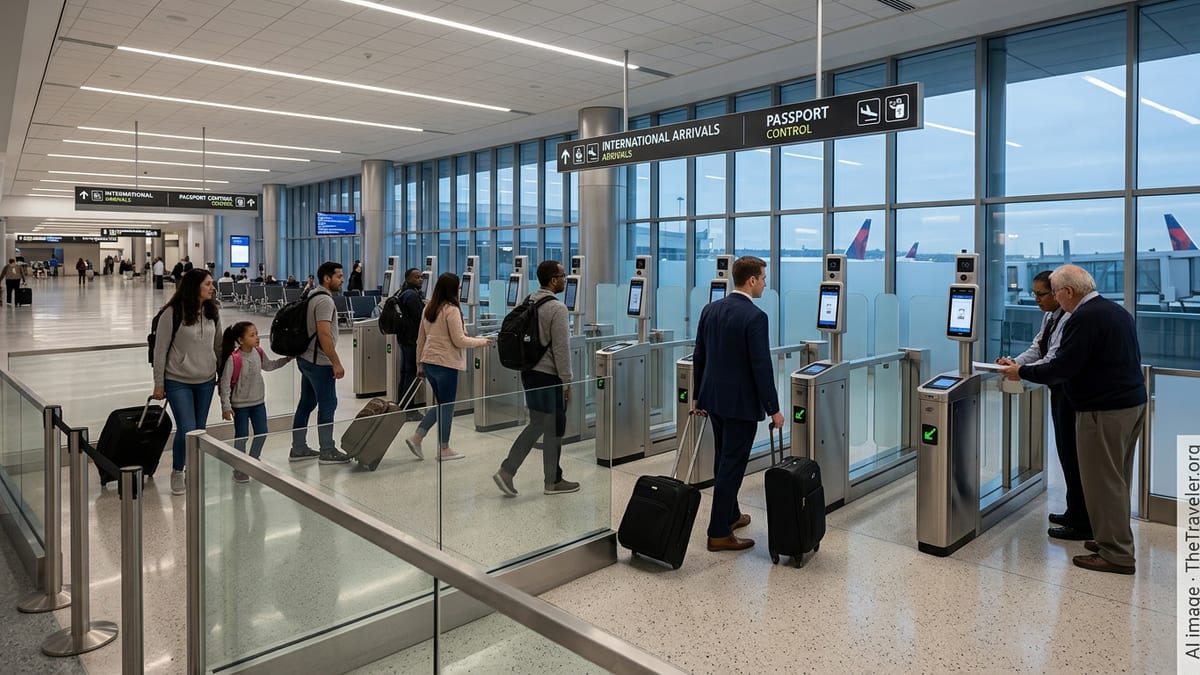
One of the most visible changes for international visitors at JFK is the spread of biometric systems in arrivals halls. Reports from aviation technology outlets show that JFK’s New Terminal One has launched an Enhanced Passenger Processing program in partnership with U.S. border authorities, using facial recognition to verify travelers as they enter the country. The system is designed to match a live image of the passenger to existing government records, reducing manual document checks and helping to cut the time spent in inspection lines.
Similar biometric approaches are already in use elsewhere at JFK, particularly in Terminal 8, where American Airlines and federal agencies have piloted facial recognition for a large share of inbound passengers. Industry coverage notes that these deployments are part of a wider shift in U.S. airports, where face-based identity checks are gradually replacing traditional procedures at kiosks and primary inspection booths. At JFK, the rollout is being framed as a way to manage rising international demand while working within tight terminal footprints.
For international travelers, the effect is a more automated frontier crossing, with cameras embedded into lanes that once relied almost entirely on passport swipes and manual visual inspections. The technology is intended to process most passengers in seconds, although its use has also prompted debate among advocacy groups and travelers about data protection, algorithmic accuracy, and long-term storage of biometric information. JFK’s deployments place the airport at the center of this global conversation about how much automation should shape the border experience.
As traffic builds toward major events such as the 2026 FIFA World Cup in North America, these biometric initiatives are likely to expand. Industry forecasts suggest that airports like JFK will continue to refine eligibility rules, signage, and fallback options to make the systems feel intuitive to visitors arriving from a wide range of countries and technology backgrounds.
Touchless Security and AI-Driven Operations
Beyond arrivals processing, JFK is adopting a suite of touchless and AI-enabled tools that aim to streamline the entire journey for international passengers. Transportation security briefings and aviation analytics reports show that TSA’s PreCheck Touchless ID program, which relies on facial recognition instead of physical boarding passes and identity documents at checkpoints, now includes JFK among its participating airports. The objective is to enable eligible travelers to move through security with minimal physical interaction, reducing bottlenecks and improving throughput at busy times.
Behind the scenes, JFK is also experimenting with AI-driven systems to manage aircraft movements and ground operations more efficiently. Industry publications describe the use of virtual ramp control platforms and so-called Smart Stand technology that help orchestrate aircraft parking, pushback, and gate allocation in real time. For international visitors, the result can be fewer last-minute gate changes, shorter taxi times, and more predictable connections between long-haul flights and domestic links.
Within terminal buildings, JFK’s technology roadmap includes predictive analytics for passenger flows, enabling airport operators to anticipate surges at security, immigration, and baggage claim. Interviews and public presentations from terminal operators indicate that these tools draw on real-time data from flight schedules, sensors, and historical patterns to optimize staffing and queue layouts. While invisible to most travelers, these systems are increasingly important as international volumes rebound and surpass pre-pandemic levels.
These operational upgrades align JFK with a broader global movement toward data-driven airport management. As other hubs adopt similar approaches, the experience at JFK offers an early glimpse of how automation, AI, and touchless identity verification may quietly coordinate the journey of each arriving international passenger.
Designing a Seamless Experience for Global Visitors
Future-facing technology at JFK is being paired with physical design choices intended to make the journey less stressful for visitors unfamiliar with the airport. Planning materials and recent project updates emphasize more intuitive wayfinding, clearer sightlines, and centralized processing areas in the new terminals. For international passengers, this means fewer confusing corridor turns between aircraft, passport control, baggage claim, and ground transport, with information displays and staff positioned at critical decision points.
Terminal 6 and the New Terminal One are both described as prioritizing natural light, open concourses, and generous dwell spaces around security and border control zones. These features are intended to reduce the feeling of congestion even as passenger numbers grow. For long-haul travelers recovering from overnight flights, the combination of more comfortable waiting areas, expanded seating, and additional electrical outlets and charging points may make layovers and delays less taxing.
Accessibility is another emerging focus at JFK as part of the future visitor experience. Recent announcements highlight pilot programs that use digital tracking to monitor mobility carts and other assistance services across the airport, allowing staff to dispatch support more efficiently to passengers with reduced mobility. For international visitors who may be navigating language barriers as well as physical challenges, more predictable assistance can significantly improve the perception of the airport.
Retail and food offerings are also expected to play a role in the reimagined international journey. Project descriptions for the new terminals reference a mix of global brands and local New York concepts, with an emphasis on flexible spaces that can adapt to changing traveler preferences. For visitors, these upgrades contribute to the sense that the airport is both a gateway to the city and a modern travel hub in its own right.
Previewing the Global Airport of Tomorrow
The changes underway at JFK place the airport among a group of large international hubs that are attempting to redefine how border crossings, security, and connections will work in the coming decade. Industry analysis frequently cites JFK alongside airports in cities such as Los Angeles and Chicago as early adopters of integrated biometric and AI systems at scale. Because of its role as a primary entry point to the United States for transatlantic and transpacific travelers, JFK’s choices carry outsized influence on global expectations.
As more elements of the redevelopment program come online between now and the late 2020s, travelers arriving from abroad will encounter an airport that feels increasingly digital, automated, and data-informed. Some aspects of this transformation, especially biometric screening, are likely to remain the subject of policy discussions and traveler scrutiny. Others, such as faster queues and more reliable connections, may be noticed only in their absence when compared with older facilities elsewhere.
For now, JFK effectively serves as a showcase for where international air travel is headed: a tightly choreographed mix of cameras, sensors, algorithms, and redesigned spaces that aim to move people more quickly while preserving security and, ideally, a sense of welcome. For millions of visitors stepping into the United States, their first glimpse of this future will be the moment they walk off a long-haul flight and into New York’s evolving global gateway.