

More news on this day
Hundreds of passengers were stranded at New York’s John F. Kennedy International Airport on March 1 as a cascade of 161 delays and 21 cancellations hit flights operated by El Al, Emirates, Qatar Airways, Delta Air Lines and JetBlue, severing or rerouting crucial links between Tel Aviv, Dubai, Doha, London and key cities across the United States.
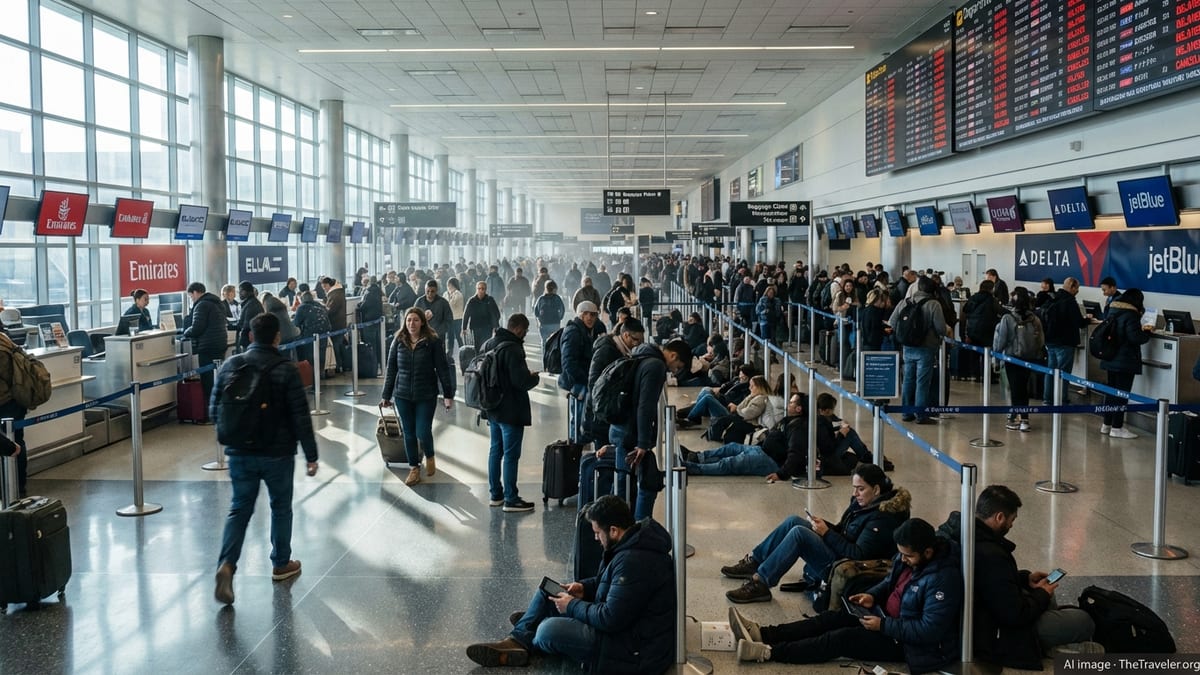
Middle East Conflict Triggers Global Flight Disruptions
The turmoil at JFK is part of a far wider shock to the global aviation system following joint United States and Israeli strikes on Iran late on February 28. In the hours that followed, authorities in Israel, Iran, Iraq, Qatar, the United Arab Emirates and several neighboring states moved to close their airspace, effectively shutting some of the world’s busiest long haul corridors between Europe, Asia and North America.
Major hubs including Dubai International, Abu Dhabi’s Zayed International, Doha’s Hamad International and Tel Aviv’s Ben Gurion Airport suspended or sharply curtailed operations after reported missile and drone strikes and amid fears of further attacks. Airlines scrambled to cancel, reroute or divert flights already airborne, sending some wide body jets back to their points of origin and forcing others to land at secondary airports far from their intended destinations.
By Sunday morning, aviation analytics firms were counting thousands of cancellations and a far larger number of delays worldwide, with long haul services that would normally arc across the Middle East instead detouring around closed airspace or being withdrawn entirely. The knock on effects rippled quickly into North American and European timetables, snarling schedules even at airports thousands of miles from the conflict zone.
JFK Passengers Face Long Lines, Sparse Information
At JFK, the disruption translated into long queues at check in counters, crowded departure halls and confusion at departure boards as passengers tried to piece together what the shifting situation meant for their trips. Flights linking New York with Tel Aviv, Dubai and Doha were among those hardest hit as carriers adjusted operations to comply with airspace closures and reassessed security risks.
El Al, Emirates and Qatar Airways bore the brunt of cancellations for nonstop services to their home hubs, leaving passengers bound for Israel and the Gulf abruptly grounded in New York. Many had onward connections planned to destinations in Asia, Africa and the Indian Ocean, turning JFK’s terminals into an impromptu holding area for travelers whose entire journeys suddenly became uncertain.
Delta Air Lines and JetBlue, both significant operators at JFK, were also drawn into the disruption. Delta had already paused its Tel Aviv service from New York following the strikes, while additional late running and equipment swaps spread delays across parts of its domestic and transatlantic network. JetBlue, which partners with several international carriers at JFK, saw knock on schedule issues as aircraft and crews fell out of position.
Key Links to Tel Aviv, Dubai, Doha and London Severed or Rerouted
The sudden loss or curtailment of direct links from JFK to Tel Aviv, Dubai and Doha disrupted some of the most important connecting flows in modern air travel. Ben Gurion Airport serves as Israel’s primary international gateway, while Dubai and Doha function as giant transfer hubs that channel passengers between North America, Europe, Asia and Africa on a single ticket.
With airspace over large swaths of the Middle East unavailable, some airlines began plotting longer, fuel intensive detours over alternative corridors, adding hours to flight times and squeezing operational margins. Others opted to cancel or temporarily suspend services outright, prioritizing crew safety and regulatory compliance over schedule integrity. That left passengers who had carefully constructed itineraries through the region suddenly facing missed connections and unexpected stopovers.
Even routes that do not normally overfly the Middle East felt the strain. Services between New York and London, one of the world’s busiest transatlantic city pairs, experienced knock on delays as aircraft expected to rotate in from disrupted Middle Eastern or South Asian flights arrived late or not at all. For many travelers, the impact surfaced not through a single high profile cancellation, but through a cascading series of smaller holdups that turned relatively simple journeys into day long endurance tests.
Airlines Roll Out Waivers as Travelers Scramble for Alternatives
In response to the growing disruption, airlines serving JFK and other major US gateways moved to roll out waivers, rebooking options and limited compensation for affected passengers. Delta extended a travel waiver for customers booked to or from Tel Aviv, allowing changes without typical penalties, while carriers based in the Middle East offered similar flexibility for journeys touching Dubai, Abu Dhabi, Doha and Tel Aviv.
Yet on the ground in New York, many travelers reported difficulty reaching airline call centers or securing firm new travel dates amid fast changing conditions. With seats scarce on remaining flights that avoided the conflict zone, rebookings often involved circuitous routings through European or Asian hubs and extended layovers, further prolonging journeys already thrown off course.
Airport staff and airline agents at JFK worked to arrange hotel rooms and meal vouchers for some stranded passengers, prioritizing families with children, elderly travelers and those lacking US visas who could not easily clear immigration. Others opted to stay airside, stretched out across benches and gate area floors as they waited for clarity on when routes might resume or stabilize.
Uncertain Outlook for Global Travelers in the Days Ahead
With military and diplomatic developments in the region still unfolding, airline planners cautioned that schedules would likely remain in flux for days, and potentially longer, as they reassessed routings, crew duty times and demand patterns. Even if some airspace restrictions are eased, restoring normal operations across such a dense web of long haul services is expected to be a gradual process rather than an overnight reset.
For travelers passing through JFK and other major hubs, the immediate advice from airlines and airport authorities is to monitor flight status continuously, keep contact details updated within reservations and avoid heading to the airport without a confirmed departure time. Many carriers have encouraged customers to make use of their mobile apps or online portals rather than relying solely on phone lines, which have been inundated by a surge in calls.
The chaos at JFK on March 1 underscores how quickly a regional security crisis can reverberate through global travel, transforming a single night of military action into days of uncertainty for passengers far from the front lines. As aircraft sit idle, routes are redrawn and timetables rewritten, the full scale of the disruption to links between New York, Tel Aviv, Dubai, Doha, London and other cities is only beginning to emerge.