

More news on this day
Flight delays at New York’s John F. Kennedy International Airport are rippling across heavily traveled Florida leisure routes this week, compounding disruption for spring travelers already contending with a volatile U.S. flight network.
Get the latest news straight to your inbox!
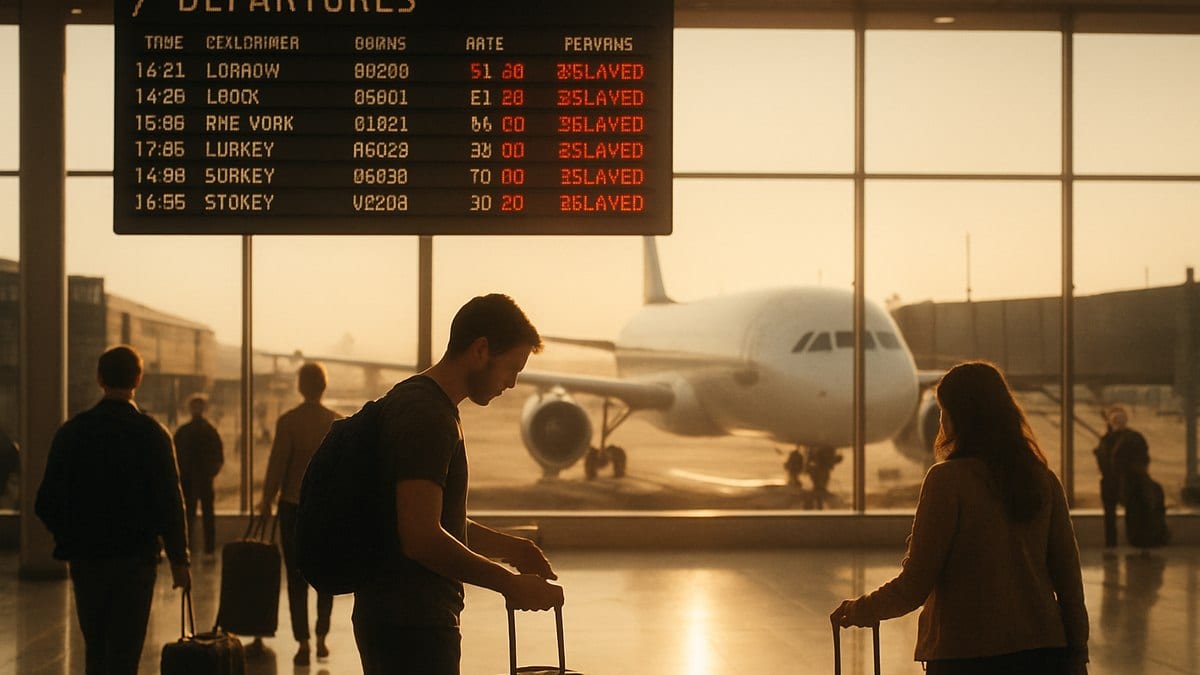
JFK Logs Triple-Digit Delays As System Strain Builds
Publicly available tracking data for April 8 indicates that John F. Kennedy International Airport recorded more than 130 delayed departures and arrivals within a single day, alongside a smaller number of cancellations. New York’s major airports have featured prominently in national disruption tallies in recent days, reflecting how quickly congestion in the Northeast can spill across the wider system.
The latest figures follow a delay heavy period over the early April holiday window, when weather and traffic management initiatives around New York triggered rolling scheduling constraints. Reports from consumer advocacy platforms describe thousands of impacted flights across the United States over the first week of April, with New York repeatedly listed among the hardest hit metro areas.
Operational bulletins and industry analysis note that even a brief period of reduced capacity in New York airspace can force airlines to compress or retime departures at JFK. Once departure slots are pushed back during peak bank periods, late running aircraft and crews often arrive out of sequence, creating knock on delays that can persist well into the evening schedule.
Because JFK functions as both an international gateway and a key domestic connecting point, these delays rarely remain contained to the New York region. Aircraft scheduled to continue to Florida or onward from Florida to other U.S. destinations may start their day already behind schedule, diminishing on time performance across multiple legs.
Florida Leisure Corridors Shoulder The Impact
The high frequency shuttle of flights between New York and Florida has left leisure travelers particularly exposed to this latest round of operational strain. Route mapping services show that JFK maintains dense schedules into Orlando and South Florida, with dozens of weekly nonstop flights to Orlando and additional capacity into Fort Lauderdale and Miami operated by a mix of full service and low cost carriers.
These links are especially busy in early April as families take advantage of school breaks and snowbirds complete their seasonal journeys. Demand focused on a narrow set of departure windows, often morning southbound and evening northbound, increases the difficulty of absorbing a wave of delays. When one bank of flights from JFK departs late, corresponding return services from Florida frequently depart behind schedule as well.
According to same day snapshots compiled by aviation data specialists, Orlando International Airport and Fort Lauderdale-Hollywood International Airport each reported well over one hundred delays on April 8 alone, alongside a smaller cluster of cancellations. Many of these disruptions involved airlines with large leisure footprints, underscoring how tightly New York Florida flying patterns are intertwined.
For passengers, the effect is most visible in extended waits at departure gates, late evening arrivals that cut into vacation time, and missed connections onto cruises or theme park packages. With limited spare seats during the peak spring period, rebooking options for severely delayed or cancelled flights can be constrained, forcing some travelers to accept next day departures.
Weather And Air Traffic Constraints Combine
The ripples from JFK to Florida are unfolding against a backdrop of unsettled spring weather in the Southeast. On April 7, a line of heavy rain and thunderstorms prompted a temporary ground stop for arriving flights at Miami International Airport, according to regional broadcast coverage, with delays continuing as storms moved across South Florida. Similar convective systems have periodically slowed operations at Orlando and Fort Lauderdale, further complicating efforts to recover punctuality.
When storms encroach on already saturated airspace, the Federal Aviation Administration typically responds with flow control programs that limit the number of aircraft that can depart or arrive within a given period. Industry briefings point out that routes from the Northeast to central Florida are among the busiest in the country, leaving little slack when restrictions are imposed.
Technical summaries released by federal aviation officials describe how traffic management initiatives on this corridor can add minutes or even hours of holding and rerouting, particularly when aircraft must skirt convective weather. With JFK relying on a tight runway configuration during busy hours, even short stretches of reduced arrival or departure rates can quickly translate into cascading delays.
Compounding these weather related factors are staffing and crew positioning challenges, which analysts identify as recurring contributors to schedule instability. When earlier flights are delayed or diverted, flight and cabin crew can “time out” under duty regulations, forcing airlines to search for replacements or, in some cases, consolidate services.
Airlines Juggle Schedules As Spring Peak Continues
Carriers operating at JFK and across Florida have entered the spring break and early summer build up with full schedules and limited buffer capacity. Recent corporate statements and regulatory filings highlight efforts to add seasonal seats on sun destinations, including expanded service into Fort Lauderdale and Orlando. While these moves cater to strong leisure demand, they also leave operators vulnerable when irregular operations emerge.
Flight status boards on April 7 and 8 show a mix of legacy and low cost airlines absorbing substantial delays at New York and Florida airports. Industry roundups list Delta Air Lines, American Airlines, JetBlue, Spirit, Frontier and Southwest among those most affected on key days, though performance varies by carrier and route. On some JFK Florida rotations, aircraft cycled through the day with successively longer delays as earlier disruptions eroded schedule margins.
In parallel, consumer rights organizations continue to scrutinize how airlines handle extended delays and cancellations. Public databases maintained by the U.S. Department of Transportation show heightened enforcement activity around chronic delays and tarmac holds in recent years, alongside efforts to clarify what compensation or amenities passengers can expect when airlines are responsible for disruptions.
However, travel law specialists note that when weather or air traffic control constraints are the primary trigger, U.S. regulations do not generally mandate cash compensation. Instead, responses are governed by individual carrier policies, which may include meal vouchers, hotel accommodations or fee free rebooking in some circumstances.
What Travelers Can Expect In The Coming Days
With unsettled spring weather still in the forecast and demand for Florida leisure trips remaining high, analysts caution that operational volatility at JFK and across the East Coast could persist in the near term. Aviation data providers emphasize that single day tallies of several thousand delays across the United States, including more than one hundred at JFK alone, have become relatively common during peak travel periods.
Passengers booked on New York Florida services over the next week are likely to encounter longer than normal security and boarding queues, as well as a heightened risk of schedule changes close to departure. Airlines are encouraging customers through public advisories to monitor flight status tools and mobile apps and to allow extra time between connections, particularly when a journey involves both New York and central or South Florida.
Experienced travelers also recommend booking earlier departures where possible, as morning flights are more likely to leave close to schedule before daily delays accumulate. For those with tight onward plans such as cruise departures or prepaid excursions, consumer advocates suggest building in additional buffer time or considering arrivals a day in advance.
While the current disruption may ease as weather patterns stabilize and airlines work through backlogs, the episode highlights the structural sensitivity of the JFK Florida corridor. Any future capacity pinch in New York’s crowded airspace is likely to echo quickly along these leisure routes, reinforcing the importance of flexible planning for travelers chasing sun across the Atlantic seaboard.