

More news on this day
Kenya Airports Authority is rolling out a new technology-driven taxi dispatch platform at Jomo Kenyatta International Airport, promising a more orderly, transparent and seamless transfer experience that officials say will enhance Nairobi’s status as a leading gateway for African tourism.
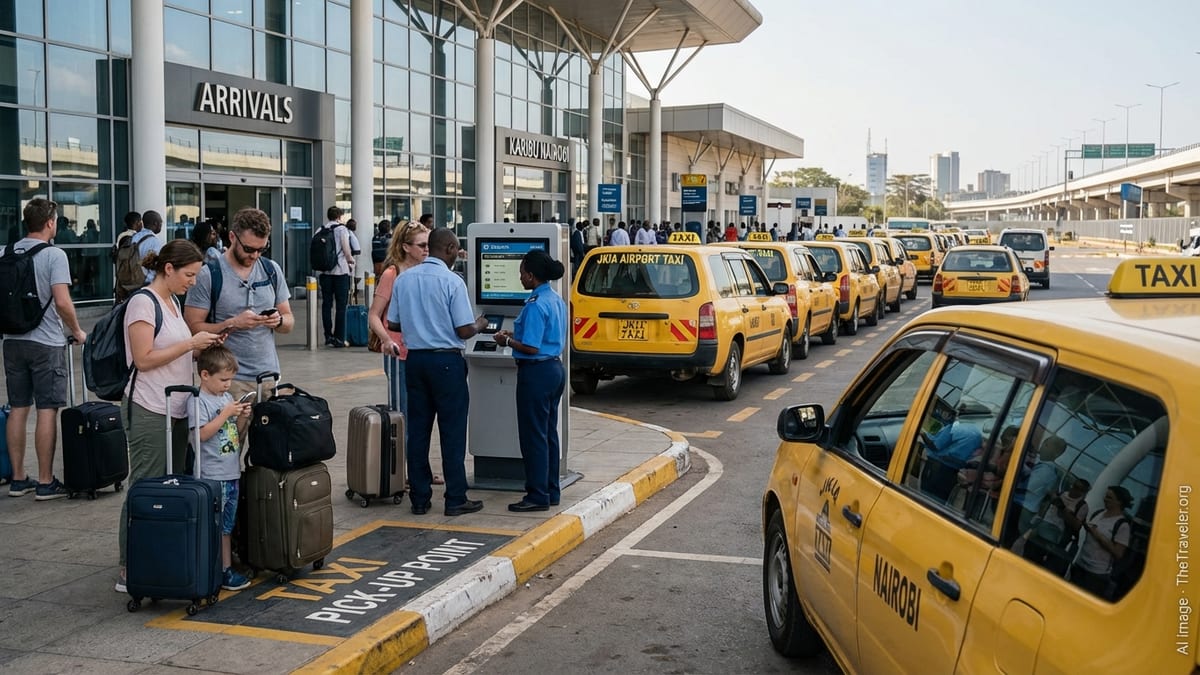
Digital Platform Targets Friction at Africa’s Fourth-Busiest Hub
The new dispatch system, developed through a public-private partnership, will centralise how official airport taxis are ordered, allocated and monitored at Kenya’s main international gateway. Passengers arriving at Jomo Kenyatta International Airport will be able to request rides via a mobile application, web portal or staffed kiosks in the arrivals halls, with the platform initially limited to approved yellow cabs that meet Kenya Airports Authority standards.
Kenya Airports Authority has framed the initiative as a response to long-standing complaints about confusion, touts and widely varying fares in the terminal forecourts. By replacing informal queuing with an automated, rules-based system, the authority aims to reduce passenger stress at the critical first touchpoint in the country, particularly for first-time visitors unfamiliar with Nairobi.
The platform is expected to go live within months of the contract signing and will operate alongside existing ride-hailing services rather than replacing them. Officials and industry observers say the competition should lift service quality across the board and reinforce JKIA’s ambitions to function as a modern, digitally enabled hub at the heart of East Africa’s travel network.
Real-Time Features Promise Safer, More Predictable Rides
At the core of the new system is an automatic dispatch engine designed to manage taxi queues in real time, matching vehicles to passengers based on proximity, availability and terminal location. Travellers will see fare estimates before confirming a ride, receive trip notifications on their phones and be able to track the assigned vehicle on a live map from the moment it is dispatched to their pickup point.
The platform also incorporates GPS-based geofencing to ensure that pickups and drop-offs occur only in designated airport areas. Kenya Airports Authority expects this to improve orderliness in the curbside zones, reduce congestion and give arriving visitors more confidence that they are boarding a licensed cab rather than an unregulated operator. The emphasis on traceability and digital records is intended to strengthen security oversight and provide a clear recourse channel in the event of disputes or lost property.
For taxi drivers attached to the official JKIA fleet, the software promises more efficient utilisation and a fairer allocation of passengers. Digital queuing and transparent assignment rules should reduce idle time, while electronic payment options integrated into the system are likely to encourage more cashless transactions, aligning with Kenya’s broader shift toward mobile money and card-based payments.
Strengthening Kenya’s Tourism Brand from the First Mile
Tourism remains one of Kenya’s most important economic pillars, and Jomo Kenyatta International Airport serves as the primary arrival point for visitors heading to Nairobi, the Maasai Mara, the coast and other marquee destinations. Kenya Airports Authority has positioned the taxi dispatch platform as a strategic investment in the so-called first and last mile of the tourist journey, an area that has grown in importance as travellers place greater weight on ease and safety of ground transport.
By standardising service levels, providing clear pricing and minimising the risk of overcharging, the new system is expected to support Kenya’s efforts to present itself as a reliable, tourist-friendly destination. The authority argues that small frictions at the airport, from long taxi queues to uncertainty over how to arrange transport after midnight, can colour a visitor’s perception of the country and sometimes overshadow otherwise positive experiences in national parks and coastal resorts.
The taxi platform complements other recent policy moves designed to make entry smoother, including ongoing immigration reforms that aim to simplify arrival formalities for African and international travellers. Together with major infrastructure projects such as the Nairobi Expressway, which links JKIA directly to the city’s business districts, Kenya is gradually assembling a more coherent and integrated arrival experience for both leisure and business visitors.
New Revenue Streams and a Broader Digital Airport Ecosystem
Beyond passenger convenience, the taxi dispatch platform is expected to create additional non-aeronautical revenue streams for Kenya Airports Authority at a time when airport operators worldwide are seeking to diversify income. The authority will earn fees from participating taxi operators and may also open limited digital advertising inventory within the application and kiosk interfaces to tourism boards, hotels and local service providers.
Officials have indicated that the dispatch system is a building block in a wider digital strategy for JKIA, which includes plans for online parking reservations, pre-booked lounge access, airport navigation tools and enhanced duty-free retail experiences. By anchoring ground transport in a modern, app-based ecosystem, Kenya Airports Authority hopes to encourage travellers to interact with a suite of connected services rather than relying on a fragmented mix of analogue processes and informal operators.
Industry analysts note that airports which successfully integrate ground transport with retail, hospitality and passenger information platforms often see higher spending per visitor and stronger airline partnerships. For JKIA, which handles millions of international passengers a year, even small increases in efficiency and customer satisfaction could translate into meaningful gains in both revenue and global competitiveness.
Positioning JKIA as a Regional Benchmark for Seamless Travel
The rollout of the taxi dispatch platform comes as airports across Africa race to modernise in response to rising passenger volumes and heightened expectations. Kenya Airports Authority is seeking to position JKIA not only as a convenient hub for connections between Africa, Europe, the Middle East and Asia, but also as a reference point for how digital tools can transform the end-to-end travel experience on the continent.
Travel trade groups have welcomed the project as a sign that Kenya is listening to feedback from tour operators, corporate travel managers and individual visitors who have long called for more predictable ground transport at the airport. The move is expected to resonate with airlines as well, many of which see efficient transfers and safe onward travel as a prerequisite for expanding routes or promoting Nairobi as a preferred connection point.
As the system is implemented, attention will turn to how effectively it coordinates with existing ride-hailing platforms, hotel shuttles and tour operators, and whether similar models are adopted at other Kenyan gateways such as Mombasa’s Moi International Airport and the coastal charter terminals. If successful, the JKIA taxi dispatch initiative could serve as a template for other African airports seeking to couple technology with tourism development and reinforce their reputations as modern, welcoming entry points for global travellers.