

More news on this day
Franchise advisor Joe Carter is advising on the planned sale of the Two Maids Round Rock territory, a move that highlights continued investor interest in residential cleaning brands across fast-growing Central Texas.
Get the latest news straight to your inbox!
Resale Highlights Maturing Home-Service Franchises
The planned transfer of the Two Maids Round Rock territory underscores how residential cleaning franchises are evolving from first-time launches to maturing resale opportunities. Publicly available franchise materials describe Two Maids as a residential home-cleaning brand that operates through protected territories defined by ZIP codes, typically covering tens of thousands of households. These territories can later be transferred to new owners subject to the franchisor’s approval and standard transfer fees.
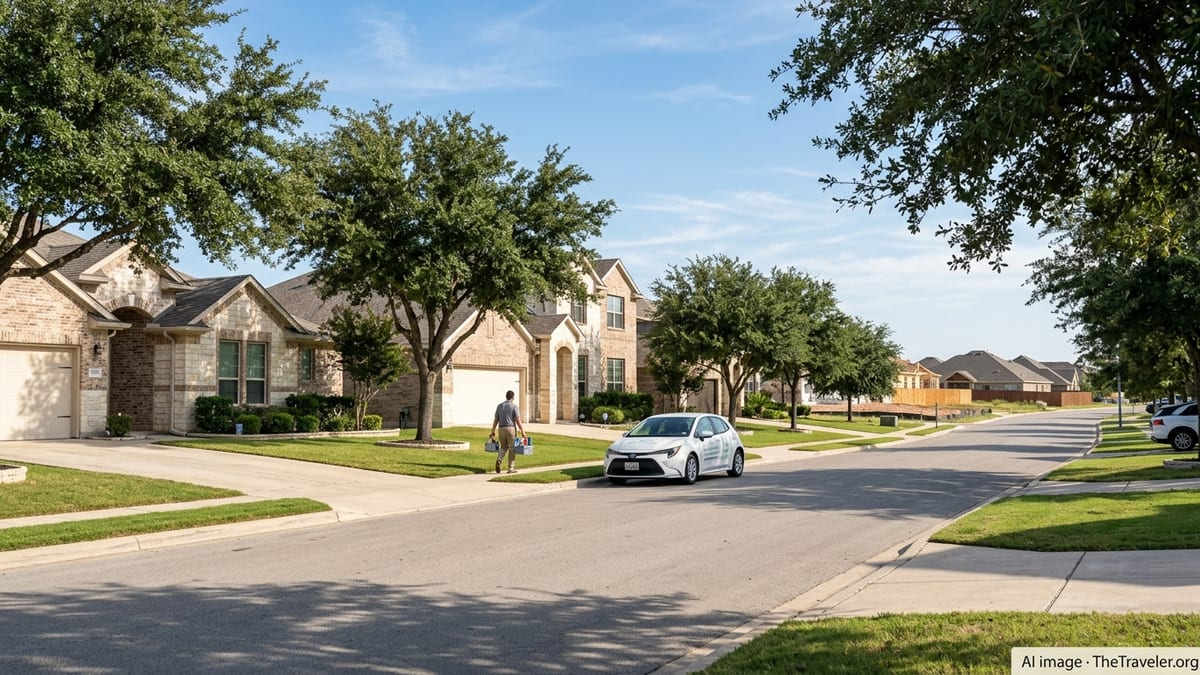
Round Rock, part of the greater Austin metropolitan area, has been one of the state’s faster-growing suburban markets, with a steady influx of residents and new housing developments. Earlier local coverage has documented how the Two Maids Round Rock franchise built its customer base around this expanding residential footprint while also participating in community initiatives aimed at supporting local families and patients undergoing medical treatment. As the territory moves toward a resale, that existing customer base and community visibility are expected to be central to the valuation.
The broader Two Maids system has seen a similar trajectory, shifting from a younger, emerging concept to a more established brand that is now part of a larger home-services platform. Two Maids was acquired by Home Franchise Concepts, a multi-brand franchisor backed by JM Family Enterprises, in a transaction announced in September 2021, positioning the cleaning brand alongside other established home-service concepts under one corporate umbrella.
In this context, the Round Rock territory sale reflects how franchisees increasingly view their businesses as assets that can be built and later exited, rather than purely long-term owner-operator roles. For some buyers, acquiring an existing location can provide a faster path to revenue than starting from scratch in a new market.
Joe Carter’s Role in the Territory Transfer
Joe Carter is described in published profiles as a franchise advisor and founder of Twin Flame Group, as well as a partner with The Franchise Consulting Company. His work typically focuses on helping individuals evaluate and invest in what are presented as high-growth franchise brands across multiple service categories. In that capacity, Carter has been associated with franchise ownership stories that span home services and other business-to-consumer concepts.
Recent business-press features identify Carter as having close ties to former Two Maids of Round Rock owner Angela Spencer, who has since gone on to co-found new ventures in the mobile services space. Those reports characterize his advisory work as centered on franchise selection, territory strategy, and exit planning, areas that are directly relevant when a mature territory such as Round Rock is prepared for sale.
Advising on the sale of an established territory typically involves reviewing financial performance, operational systems, and brand positioning, then packaging that information for prospective buyers who may be entering franchising for the first time. While specific terms of the Round Rock transaction have not been made public, standard franchise disclosure documents show that transfers within the Two Maids system are subject to defined fees and franchisor review, which can influence how an advisor structures the overall deal.
In addition to matching buyers and territories, advisors in Carter’s position often guide candidates through due diligence on franchise agreements, territory protections, and ongoing fee structures. For a brand like Two Maids, those details include items such as technology fees, advertising contributions, and training requirements, all of which can affect the long-term economics for a new owner of the Round Rock location.
Inside the Two Maids Franchise Model
Two Maids operates as a residential cleaning franchise built around protected geographic territories. Franchise disclosure materials indicate that each territory is defined by ZIP codes and is designed to include a significant number of households, giving owners a clear service area and reducing direct brand competition inside that zone. During the term of the franchise agreement, the franchisor commits not to operate competing company-owned outlets using the same brand within the territory.
Investment ranges published in recent franchise guides suggest that a new Two Maids franchise requires a total initial outlay that can run into the low to mid six figures, depending on territory size and local cost structure. That range typically includes an initial franchise fee, territory fee, start-up equipment, lease deposits, and working capital for the first months of operation. More recent materials for 2026 indicate a franchise fee approaching the upper five-figure range, along with minimum net-worth requirements designed to ensure that owners can sustain the business through ramp-up.
The brand also charges ongoing royalties and technology and marketing fees, which fund system-wide support and advertising. Public descriptions of the model note that Two Maids provides a mix of classroom and on-the-job training, focusing on lead generation, pricing, hiring, and daily operational routines. That training framework is often cited as a key selling point for first-time business owners who may not have prior experience in residential services but see recurring-cleaning revenue as an attractive, stable income stream.
For a resale such as the Round Rock territory, buyers are expected to step into an existing operational framework that already follows these standards. The value proposition often centers on inheriting trained staff, established processes, and an existing roster of recurring customers, all within a defined territory that has been operating under the brand for several years.
Round Rock’s Growth Adds Appeal for Buyers
Round Rock sits just north of Austin and has been repeatedly identified in demographic reports as one of Central Texas’s most dynamic growth corridors. The area includes a mix of master-planned communities, established neighborhoods, and business parks, along with a population that skews toward working professionals and families. Those characteristics tend to align well with demand for outsourced home services, including recurring housekeeping.
Earlier local coverage of Two Maids in Round Rock emphasized how the franchise’s service footprint extended across multiple surrounding communities, from Georgetown to Pflugerville and Leander. That broad catchment area means that a new owner would be taking over a territory that already taps into several fast-growing suburbs, potentially offering room to increase market penetration without expanding into additional territories.
Population growth in and around Round Rock has also drawn more national and regional franchise brands seeking a presence in the corridor between Austin and the northern suburbs. For service franchises, this has translated into rising competition but also increased consumer familiarity with subscription-style home services. Analysts tracking the sector note that in such markets, brand recognition and online reviews can be more important than pure price competition.
Against this backdrop, the sale of the Two Maids Round Rock territory is expected to attract interest from buyers looking for both lifestyle flexibility and long-term asset value. The territory’s history of community engagement and charitable partnerships may further enhance its appeal for investors who prioritize local visibility and social impact as part of their business strategy.
What Prospective Buyers May Evaluate Next
As the Round Rock territory moves through the sale process with Carter’s advisory support, prospective buyers are likely to focus on several key factors: historical revenue performance, customer retention rates, staffing stability, and the broader economic outlook for the Austin region. Franchise documentation and marketing materials stress the importance of active ownership or dedicated management, particularly in service concepts where team culture and customer relationships drive repeat business.
Standard Two Maids franchise materials also outline transfer procedures, including franchisor approval, training commitments for incoming owners, and any required upgrades to technology or branding. These elements, together with defined transfer fees, help determine both the timing and structure of the final transaction. For buyers comparing multiple franchise systems, clarity around these obligations can be as important as headline purchase price.
More broadly, the Round Rock sale comes at a time when many home-service brands are positioning themselves as scalable, multi-unit ownership opportunities. Industry reports point out that a significant share of franchisees in residential cleaning and related sectors now own more than one territory, using established locations as a platform to add additional markets over time. The Round Rock territory could play a similar role for a regional operator already active in Central Texas home services.
For now, the Round Rock transaction illustrates how advisory figures such as Joe Carter operate at the intersection of franchise development, resale markets, and local economic trends. As more early-generation franchisees in brands like Two Maids consider exit options, similar territory transfers are likely to become an increasingly common feature of the home-services landscape.