

More news on this day
Hundreds of passengers were left facing extended waits and missed connections at Amman’s Queen Alia International Airport on March 25, as airport data showed seven flight cancellations and 29 delays affecting services by Royal Jordanian, Qatar Airways, Emirates, flydubai, Turkish Airlines and other carriers.
Get the latest news straight to your inbox!
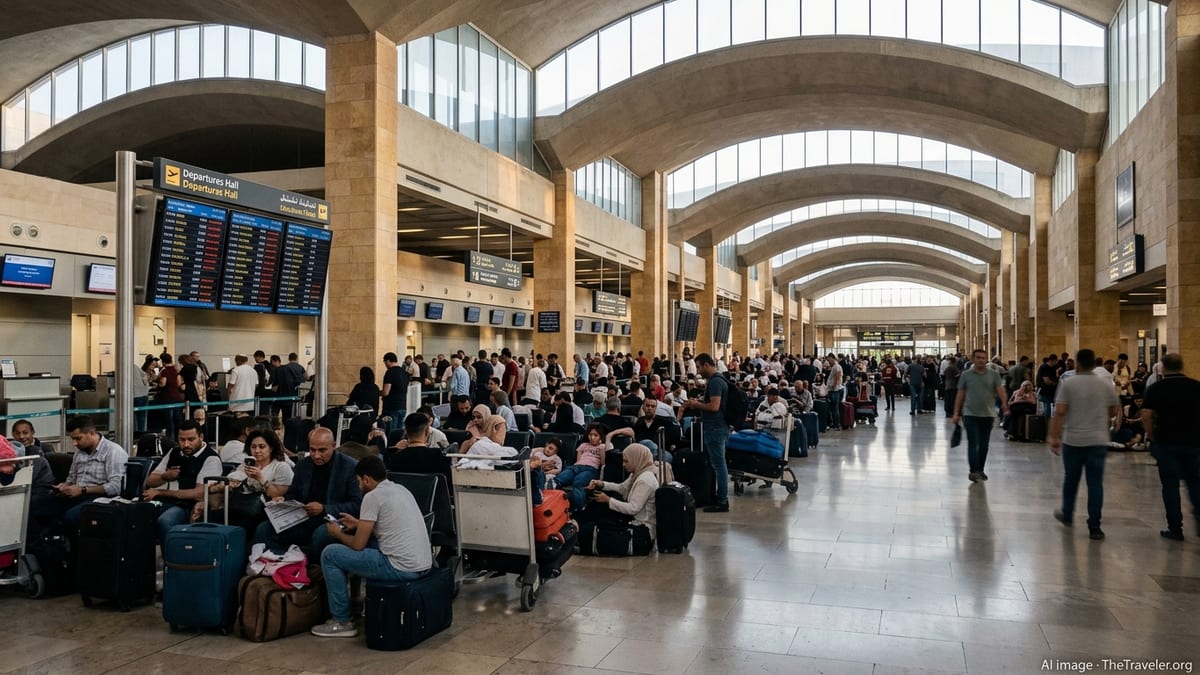
Regional Turmoil Spills Into Amman’s Main Gateway
The disruption at Queen Alia International Airport unfolded against the backdrop of ongoing regional instability that has already prompted widespread airspace closures and schedule changes across the Middle East. Recent published coverage on aviation movements in the region has highlighted rerouted flight paths, temporary suspensions and a rolling wave of cancellations as airlines seek safe operating corridors.
Amman has remained an important transit and relief hub during this period, with many itineraries restructured to avoid nearby airspace restrictions. Public flight-tracking data indicates that even when services continue to operate, aircraft are often flying longer southern routes to bypass closed or high-risk areas, adding pressure to schedules and increasing the likelihood of knock-on delays.
While the number of affected flights at Queen Alia International Airport on March 25 was limited compared with some neighboring hubs earlier in the month, the impact on individual passengers was significant. With regional connections already fragile, each cancellation or multi-hour delay risked breaking onward journeys and stranding travelers far from their final destinations.
The pattern in Amman mirrors a broader trend reported across Gulf and Levant airports in recent weeks, where airlines have been balancing demand for repatriation and essential travel with fluctuating assessments of airspace safety and operational feasibility.
Royal Jordanian and Partner Networks Under Strain
As Jordan’s flag carrier and the largest operator at Queen Alia, Royal Jordanian bore a substantial share of the disruption. Publicly available timetables and airline communications in recent weeks have already shown the carrier adjusting frequencies, pausing some routes and planning resumptions on others as conditions evolve.
On March 25, cancellations and delays affecting Royal Jordanian at its main hub had a ripple effect across its wider network. Late departures from Amman can translate into missed slots and late arrivals at European and regional airports, complicating aircraft rotations and crew scheduling. For passengers relying on tight connections through Amman, particularly those traveling between Europe, the Gulf and South Asia, even a short hold on the ground can jeopardize entire itineraries.
The strain was not limited to Royal Jordanian alone. As a member of a global alliance and a codeshare partner for multiple foreign airlines, changes on its metal can affect travelers ticketed on other carriers. According to public booking tools, some passengers arriving in Amman on partner airlines in recent days have found their onward Royal Jordanian legs rescheduled, forcing last-minute rebookings or overnight stays.
Industry analysis in regional media has noted that these operational challenges are compounded by aircraft and crew being out of position after weeks of irregular flying patterns, leaving airlines with less flexibility to recover quickly from each new disruption.
Gulf Carriers Adjust Schedules Through Jordan
Carriers based in the Gulf, including Qatar Airways, Emirates and flydubai, were also among those affected in the March 25 disruption at Queen Alia. These airlines normally operate frequent services linking Amman with Doha and Dubai, connecting Jordanian travelers and transit passengers to long-haul flights across Europe, Asia, Africa and the Americas.
In recent weeks, publicly available information and traveler reports have described repeated schedule changes at Gulf hubs as airlines respond to shifting airspace conditions. Qatar Airways in particular has been operating a reduced network and intermittent repatriation-style services on some routes, resulting in rolling cancellations and rebookings for passengers attempting to travel via Doha.
For Emirates and flydubai, which have played a prominent role in regional repatriation and rerouting efforts, disruptions in Amman add another layer of complexity. When flights from Queen Alia are delayed or canceled, travelers who were relying on fast connections in Dubai can lose access to onward services that have remained in operation, such as long-haul flights to Europe and Australia described in recent media and community coverage.
The result for many passengers on March 25 was a sense of uncertainty about whether alternative routings through the Gulf would hold, with some travelers reportedly opting to secure seats on different carriers or via different transit points rather than risk further last-minute changes.
Turkish Airlines, Other Foreign Carriers Face Knock-On Effects
Turkish Airlines and other foreign carriers serving Amman also experienced disruption amid the cancellations and delays. Istanbul has been a key bridge between affected Middle Eastern hubs and European and North American destinations, with Turkish Airlines frequently used as a rerouting option by travelers whose original flights via Gulf hubs were canceled.
Recent traveler accounts shared in public forums describe multiple instances of passengers initially rerouted from one Middle Eastern carrier onto Turkish Airlines, only to see those replacement flights subsequently canceled as operational conditions shifted again. When such changes coincide with delays and cancellations at Amman, passengers can find themselves navigating several successive itinerary revisions in a short period.
Other international airlines flying to Jordan have taken varied approaches, ranging from maintaining largely intact schedules to trimming frequencies or consolidating services. Publicly accessible flight-status boards for Queen Alia in recent days have shown a patchwork of on-time operations alongside delayed arrivals and departures, reflecting the differing risk assessments and resource constraints of each airline.
For travelers, this patchwork meant that on March 25 some flights departed Amman close to schedule, while others endured lengthy holds or did not operate at all, even on similar regional routes. Such inconsistencies have made it difficult for passengers to predict which connections are most likely to operate reliably.
Stranded Passengers Navigate Limited Options
The immediate consequence of seven cancellations and nearly thirty delays at Queen Alia International Airport was a surge of stranded and displaced passengers seeking scarce alternatives. With many airlines already operating reduced schedules across the Middle East, same-day rebooking options were often limited, particularly for those heading to or from destinations with only a handful of weekly services.
Public guidance issued by airlines in recent weeks has typically encouraged passengers to monitor flight status via official websites and apps, consider flexible or later departure dates, and be prepared for routing changes that may add extra stops or overnight layovers. In practice, as seen on March 25, these measures can still leave travelers facing prolonged uncertainty when capacity is tight and regional airspace restrictions remain fluid.
Travel discussion forums and social media posts over the past days have featured personal accounts from passengers choosing to abandon complex multi-stop itineraries via Amman and Gulf hubs in favor of more direct alternatives, even at higher cost. Others have reported opting to delay travel entirely, waiting for clearer signs that schedules have stabilized before attempting to rebook.
For those who did manage to depart Amman on March 25, longer-than-usual journeys were common, with additional stops, detours to avoid restricted airspace and extended layovers in secondary hubs. For those who remained stranded at Queen Alia, the day’s pattern of cancellations and delays served as another reminder of how quickly the region’s aviation picture can change, and how fragile even confirmed tickets can be in the current environment.