

More news on this day
Jordan’s tourism industry is navigating a paradox in early 2026, with regional tensions weighing on arrivals even as reports highlight the kingdom’s internal stability, open borders and unusually crowd-free access to its World Heritage treasures.
Get the latest news straight to your inbox!
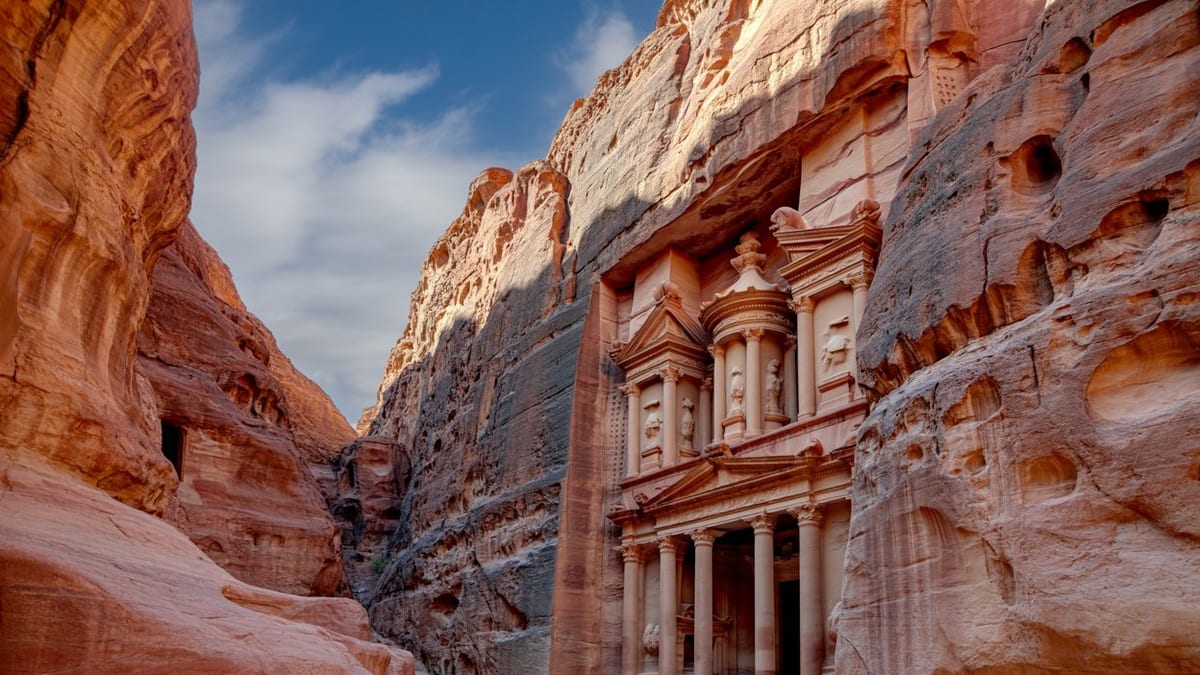
Image by Travel And Tour World
Tourism Rebounds From Record Highs and Sudden Setbacks
Before the latest regional upheavals, Jordan was on a strong tourism upswing. Industry data cited by regional trade publications show that 2023 marked a record year for visitors, with Petra welcoming more than 1.1 million people and national tourism receipts surpassing pre-pandemic levels. Recovery from the health crisis had been held up internationally as a Middle East success story, driven by pent-up demand for cultural travel and flexible air links into Amman and Aqaba.
That momentum stalled sharply in late 2023 and 2024 as the war in Gaza and broader Middle East tensions reshaped traveler perceptions. Coverage in Jordanian outlets notes that foreign arrivals to Petra plunged by more than half in 2024, with some months recording only a fraction of the previous year’s visitor counts. In March this year, local reports indicated that reservations in Petra for that month had been effectively wiped out, reflecting a wave of cancellations by tour groups and individual travelers.
Despite the drop, officials’ public statistics and regional tourism analyses underline that the downturn has been driven primarily by perception rather than incidents on the ground. Jordan’s visitor infrastructure, from hotels to guides and transport providers, has remained fully operational, leaving a significant gap between the country’s internal situation and how it is sometimes viewed from afar.
The result is a compressed cycle in which a historic boom has been followed by a steep, perception-led slowdown. For travelers who monitor official advisories and make nuanced risk assessments, this has created an unusual scenario: a heavily touristed destination that suddenly offers the space and calm more often associated with emerging locations.
Safety, Stability and a Calm Interior in a Volatile Region
Jordan’s appeal has long rested on a reputation for domestic stability in a turbulent neighborhood. Publicly available assessments by international organizations and foreign governments continue to describe the kingdom as politically steady, with security forces maintaining firm control over major cities, highways and key tourism corridors. While some states have issued cautionary notes related to border areas and airspace during specific episodes, their broader advisories generally distinguish between Jordan’s interior and surrounding conflict zones.
Travel industry coverage since late 2023 has repeatedly emphasized that major tourist areas, including Amman, the Dead Sea, Petra and Wadi Rum, have remained calm. Reports from tour operators and visitors published in trade media and online forums describe quiet streets and a visible security presence at major sites, but few disruptions to itineraries. Many accounts characterize Jordan as feeling significantly safer on the ground than general headlines about the wider region might suggest.
This relative stability is underpinned by significant international interest in Jordan’s security and economic resilience. Analysts point to the kingdom’s strategic partnerships, hosting of large refugee populations and role in regional diplomacy as factors that encourage continued support from global powers. In tourism terms, that translates into a strong incentive to keep airports, roads and heritage areas functioning smoothly.
For travelers, the practical impact is that most disruptions have been logistical or psychological rather than physical. Airline schedule changes, shifting insurance terms and heightened media coverage have caused some to pause or postpone trips. Those who do proceed, however, typically report normal conditions across most of the country and an often-surprising sense of ease once on the ground.
World Heritage Icons With Rarely Light Crowds
The contrast between global name recognition and local visitor numbers is currently most visible at Jordan’s World Heritage sites. UNESCO’s list for the kingdom includes Petra, Wadi Rum Protected Area, Quseir Amra, Umm al Rasas, the Baptism Site “Bethany Beyond the Jordan” and the historic city of As-Salt. Together they form a tightly packed circuit of Nabataean, Roman, early Islamic and Christian heritage that has long been central to Jordan’s tourism identity.
Petra, the sandstone capital of the Nabataeans, is typically crowded at its narrow Siq entrance and at the famed Treasury facade. Recent travel accounts and industry reports describe a different experience, with visitors able to linger in front of landmarks that once required patience and careful timing to photograph without crowds. Guides and local businesses in the surrounding town of Wadi Musa are reported to be eager for custom, offering flexible arrangements and more personalized attention than in peak years.
In Wadi Rum, a mixed natural and cultural World Heritage landscape, the current lull has accentuated the sense of space. Desert camps and jeep tour operators have scaled back capacity, but public information from local providers suggests that core services remain available, often at more negotiable price points. Travelers report star-filled skies, quiet dunes and the ability to choose routes and campsites that might be fully booked in more typical seasons.
At Bethany Beyond the Jordan, the recognized baptism site along the lower Jordan River, and in the hilltop city of As-Salt, the shift is subtler but still clear. Heritage-focused visitors can often move through churches, museums and historic streets without tour-bus congestion. For many, that atmosphere enhances the contemplative and educational dimension of these sites, turning what might once have been a brief stop on a regional circuit into a more immersive experience.
Government and Industry Push for a Renewed Travel Boom
Jordan’s tourism and economic planners are responding to the downturn with an eye on a renewed boom rather than a sustained slump. The Jordan Tourism Board has publicly approved multi-year marketing and budget plans through 2026, aiming to rebuild confidence in key source markets while diversifying into new segments. Reported priorities include digital campaigns in North America and Europe, partnerships with low cost and charter airlines and the promotion of year round events tied to culture, sports and wellness.
UN tourism agencies and development partners have also highlighted Jordan as a candidate for increased investment, pointing to its combination of heritage assets, educated workforce and relative stability. Previously published guidelines from international tourism bodies encourage private sector participation in new hotels, eco lodges and experience based products that spread visitor spending beyond the classic triangle of Amman, Petra and Wadi Rum.
Within Jordan, commentators have debated how much public money should be committed to destination marketing while other sectors also compete for funds. Opinion pieces in local media argue that sustained promotion is essential to protect foreign exchange earnings and jobs, noting that tourism directly and indirectly supports a significant share of employment in the kingdom. Advocates warn that cutting campaigns just as conditions begin to normalize could delay recovery by several years.
Against this backdrop, the immediate opportunity falls to independent travelers and smaller tour operators who can move quickly. As larger groups wait for advisory language and headline tone to soften, more flexible visitors are stepping into a landscape where top tier sites are operating well below capacity but staffed by experienced professionals ready to welcome guests.
What Today’s Travelers Can Expect on the Ground
For those considering trips in 2026, publicly available guidance converges on a few practical themes. Major arrival points such as Queen Alia International Airport near Amman and King Hussein International Airport in Aqaba are functioning normally, with occasional route or schedule adjustments depending on airline decisions. Roads connecting Amman to Petra, the Dead Sea, the northern sites around Jerash and the southern port of Aqaba remain the backbone of overland travel and have not been the focus of significant disruption reports.
Accommodation options across the country reflect the earlier boom years, with an extensive mix of international chains, boutique hotels, guesthouses and desert camps. With occupancy rates below their 2023 highs, many properties are reported to be offering competitive rates and upgrades. Travelers can generally expect mature service standards in key areas, though some secondary destinations may be operating with leaner staffing until volumes return.
On the safety front, experienced travelers often recommend staying informed through multiple channels, reviewing official travel advisories from home governments and remaining alert to any changes near border regions. Inside Jordan itself, recent visitor reports commonly describe friendly interactions, straightforward logistics and a sense that the country is keen to demonstrate normalcy. Organized tours and local guides continue to play a valuable role in monitoring any localized issues and adjusting routes as needed.
The broader picture is of a destination whose long term fundamentals remain strong: layered civilizations, dramatic desert and Rift Valley landscapes, a record of domestic calm and a tourism workforce that has already proved its ability to bounce back from shocks. For culture oriented travelers who weigh risk carefully, that combination is turning Jordan’s current lull into one of the most appealing windows in years to experience its World Heritage adventures up close.