

More news on this day
Travelers moving through Juneau International Airport on April 7 faced a fresh round of schedule disruptions as four delayed departures and three cancellations affected key regional routes operated by Alaska Airlines and Alaska Central Express, with knock-on impacts reported in Anchorage and other US cities.
Get the latest news straight to your inbox!
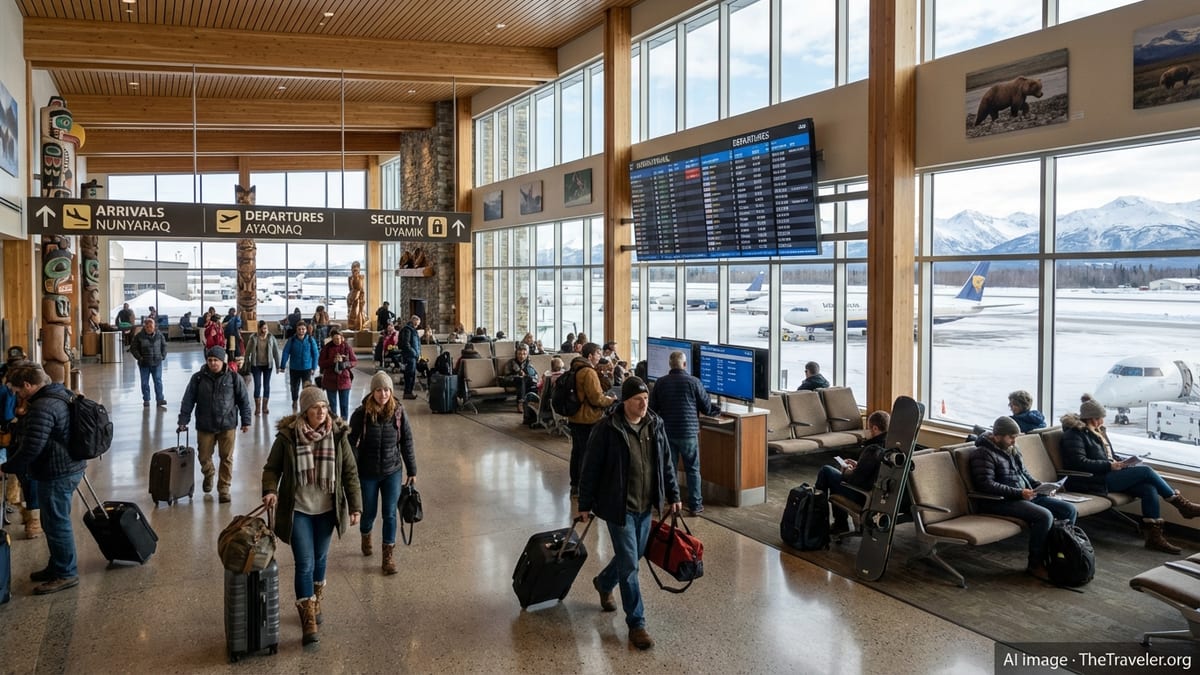
Operations Strained at Key Southeast Alaska Hub
Juneau International Airport, a critical link for communities across Southeast Alaska, experienced a cluster of delays and cancellations that strained already tight regional connectivity. Publicly available flight-tracking data and airline status boards for April 7 indicate that seven affected services, split between Alaska Airlines and cargo and mail specialist Alaska Central Express, disrupted travel plans and freight movements through the capital city.
Although Juneau sees far fewer daily movements than major mainland hubs, even a handful of off-schedule flights can have an outsized effect. The airport functions as both an origin and connecting point for passengers continuing onward to Anchorage, Seattle and smaller Alaskan communities. When departures bunch up late or fail to operate, itineraries built around tight connections quickly unravel.
The disruptions occurred against a wider backdrop of operational pressure across the United States, where same-day reports from industry trackers show hundreds of delays and cancellations nationwide involving Alaska Airlines and its competitors. In this context, Juneau’s relatively small number of affected flights still formed part of a broader picture of strain in North American air travel.
Available data at the time of publication does not point to a single trigger specific to Juneau, but regional aviation in Alaska frequently contends with rapidly changing coastal weather and operational constraints that can cascade through the schedule once early services are pushed off time.
Alaska Airlines Delays Touch Anchorage and Lower 48 Links
Alaska Airlines, the primary jet operator at Juneau International Airport, accounted for several of the day’s delays, with flights linking Juneau to Anchorage and to major hubs in the Lower 48 running behind schedule. Flight-status feeds show service patterns in recent days between Anchorage and Juneau that typically include multiple daily departures, meaning that even a small number of delayed aircraft can compress available capacity on subsequent rotations.
Reports from national flight-monitoring services on April 7 also highlight broader challenges for Alaska Airlines across the United States, including dozens of delays and a double-digit number of cancellations at larger airports from Los Angeles to Newark. While those figures far exceed the handful of affected services in Juneau, they illustrate how disruptions on key trunk routes can limit options for rebooking passengers traveling to or from Alaska’s capital.
Travel and aviation outlets tracking US operations note that, on peak disruption days, Alaska Airlines often ranks among the carriers logging higher numbers of delayed departures alongside the nation’s largest airlines. When those delays overlap with complex routings involving multiple connections through Seattle, Anchorage or other hubs, Juneau-bound passengers can find their itineraries significantly stretched.
For travelers heading south from Juneau or transiting through Anchorage, the immediate result on April 7 was longer-than-expected connection times and, in some cases, missed onward services, particularly for those booked on tight itineraries to the US West Coast and beyond.
Alaska Central Express Cancellations Hit Cargo and Communities
Alaska Central Express, which focuses on freight, mail and limited passenger services, was responsible for several of the cancellations recorded out of Juneau. Even when such flights do not carry large numbers of passengers, their absence can be sharply felt in remote communities that depend on regular shipments for essential goods, medications and time-sensitive materials.
Industry schedules show Alaska Central Express operating a web of short-haul routes that knit Juneau, Anchorage and smaller Alaskan airports into a logistics network. When a single flight in that chain fails to depart, it can delay cargo reaching destinations where alternative ground transport is not practical and maritime options may be infrequent or weather-dependent.
On April 7, the three canceled services linked to Alaska Central Express contributed to localized backlogs, particularly for freight moving between Juneau and Anchorage. Because many of these runs are designed as part of multi-stop circuits, the removal of a single leg can require operators to reshuffle loads on subsequent flights or consolidate communities onto fewer services later in the day or week.
Observers of Alaska’s regional aviation landscape have long noted that capacity in this specialist segment is difficult to replace at short notice. Unlike larger passenger carriers with deeper fleets and spare aircraft positioned in multiple cities, smaller freight-focused airlines serving Juneau operate with tighter margins on both equipment and schedules.
Part of a Wider Pattern of US Disruptions
The issues in Juneau emerged on a day when major US hubs were also grappling with significant operational disruptions. Aviation news outlets report that airports such as Los Angeles, Atlanta and Newark each recorded large numbers of delayed and canceled flights on April 7, involving airlines from American and Delta to United, Southwest and Alaska Airlines.
These nationwide figures illustrate how localized events interact with systemic factors, including air traffic control programs, congested airspace and weather-driven constraints that ripple through multiple hubs. If an Alaska Airlines aircraft expected to operate a Juneau leg encounters an earlier delay at a mainland airport, the knock-on effects can reach Alaska hours later even if local conditions in Juneau remain relatively stable.
For Alaska Central Express and similar regional carriers, the broader US picture is also relevant. National disruptions can affect the timely delivery of spare parts, specialist technicians and connecting freight that feeds into their networks. This environment reduces the margin for error when planning tightly timed runs between Juneau, Anchorage and smaller Alaskan cities.
April 7’s combination of a modest but meaningful disruption in Juneau and more severe congestion at major hubs underscores the interconnected nature of modern aviation, in which small airports are rarely insulated from events at far larger facilities thousands of miles away.
What Travelers and Shippers Can Do
For passengers using Juneau International Airport, recent disruptions serve as a reminder of the importance of monitoring flight information closely, especially when itineraries involve multiple connections through Anchorage or major US hubs. Publicly available guidance from airlines and consumer advocates generally encourages travelers to rely on real-time updates from airline apps and airport displays to track gate changes and revised departure times.
Travel analysts also note that, for complex journeys involving Juneau, building in longer connection windows can reduce the risk of missed onward flights, particularly during seasons when coastal weather is more volatile. Choosing earlier departures on critical legs may provide additional flexibility if rebooking becomes necessary later in the day.
For shippers and organizations depending on Alaska Central Express services, contingency planning can help mitigate the effects of short-notice cancellations. This may include allowing additional lead time for urgent shipments, coordinating with local agents in Juneau or Anchorage to identify alternative routings, and maintaining clear communication with recipients in smaller communities about possible delays.
While April 7’s four delays and three cancellations at Juneau International Airport represent a relatively contained disruption in numerical terms, the operational and personal impacts highlight how even a small number of off-schedule flights can reverberate across Alaska’s tightly woven air network and into the broader US aviation system.