

More news on this day
Juneyao Airlines has inaugurated a new Wuxi–Kuala Lumpur route operated by Airbus A320neo aircraft, expanding point-to-point connectivity between China’s Yangtze River Delta and Malaysia’s capital as travel flows between the two countries accelerate.
Get the latest news straight to your inbox!
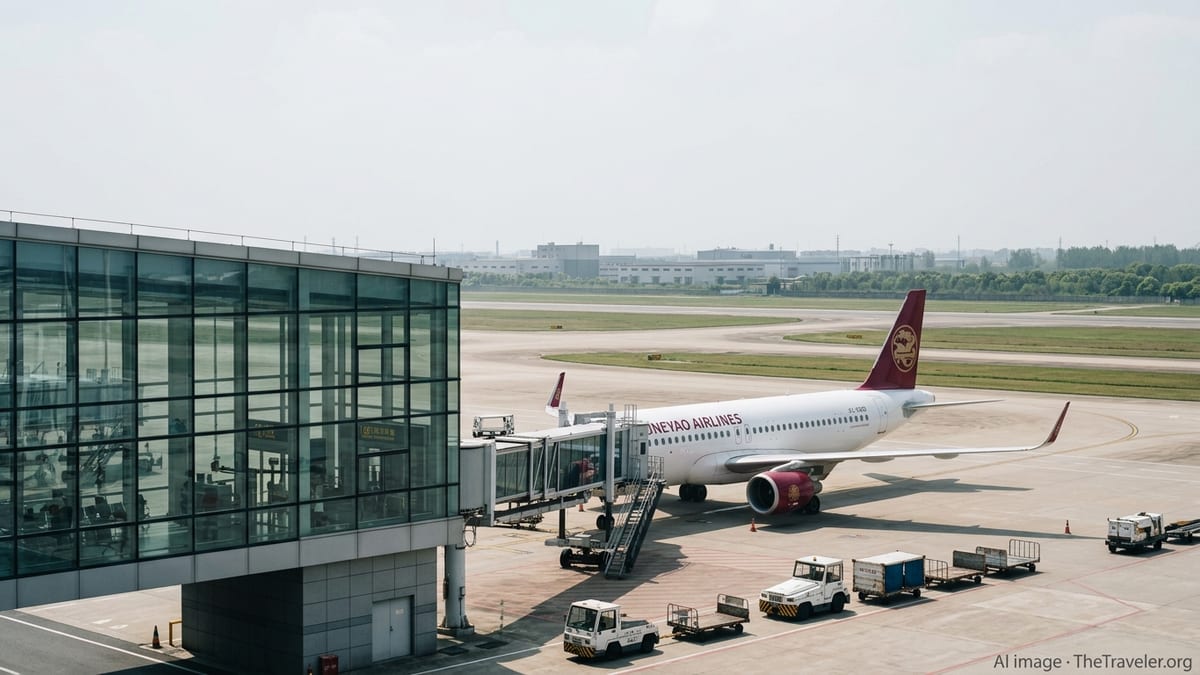
New Link Between Wuxi and Kuala Lumpur Takes Off
The new service connects Wuxi Shuofang International Airport, a fast-growing hub in Jiangsu Province’s industrial corridor, with Kuala Lumpur International Airport, Malaysia’s primary international gateway. Publicly available schedule data indicates that the route is being launched as part of a broader wave of additional China–Malaysia capacity timed to capture strong outbound and inbound demand in 2025 and 2026.
The Wuxi–Kuala Lumpur sector is operated by Juneyao Airlines under its HO code, offering nonstop service that removes the need for travelers to connect via larger Chinese hubs such as Shanghai or Guangzhou. The move aligns with the airline’s wider strategy of developing Wuxi as a secondary focus city after Shanghai, supported by recent route additions from Wuxi to regional destinations including Kansai in Japan using A320neo equipment.
While exact day-of-week patterns may vary by season, the route is designed to target both leisure and business traffic, linking Malaysia’s capital region with one of eastern China’s most export-oriented manufacturing clusters. Industry observers note that the pairing also gives Malaysian travelers a new alternative gateway into the Yangtze River Delta beyond Shanghai and Nanjing.
The service complements other new China–Kuala Lumpur links operated by different carriers in the past two years, contributing to a dense web of connections that underpins Malaysia’s tourism and investment ambitions and China’s continued focus on Southeast Asia as a priority outbound market.
A320neo Fleet at the Center of Juneyao’s Growth
The Wuxi–Kuala Lumpur route is being flown with Juneyao Airlines’ Airbus A320neo aircraft, a core type in the carrier’s narrowbody fleet. Publicly available fleet information shows that Juneyao operates dozens of A320-family aircraft, including the latest-generation neo models that offer improved fuel efficiency and range compared with earlier variants.
Configurations used by Juneyao on the A320neo typically feature a two-class layout with a small business cabin and a larger economy section. Press materials from partner airports show similar A320neo layouts of around 160 to 164 seats on regional routes, underscoring the type’s role as a flexible workhorse for short and medium-haul services.
The choice of the A320neo for the Wuxi–Kuala Lumpur sector reflects the aircraft’s suitability for routes of roughly five hours, balancing operating economics with passenger comfort. The type’s quieter engines and updated interiors are intended to support a more premium feel in line with Juneyao’s positioning as a full-service airline rather than a low-cost carrier.
Airbus has highlighted the A320neo family’s appeal in the Chinese market, citing deliveries of neo aircraft to Juneyao and other airlines as evidence of sustained demand for single-aisle jets optimized for regional and intra-Asia growth. The deployment of these aircraft on new Southeast Asia routes suggests that airlines view fuel-efficient narrowbodies as central to restoring and expanding their international networks.
Riding a Renewed China–Malaysia Travel Wave
The Wuxi–Kuala Lumpur inauguration comes amid a broader resurgence in China–Malaysia traffic. Malaysian tourism campaigns tied to multi-year initiatives, including preparations for Visit Malaysia-themed years, have emphasized the importance of China as a priority source market, while Chinese travelers continue to show strong interest in Southeast Asian destinations.
Available air travel and tourism statistics indicate that arrivals from China to Malaysia have climbed steadily as travel restrictions eased, with airlines progressively reinstating and adding routes to Kuala Lumpur, Penang, Kota Kinabalu and other Malaysian cities. New capacity from secondary and emerging Chinese markets is seen as key to sustaining that momentum, especially in the Yangtze River Delta and inland provinces.
For Wuxi and the surrounding Suzhou–Changzhou corridor, the direct link to Kuala Lumpur strengthens connectivity for manufacturers, technology firms and service industries with growing footprints in Malaysia and the wider Association of Southeast Asian Nations region. The route shortens travel times for corporate travelers and supply-chain partners, while also offering Malaysian businesses a more direct window into one of China’s most dynamic industrial belts.
On the leisure side, Malaysia’s mix of urban attractions, beaches and cultural tourism remains attractive to Chinese travelers, particularly families and younger independent tourists. Direct flights from Wuxi lower the barrier to first-time visits and make short-break holidays more feasible, supporting diversification of visitor flows beyond the traditional Shanghai gateway.
Strategic Role for Wuxi Shuofang and Kuala Lumpur
Wuxi Shuofang International Airport has been expanding its regional footprint, with public information describing it as one of Jiangsu Province’s most commercially successful airports by profitability. The launch of additional international routes, including services to Japan and Southeast Asia, is part of the airport’s strategy to elevate its status from a primarily domestic facility to a more internationally connected hub for the wider Wuxi–Suzhou metropolitan area.
For Kuala Lumpur International Airport, the arrival of new Chinese carriers and routes forms a central pillar of growth. Malaysia’s main gateway has positioned itself as a connector between Northeast Asia, Southeast Asia, South Asia and beyond, with additional flights from Chinese cities helping to rebuild hub traffic and increase options for onward connections to domestic Malaysian destinations and to third countries.
The Wuxi–Kuala Lumpur route also contributes to growing competition among airports in the Yangtze River Delta. Wuxi Shuofang, Shanghai Pudong, Shanghai Hongqiao and Nanjing Lukou each seek to attract international services, and the success of this new link will be closely watched as a test case for how much long-term demand exists from Wuxi’s catchment area for direct Southeast Asia access.
Industry analysts note that routing decisions in the region are increasingly shaped by local economic development policies and by the desire of municipalities to secure direct international connections as a tool for investment promotion. In that context, a sustained Wuxi–Kuala Lumpur operation signals confidence in both Wuxi’s export-oriented economy and Kuala Lumpur’s role as a Southeast Asian financial and logistics center.
Competitive Dynamics and Passenger Experience
The introduction of A320neo-powered flights on the Wuxi–Kuala Lumpur corridor adds another layer to the competitive landscape for China–Malaysia travel. Passengers now weigh options that include major hubs in Shanghai and Guangzhou, emerging gateways like Wuxi, and alternative routings via other Southeast Asian cities, depending on price, schedule and loyalty preferences.
Juneyao Airlines’ use of newer-generation aircraft is expected to be a selling point for travelers sensitive to comfort and environmental performance. The A320neo’s reduced fuel burn compared with older narrowbody jets aligns with airlines’ efforts to improve efficiency on international routes at a time of variable fuel costs and growing attention to sustainability metrics.
From a passenger-experience perspective, non-stop service can reduce total journey time and simplify formalities by eliminating additional transfer points. Travelers from Wuxi and nearby cities such as Suzhou and Changzhou gain a more convenient departure option, while Malaysian travelers heading to the Yangtze River Delta can arrive closer to their final destinations without backtracking through Shanghai.
Market watchers expect that if demand on the Wuxi–Kuala Lumpur sector proves resilient, airlines could consider capacity adjustments, schedule refinements or additional frequencies in future seasons. For now, the route stands as a tangible example of how Chinese and Malaysian aviation stakeholders are leveraging modern aircraft like the A320neo to unlock new city pairs and stimulate a fresh phase of regional travel growth.