

More news on this day
The reported 835 million dollar sale of the JW Marriott Marco Island Beach Resort is emerging as one of the largest single-asset hotel trades in Florida, underscoring renewed investor appetite for high-end coastal properties and raising fresh questions about pricing, access and competitiveness in the state’s tourism economy.
Get the latest news straight to your inbox!
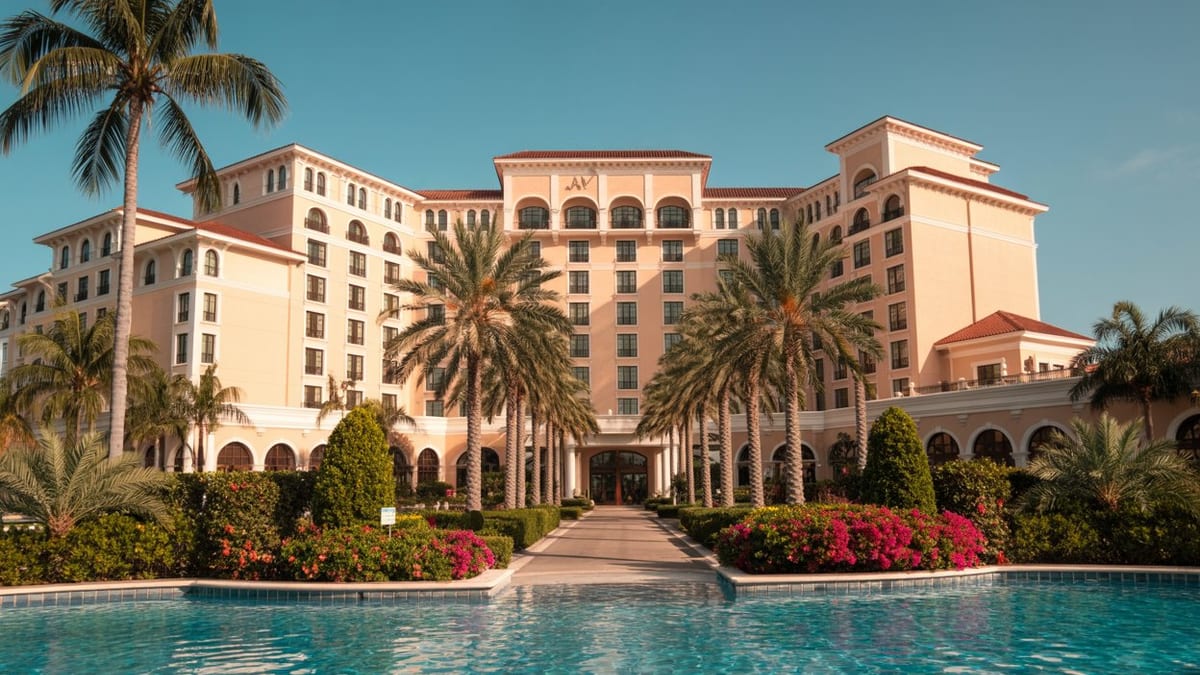
Image by International Hotels News, Hotel Industry & Hospitality News
A Benchmark Deal in Florida’s Hotel Investment Market
Publicly available real estate investment reports indicate that the JW Marriott Marco Island Beach Resort has been marketed at valuations close to one billion dollars, reflecting its scale, beachfront location and role as a flagship property on Florida’s Gulf Coast. Industry transaction summaries and marketing materials now point to an agreed sale price around 835 million dollars, positioning the deal among the most expensive single-hotel trades recorded in the state.
The 835 million dollar figure places the Marco Island resort in the same league as some of the priciest coastal hospitality assets in the United States. Analysts who track hotel investments note that recent years have seen a resurgence of big-ticket transactions in South Florida, including large refinancing packages for prominent Miami-area resorts. The Marco Island sale fits within that broader pattern of institutional capital gravitating toward leisure-focused, resort-style assets.
The property’s history helps explain the price. Originally repositioned as a JW Marriott in 2017 after an approximately 320 million dollar renovation backed by MassMutual’s investment arm, the resort offers more than 800 rooms, extensive meeting space and three miles of Gulf-front beach. Prior capital expenditure has effectively lowered near-term renovation risk for the buyer, which can make a higher purchase price more palatable to investors seeking stable cash flows.
What the Sale Signals About Florida’s Tourism Fundamentals
According to published coverage from commercial real estate and hospitality outlets, institutional owners are increasingly focused on leisure destinations that demonstrated resilience during and after the pandemic recovery period. Florida’s Gulf Coast, including Collier and Lee counties, has benefited from strong domestic travel demand, higher average daily room rates and a steady flow of group and incentive business.
Marco Island has consistently ranked as a premium beach destination within Florida, drawing repeat visitors from the Northeast and Midwest United States as well as international markets. Industry data providers have highlighted sustained occupancy and revenue per available room growth at high-end Gulf Coast resorts in recent years, even as some urban business hotels faced slower rebounds. That performance backdrop makes the JW Marriott Marco Island a strategic acquisition for investors seeking long-term exposure to leisure travel trends.
The 835 million dollar valuation is being read by market observers as a vote of confidence not only in the specific resort, but also in the long-term health of Southwest Florida tourism. Despite headwinds from insurance costs, hurricane risk and rising operating expenses, buyers appear willing to pay record prices for well-located beachfront assets, suggesting expectations of continued pricing power and demand growth.
Potential Effects on Room Rates, Fees and Visitor Spend
In Florida’s resort markets, large acquisitions at elevated valuations often translate into increased pressure to drive revenue through higher room rates and ancillary charges. Hospitality analysts note that new owners typically seek to enhance returns by refining room mix, pushing premium categories, and expanding revenue from food and beverage, spa, golf and resort fees.
For the JW Marriott Marco Island, this could mean more dynamic pricing during peak holiday periods and special events, with rates calibrated to match the capital invested in the asset. Travelers have already observed that similar high-end Florida resorts routinely command nightly prices well above pre-2019 levels, suggesting that further upward movement would align with broader regional trends.
Higher room rates and fees can increase total visitor spend, which supports local employment, tax collections and supplier networks. At the same time, there is a risk that mid-market travelers may be priced out of marquee properties, shifting demand toward secondary hotels, vacation rentals and nearby destinations. This potential redistribution of visitors could reshape how tourism dollars are spread across the wider Southwest Florida economy.
Impact on the Competitive Landscape Along the Gulf Coast
The sale of JW Marriott Marco Island at 835 million dollars is likely to influence pricing expectations for other luxury and upper-upscale resorts across Florida’s Gulf Coast. Brokers and consultants tracking the region suggest that high-water-mark deals often become reference points in negotiations for future transactions and refinancing.
Nearby markets such as Naples, Fort Myers Beach and Sarasota have seen a wave of new luxury development and renovation activity, supported by major debt and equity financings. According to recent commercial real estate reports, institutional capital has backed new branded residences, mixed-use resort projects and large-scale refurbishments across coastal Florida, reinforcing the Gulf Coast’s status as a priority investment corridor.
The Marco Island transaction may encourage owners of comparable assets to explore sales or recapitalizations, potentially bringing more trophy properties to market. A deeper pipeline of deals could increase transparency around valuations, but it may also intensify competition for prime beachfront sites, pushing land prices higher and making future ground-up projects more expensive to deliver.
Local Economic Ripple Effects and Policy Considerations
For Collier County and the city of Marco Island, a change in ownership at a major resort typically has wide-reaching implications for employment, infrastructure and community planning. The JW Marriott Marco Island is a significant local employer and a key anchor for related businesses, including restaurants, tours, retail and transportation services that cater to resort guests.
Economic development analysts point out that a large, well-capitalized owner may be more inclined to invest in additional upgrades, sustainability initiatives and event programming that increase year-round visitation. Enhanced meeting and convention offerings, for example, can help smooth seasonal swings in occupancy, supporting more stable jobs and income streams for local workers.
At the same time, the elevated valuation of the resort underscores ongoing debates within Florida about coastal affordability, property taxes and the balance between tourism-driven growth and quality of life for residents. As assets appreciate, pressures can mount on housing costs, service-sector wages and public infrastructure. State and local decision-makers are likely to watch closely how major resort transactions such as the JW Marriott Marco Island sale shape long-term patterns of development, employment and environmental stewardship along the Gulf Coast.