

More news on this day
Kai Tak Sports Park in Hong Kong has been named to TIME’s World’s Greatest Places 2026 list, a recognition that underscores the city’s strategy to use mega events and world-class venues to power its tourism rebound.
Get the latest news straight to your inbox!
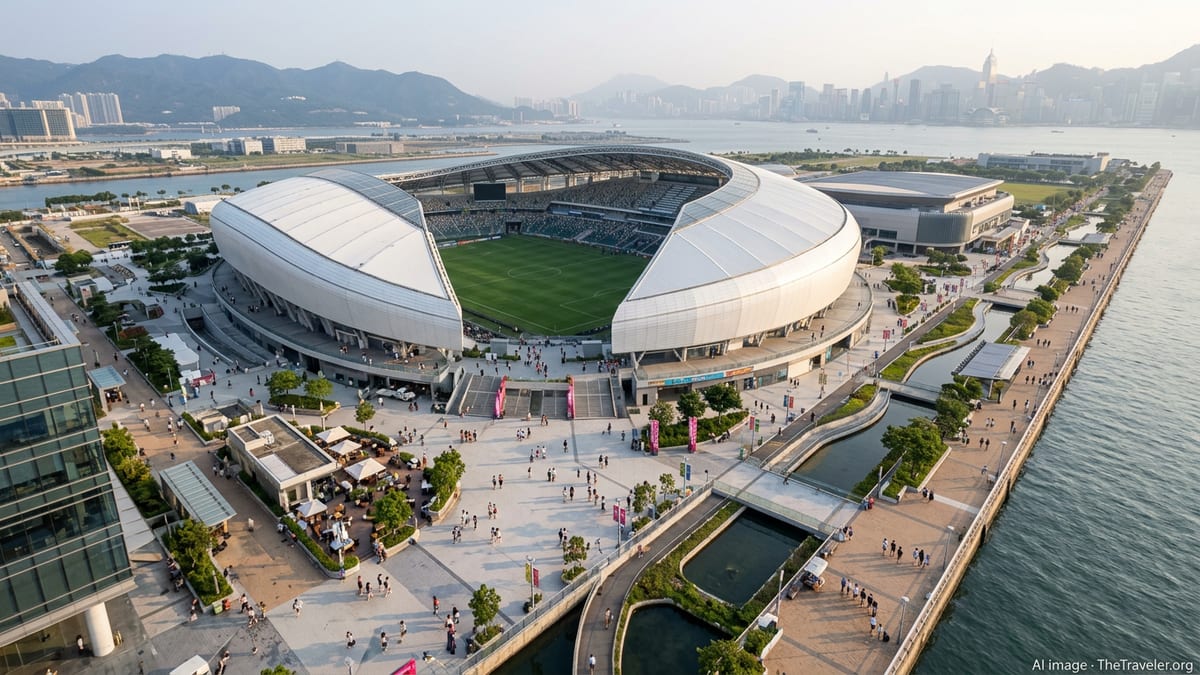
Global Recognition for a New Landmark on the Old Runway
The inclusion of Kai Tak Sports Park in TIME’s World’s Greatest Places 2026 highlights how quickly the 28-hectare complex has become a defining feature of Hong Kong’s skyline and visitor experience. Built on the former Kai Tak Airport runway in Kowloon, the venue only opened its doors in March 2025 yet has already emerged as a centerpiece of the city’s “events plus tourism” push.
Publicly available information shows that the HK$30 billion multi-venue project combines a 50,000-seat main stadium, a 10,000-seat indoor arena and a community sports ground with retail, dining and waterfront public spaces. The mix is designed to support major international fixtures while remaining accessible to residents and day visitors, a balance that aligns closely with the criteria TIME typically highlights for its annual travel list, including innovation, experience and cultural impact.
The TIME accolade places Kai Tak Sports Park alongside newly opened cultural districts and regenerated waterfronts in other world cities, positioning the development not just as a Hong Kong attraction but as a regional benchmark for integrated sports and entertainment districts. Travel and tourism outlets note that the transformation of the historic airport site into a modern “sportainment” hub has become a compelling narrative in its own right for visitors interested in urban change and aviation history.
Surging Visitor Numbers and the Mega-Event Effect
Reports indicate that Kai Tak Sports Park has rapidly turned into one of Hong Kong’s most visited venues. Tourism and venue data suggest that by late 2025 the complex had attracted millions of spectators across rugby, football, concerts and other large-scale events, contributing significantly to a broader recovery in arrivals to the city.
Travel trade publications have highlighted the role of the park’s packed calendar, citing the Hong Kong Sevens, international football friendlies, top-tier snooker tournaments and multi-night stadium concerts by global acts as key drivers of demand. These events have drawn visitors not only from mainland China but also from long-haul markets, helping airlines and hotels rebuild route capacity and occupancy after several challenging years.
At the same time, Hong Kong’s tourism authorities have promoted themed packages that pair event tickets with hotel stays, cruises or neighborhood tours in Kowloon City and along Victoria Harbour. According to published coverage, these “travel with sports” products have resonated with regional travelers who are increasingly planning trips around specific fixtures on the sports and music calendar.
The TIME listing is expected to amplify this momentum by giving Kai Tak Sports Park a prominent stamp of international approval at a moment when global travelers are once again searching for new urban destinations and experiences in Asia.
Reinforcing Hong Kong’s Role as Asia’s Events Capital
The recognition for Kai Tak Sports Park also feeds into a broader narrative about Hong Kong’s effort to reclaim and strengthen its status as a leading events hub in the Asia-Pacific region. Commentary in business and tourism media points to a deliberate strategy to curate a year-round pipeline of international sports competitions, cultural festivals and concerts that can differentiate the city from regional rivals.
Analysts quoted in recent coverage argue that the ability to host back-to-back mega events in a single, purpose-built precinct gives Hong Kong a competitive edge over cities that still rely on multiple, dispersed venues. Kai Tak’s large capacity, retractable-roof stadium design and support infrastructure are seen as central to attracting new tournaments and global tours that require flexible staging and premium hospitality options.
The TIME accolade is likely to support bids for future international championships and shows by raising the park’s global profile. Industry observers suggest that being labeled one of the world’s greatest places can influence both decision-makers in sports federations and entertainment promoters, who increasingly view venue prestige and destination appeal as important factors when planning their calendars.
For Hong Kong, this could translate into a virtuous cycle: higher-profile events enhance the city’s brand, reinforce its image as a cosmopolitan gateway and, in turn, attract more visitors who discover the city through tickets rather than traditional sightseeing itineraries.
Transforming the Kai Tak District into a Tourism Cluster
Beyond the stadium and arena, Kai Tak Sports Park is acting as a catalyst for wider urban and tourism development in the former airport area. The surrounding district now includes new shopping centers, hotels and waterfront promenades, as well as residential blocks that bring a steady flow of local residents into the area outside event times.
Local business and planning commentary notes that authorities and developers aim to build a full ecosystem around the park, combining sport, leisure, dining and heritage interpretation of the old airport. Some initiatives already in place include public art, small parks tracing the outline of the historic runway and digital experiences that allow visitors to explore the site’s aviation past.
While some lawmakers and community voices have called for a stronger mix of neighborhood amenities and more seamless transport links, the TIME listing is expected to accelerate investment and attention on the precinct. Hospitality analysts anticipate growing demand for hotels within walking distance of the venue as more multi-day events encourage visitors to stay in the area instead of commuting from traditional tourist districts such as Tsim Sha Tsui or Central.
Travel planners say the emergence of Kai Tak as a distinct waterfront neighborhood could eventually diversify Hong Kong’s tourism geography, helping spread visitor spending beyond long-established shopping and nightlife enclaves.
Opportunities and Challenges Ahead for Sustained Growth
The new global spotlight on Kai Tak Sports Park brings both opportunities and scrutiny. Commentaries in regional media and local outlets have pointed to operational challenges during the venue’s first year, including crowd management, transport congestion and questions over how to keep the precinct lively on non-event days.
Urban policy observers argue that the TIME recognition increases expectations that Hong Kong will refine transport connections, public realm design and community programming around the park to match the international status implied by the award. Suggestions in public discussion include better wayfinding from nearby MTR stations, more casual waterfront dining and regular smaller-scale events that give locals and repeat visitors reasons to return between headline fixtures.
From a tourism perspective, the key question is whether Kai Tak Sports Park can evolve from a blockbuster venue into a sustained driver of repeat visitation. Travel industry analysis suggests that visitors who first arrive for a major match or concert can become advocates who return to Hong Kong for other experiences, provided the city continues investing in culture, green spaces and diverse neighborhoods.
With TIME’s World’s Greatest Places 2026 listing now in hand, Kai Tak Sports Park enters its second year as both a test case and showcase for Hong Kong’s ambitions. Its performance in the coming seasons will help determine how fully the city can convert mega-event buzz into lasting tourism growth and a refreshed global image.