

More news on this day
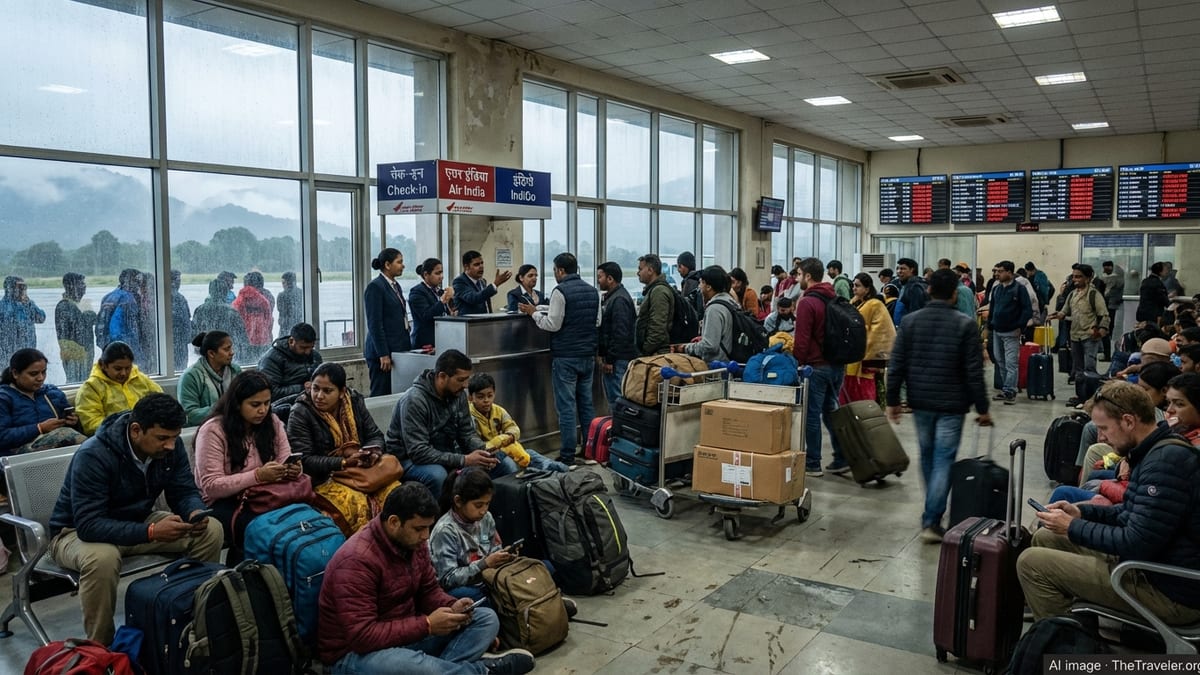
Hundreds of tourists flying in and out of Himachal Pradesh’s Kangra Airport have been stranded this weekend after sudden Middle East airspace closures forced widespread cancellations and diversions of international flights that connect India to the Gulf and Europe.
How the Middle East Conflict Reached a Small Himalayan Airport
The ripple effects of a fast‑escalating conflict in the Middle East have moved far beyond the Gulf. After coordinated strikes on Iran in late February and retaliatory missile and drone attacks, countries including Iran, Iraq, Israel, Kuwait, Qatar, Syria, Bahrain and the United Arab Emirates restricted or closed their skies to civilian traffic. Major hubs in Dubai, Abu Dhabi and Doha temporarily halted or sharply curtailed operations, prompting airlines to cancel or reroute thousands of flights across Asia, Europe and North America.
India’s busy corridor to the Gulf sits directly on these disrupted routes. Carriers that usually use Middle Eastern hubs for onward connections to Europe and the Americas have been forced into emergency schedule changes, extended detours over alternative airspace or outright cancellations. Delays and groundings at Delhi, Bengaluru, Chennai and Mangaluru have spilled over into the country’s smaller regional airports, including Kangra’s Gaggal Airport, where tourists now find themselves stuck far from their planned itineraries.
Though Kangra itself does not handle long haul services, it feeds passengers into larger Indian gateways whose flights to and through the Middle East are now severely curtailed. Travellers connecting via Delhi, Amritsar or Chandigarh for onward services to Dubai, Doha, Abu Dhabi and beyond are among those caught in the sudden breakdown of the global flight network.
The result is an unusual scene at this normally tranquil hill airport serving Dharamshala and the wider Kangra Valley: crowded departure halls, long queues at airline counters and visitors trying to rebook complex itineraries using overloaded call centres and patchy mobile networks.
Disruption on the Ground: What Travellers Are Facing at Kangra
By Saturday night, check in areas at Kangra were filled with domestic and foreign tourists whose connecting flights out of major hubs had been cancelled or indefinitely delayed. Many had planned to return to Gulf jobs or onward European holidays after visiting Dharamshala’s monasteries and trekking routes, only to receive last minute text messages or app alerts that their international legs were no longer operating.
Airlines serving Kangra have responded by holding passengers at origin rather than flying them into already congested transit hubs. This approach is intended to prevent travellers from being stranded overnight in large cities without accommodation, but it has pushed the immediate pressure back onto a regional airport with limited infrastructure, seating and food options.
Tour operators report scrambling to find extra hotel rooms in and around Dharamshala for guests whose departures have been pushed back by at least 24 to 48 hours. Local taxi drivers, who were expecting a lull between winter and peak summer, are instead doing repeated runs between resorts, homestays and the airport as itineraries shift by the hour.
Inside the terminal, airline staff are issuing paper rebooking slips and advising passengers to monitor mobile apps, even as many routes show only waitlist options in the coming days. With the main Middle Eastern hubs effectively offline or operating at sharply reduced capacity, rerouted flights via Central Asia or Southeast Asia are absorbing limited spare seats at a rapid pace.
Why Flights Are Being Cancelled or Rerouted Worldwide
Airspace closures across the Middle East are at the heart of the current crisis. When multiple countries suspend overflights for security reasons, airlines must decide whether to take longer detours, which add fuel costs and crew time, or suspend services entirely until the situation stabilises. That calculation has tipped toward cancellations for many carriers in and out of India, especially for flights transiting the Gulf en route to Europe and North America.
Aviation data firms report that more than a thousand flights scheduled to land in Middle Eastern countries over the weekend have been cancelled, with many more delayed. Global trackers show tens of thousands of passengers affected as flights that would normally use Dubai, Abu Dhabi and Doha as pivotal transfer points are either diverted to secondary hubs or removed from schedules altogether.
For travellers at Kangra, the operational decisions are playing out in very practical ways. A single cancelled sector from Delhi to Dubai can undo an entire chain of onward connections booked months in advance. With airlines prioritising safety and grappling with rapidly changing airspace notices from multiple governments, schedules are being revised hour by hour rather than days in advance.
Industry analysts expect that even when some airspace corridors begin to reopen, it could take several days for aircraft and crew to return to normal rotations, meaning residual delays and sporadic cancellations are likely to persist well into the coming week.
What Stranded Tourists Should Do Right Now
Passengers stuck at Kangra Airport are being urged by airlines and travel agents to avoid travelling to larger hubs without confirmed seats. Instead, the most important step is to secure written confirmation of any rebooking or refund directly from the operating carrier, ideally through its official mobile app or call centre, before leaving their current accommodation in the Kangra Valley.
Travellers whose itineraries involve Gulf or European connections are being advised to explore alternative routings via non Middle Eastern hubs, even if these options involve backtracking within India or adding an extra stop in Southeast Asia. While such journeys can be longer and more expensive, they may be the only realistic way to reach employers, schools or family commitments abroad in the short term.
Tourists should also document all expenses related to the disruption, including extra nights in hotels, additional ground transport and meals, as some airlines and travel insurers may later request proof for partial reimbursement. However, policies on compensation during security related airspace closures vary widely, so travellers should read the fine print on “force majeure” clauses before assuming costs will be covered.
For those already fatigued by delays, local authorities and tourism bodies in Himachal Pradesh are encouraging visitors to treat the enforced pause as a temporary extension to their stay rather than lining up for hours at airport counters with limited new information. Many hotels in Dharamshala and McLeod Ganj have begun offering distressed passenger rates to help ease the financial burden.
How Long Could the Disruptions Last and What Comes Next
The key unknown for travellers at Kangra and across India is how long airspace restrictions in the Middle East will remain in place. Past conflicts in the region have produced anything from brief suspensions measured in hours to prolonged limitations lasting weeks, depending on military developments and diplomatic negotiations.
Aviation regulators and global carriers are reviewing the situation in rolling cycles, with some airlines initially cancelling flights only for a day or two while they assess the security environment and the status of critical infrastructure at major hubs. Even a partial reopening will not translate into immediate normality, as thousands of passengers will need to be re accommodated and aircraft repositioned worldwide.
For the coming days, travellers using Kangra Airport should plan for continued uncertainty, building in generous buffers for any onward international journeys and keeping their contact details updated with airlines and booking platforms. Real time information from carriers will be more reliable than generic search results or social media rumours, which can lag or misinterpret fast moving events.
In the longer term, the crisis may prompt Indian and foreign airlines to spread their risk by developing more non stop services that bypass traditional Middle Eastern hubs, particularly for high demand routes between South Asia, Europe and North America. For now, though, the immediate story at Kangra is one of delayed departures, anxious tourists and a hill airport at the centre of a global aviation shock.