

More news on this day
Kansas City International Airport is confronting a perfect storm of disruption just as spring break travel peaks, with a recent terminal evacuation, lingering winter weather and a nationwide security staffing crunch combining to slow flights and upend passenger plans.
Get the latest news straight to your inbox!
Evacuation and Lockdown Highlight Airport Vulnerabilities
On March 8, 2026, parts of Kansas City International Airport were evacuated and the main terminal was placed under lockdown while law enforcement investigated what has been described in published coverage as a potential threat. Publicly available reports indicate that operations were halted for several hours before the terminal was cleared and reopened later that afternoon, but the immediate impact rippled across arrivals and departures through the evening.
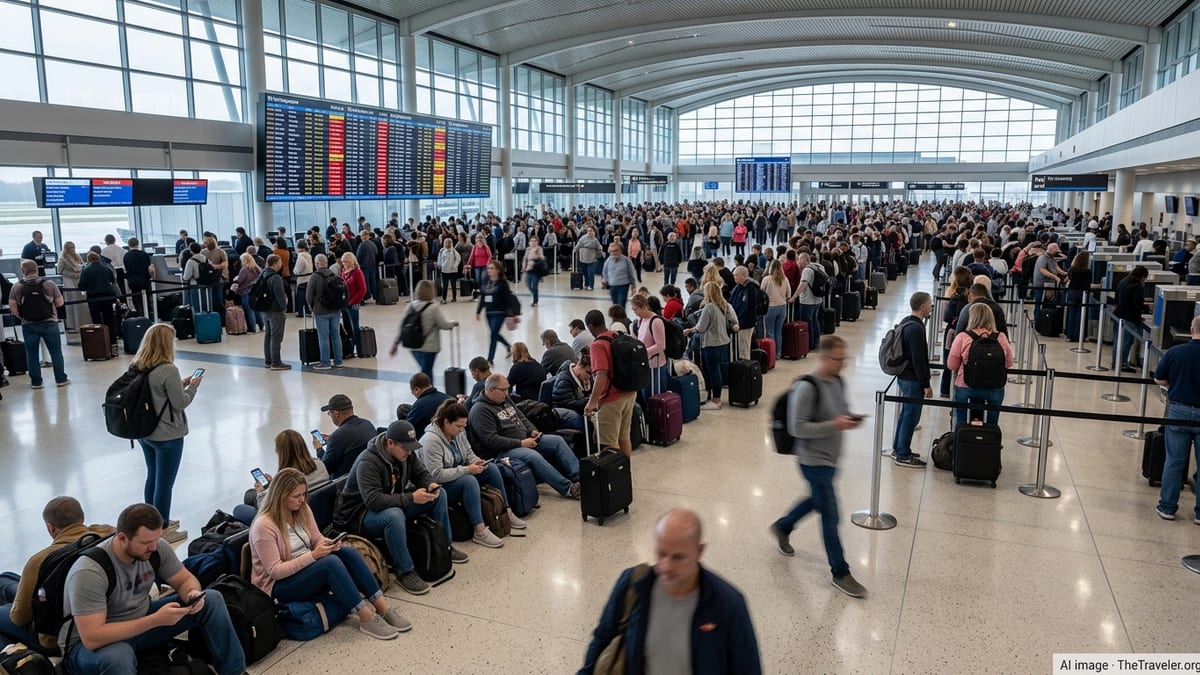
During the lockdown, flights bound for Kansas City were diverted or delayed, and departures were held at gates while security sweeps continued inside the new single terminal. Passenger accounts shared on social media and in local coverage describe crowded gate areas, limited information, and long waits as crews and aircraft fell out of position.
While normal operations have technically resumed, residual disruptions have continued into the busy spring break window. Airlines have been working through backlogs of displaced travelers, meaning that some March trips are still being rescheduled or routed through alternate hubs, particularly for tight connections or late-night arrivals.
The March 8 incident has also prompted renewed scrutiny of how quickly traffic at Kansas City International can be shut down when security concerns arise, and how long it takes to restart the tightly choreographed flow of aircraft, baggage and ground transport once an all-clear is given.
National Storm System Adds to Flight Chaos
The security scare arrived just days before a powerful mid-March storm system swept across large portions of the United States from March 13 to 17, 2026, bringing snow, high winds and severe weather to major aviation hubs. According to national flight-tracking tallies cited in multiple news reports, thousands of flights were canceled or delayed nationwide on March 16 and 17 as the system moved east.
Although Kansas City did not see the heaviest snow totals, the airport sits within the broader Midwest corridor affected by the storm complex. Airlines adjusted schedules preemptively around Kansas City to keep aircraft and crews out of potential icing and crosswind conditions, and to preserve capacity for larger hubs that were seeing more acute impacts. The result for local travelers has been a patchwork of cancellations, schedule changes and rolling delays.
Winter weather earlier in the season had already exposed the vulnerability of the regional aviation network. A January 23 to 27 winter storm produced one of the worst nationwide cancellation days since the early months of the pandemic, and Kansas City International saw departure boards fill with warnings as snow and wind disrupted operations. The March storm has revived those concerns just as leisure travelers were hoping for a smoother spring break experience.
With more unsettled weather still in the forecast for parts of the central United States, travel waivers issued by major carriers in recent days for Midwest routes serve as another indication that schedules at Kansas City International could remain fluid through the end of March.
Shutdown-Strained Security Lines Collide With Spring Break Crowds
Compounding these local and regional shocks is a national backdrop of stretched airport security staffing. A partial federal government shutdown that began on February 14, 2026 has left Transportation Security Administration checkpoints at a number of airports short staffed, according to a range of recent national and local reports.
Across the country, published accounts describe hours-long security lines, closed lanes and sporadic checkpoint closures as officers work extended shifts during one of the busiest travel periods of the year. While Kansas City International’s specific staffing levels have not been detailed in the same depth as some larger hubs, the airport shares in the broader system-wide strain that affects how quickly passengers and baggage can be screened.
Spring break travel has significantly increased passenger volumes from early March through at least March 24, with school calendars across the Midwest funneling families and students into a narrow window for vacation departures. Industry updates from multiple airports indicate that this surge is comparable to, or higher than, last year’s totals, leaving little margin when staffing or technology falters.
For Kansas City travelers, the combination of high demand and constrained security resources means that even minor slowdowns at checkpoints can cascade into missed flights, crowded boarding areas and heavy pressure on rebooking desks. Early morning departures, once a reliable way to avoid crowds, have become just as susceptible to backups as midday peaks.
Why Travelers Should Rethink Spring Break Plans Through KCI
The convergence of a recent security-driven shutdown, volatile weather patterns and a national security staffing squeeze creates a higher-than-normal risk profile for anyone planning to connect through Kansas City International in the coming days. Individually, each factor might be manageable; together, they increase the likelihood of multi-leg disruptions that can derail carefully planned vacations.
Travel industry analysis suggests that when operational shocks overlap, recovery times lengthen. Aircraft and crews can end up scattered across the network, leading to rolling cancellations even after skies clear or an incident is resolved. For travelers originating in or connecting through Kansas City, this can translate into last-minute schedule changes, unplanned overnight stays and difficulty securing seats on alternative flights during an already crowded season.
Those with flexible plans may find it prudent to reconsider itineraries that rely on tight connections, late-night arrivals into Kansas City, or same-day links to cruises and prepaid tours. Some travel advisors are recommending that passengers build in extra buffer days before fixed events, or evaluate driving or rail options for regional trips where feasible, given fuel costs and the broader surge in demand for rental cars.
Ultimately, Kansas City International remains open and functioning, but the past week has underscored how quickly conditions can shift when security incidents, severe weather and systemic staffing pressures intersect. For spring breakers hoping for a seamless start to their vacations, these layers of uncertainty make it worth reassessing whether, and how, to route journeys through the region’s primary gateway in the second half of March 2026.