

More news on this day
Kansas City’s main airport has become the latest flashpoint in a turbulent spring for U.S. aviation, with an abrupt security evacuation and rolling ground delays triggering a domino effect of missed connections and overnight strandings for thousands of travelers nationwide.
Get the latest news straight to your inbox!
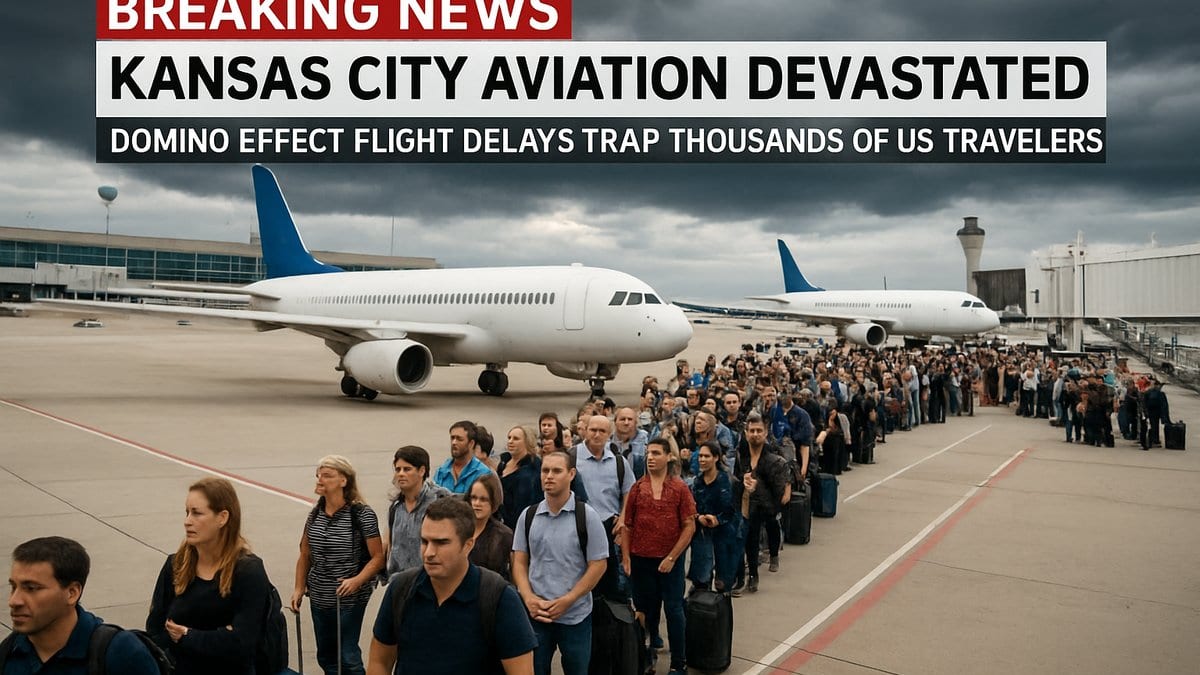
Security Scare Triggers Evacuation and Ground Freeze
Publicly available accounts indicate that Kansas City International Airport experienced a sudden terminal evacuation in early March after a reported threat, prompting passengers to flee onto the tarmac and halting departures and arrivals for an extended period. Social media posts and local discussion forums described travelers rushing out of the terminal with carry-on bags and a complete standstill in boarding operations while law enforcement swept the facility.
The Federal Bureau of Investigation later characterized the threat as not credible, but by that point the operational damage was already done. Aircraft were held at gates or diverted, inbound flights were slowed or rerouted, and aircraft and crews scheduled to fan out across the country remained stuck in Missouri. For airlines already operating on tight schedules during a volatile spring travel period, the disruption at Kansas City quickly rippled beyond the Midwest.
Because Kansas City is a key mid-continent connecting point, the freeze on movements affected a far larger group than just outbound passengers from Missouri. Travelers connecting through the city toward the Mountain West, Pacific Northwest, and East Coast reported missed onward flights and sudden rebookings onto late-night or next-day departures. For some, that meant scrambling for hotel rooms in an already busy convention and sports weekend.
Airport operations data for the surrounding days show an elevated pattern of delays and rolling rescheduling that extended well beyond the initial evacuation window. With aircraft and crews out of position, airlines needed multiple schedule cycles to rebuild their networks, turning what began as a localized emergency into a sweeping logistical headache.
Domino Effect Across the National Flight Network
Recent aviation performance dashboards highlight how a disruption at a single mid-continent node can rapidly cascade across the national grid. Flight-tracking aggregators reported several late-March days this year with more than 2,000 delays and hundreds of cancellations across the United States, driven by a mix of storms, staffing challenges, and localized ground stops at major and mid-sized airports.
In that environment, Kansas City’s outage and subsequent ground congestion functioned as a pressure point. When aircraft scheduled to operate multi-leg rotations out of the city could not depart on time, subsequent segments from other hubs never left the gate or departed hours late. That pattern was particularly visible on routes linking Kansas City with Chicago, Denver, Dallas, and coastal hubs, where equipment that typically cycles through several cities each day was suddenly removed from circulation.
Published coverage of recent spring storms underscores how fragile this system has become. A strong storm system sweeping across the eastern United States in late March produced more than 2,000 delays in a single day, while a separate thunderstorm and flooding event to close the month generated more than 3,000 delays and over 100 cancellations nationwide. Against that backdrop, the Kansas City disruption compounded a network already stretched thin, as airlines had little spare capacity to absorb yet another chokepoint.
Travel analysis sites note that today’s airline schedules operate with limited slack, particularly at secondary hubs and mid-sized markets. When Kansas City’s operations faltered, crews timed out of their legal working limits, aircraft missed maintenance windows, and early-evening delays rolled into late-night cancellations. Even airports not directly connected to Kansas City saw impacts as aircraft slated to arrive from the Midwest simply never showed up.
Travelers Face Overnight Strandings and Frayed Nerves
Passengers caught inside the disruption describe the familiar hallmarks of a modern aviation meltdown: long rebooking lines, overwhelmed customer-service counters, and limited clear information about when operations would normalize. With Kansas City’s evacuation and ground holds unfolding during a busy period for business and leisure travel, hotel inventory near the airport and in the metropolitan core tightened quickly, leaving some travelers to overnight in terminals.
Public discussion threads from March reveal accounts of travelers facing multiple consecutive cancellations as aircraft remained out of position. Some reported abandoning their flight plans entirely, renting cars, and driving many hours home or to alternative airports rather than waiting for scarce seats on later departures. Others recounted separate, compounding problems, such as unrelated ground stops in Phoenix and Houston on adjacent days that further complicated connect-the-dots journeys.
For families and less frequent travelers, the experience was especially jarring. Many had chosen Kansas City for its reputation as a relatively smooth, modern facility after the opening of its new single terminal. Instead, they encountered gridlocked departure boards and abrupt security measures that left them outside the secure area waiting for word on when, or if, they would be allowed back in.
Consumer advocates point out that the episode highlights the uneven protections available to U.S. travelers. Weather-related disruptions often fall outside mandatory compensation rules, and security incidents similarly tend to be categorized as beyond carrier control. That leaves many passengers responsible for their own meals and lodging during extended delays, even when disruptions originate far upstream from their own departure airport.
Kansas City’s Role in a Season of Aviation Strain
The Kansas City incident arrives amid a season of wider turbulence for American air travel. Recent months have seen major winter storms blanket large portions of the country, a significant blizzard in February and additional severe weather in March, and brief ground stops at other key facilities tied to equipment issues and staffing challenges. Each event has stressed an aviation system still adapting to post-pandemic demand and a tight labor market.
Industry data compiled in late March show that hubs like Chicago O’Hare, New York LaGuardia, and Boston Logan absorbed hundreds of combined delays on some days as weather systems moved through the Midwest and Northeast. Even when Kansas City itself was not directly under severe weather, tight connections through the city made it vulnerable to secondary effects: aircraft arriving late from storm-affected regions set up the next wave of missed departures for travelers beginning their journey in Missouri.
Kansas City’s revamped terminal and growing route map were designed to elevate the airport’s role as a convenient connecting point in the center of the country. The recent evacuation and subsequent ground delays demonstrate how that very strength can become a weakness under stress. When a central routing point experiences a sudden shutdown, its extensive web of domestic links spreads the disruption across time zones within hours.
Analysts observing recent events suggest that airports like Kansas City, Tampa, and other secondary hubs are increasingly important bellwethers for the health of the broader system. Spikes in delays at these facilities often coincide with nationwide operational strain, signaling that the aviation network is running with little margin for error.
What the Kansas City Breakdown Signals for Summer Travel
As airlines and airports look ahead to the peak summer season, the Kansas City disruption serves as a warning about the combined impact of security scares, staffing constraints, and extreme weather. Publicly available schedules show carriers planning aggressive summer timetables, betting on strong demand and continued consumer appetite for domestic and international travel.
Travel experts note that without additional resilience in staffing, technology, and infrastructure, isolated breakdowns will continue to create outsized effects on passengers far from the original incident. The Kansas City episode illustrates how a single evacuation and ground freeze at a mid-country gateway can strand travelers in multiple states, from coastal hubs waiting on inbound aircraft to regional airports depending on one or two daily flights.
For travelers, the lesson is emerging clearly from recent weeks of disruption. Flexible itineraries, longer connection windows, and backup plans for lodging and ground transport are becoming more a necessity than a luxury, particularly when routing through weather-prone corridors or busy mid-continent nodes like Kansas City. With spring already exposing the fragility of the system, the real test of whether U.S. aviation can withstand another summer of record demand is still to come.