

More news on this day
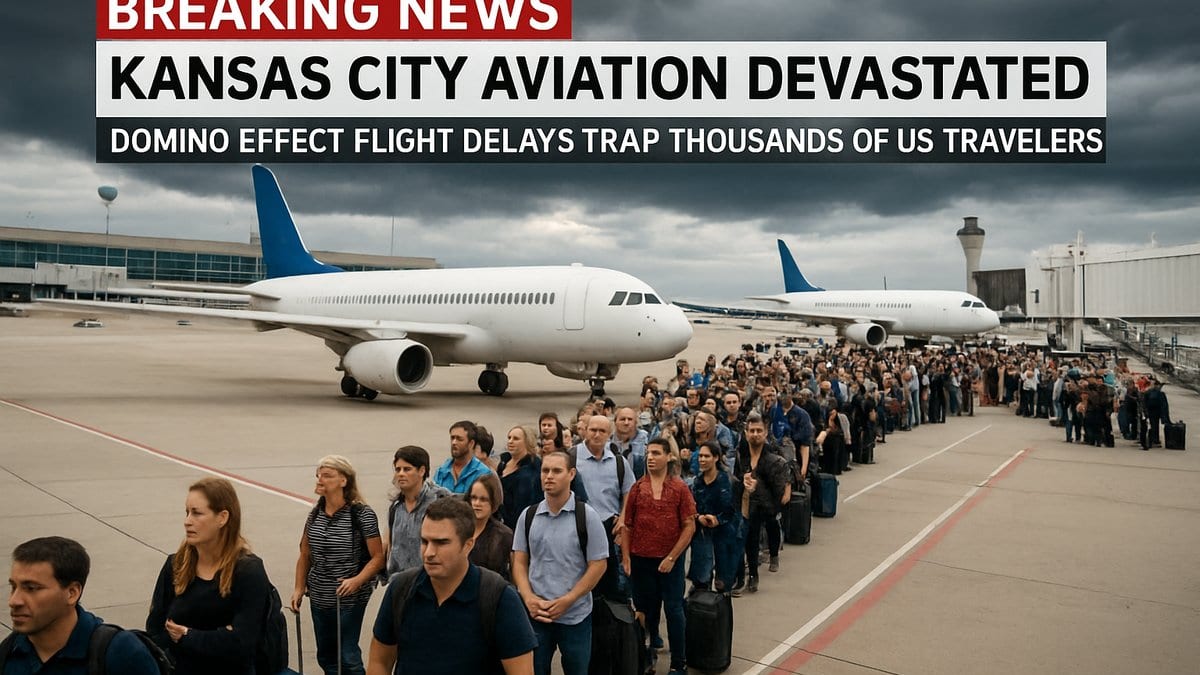
Thousands of travelers across the United States faced mounting disruptions on April 3 as concentrated delays and cancellations at Kansas City International Airport cascaded through airline networks and squeezed already busy spring travel corridors.
Get the latest news straight to your inbox!
Kansas City Becomes a Surprise Pressure Point
Real time flight tracking data on April 3 indicates that operations at Kansas City International Airport, commonly known by its code MCI, deteriorated through the day, with a tight knot of cancellations and rolling delays emerging on some of the airport’s highest demand domestic routes. While the total number of affected flights at MCI remained lower than at the country’s largest hubs, the timing and concentration of disruption on key morning and midday departures created outsized knock‑on effects for the wider network.
Published coverage focusing on Kansas City notes that the airport does not usually appear among the nation’s most delay prone facilities. However, relatively limited spare capacity at mid‑sized connecting points means that once a series of departures and arrivals fall behind schedule, recovery options quickly narrow. When late‑running inbound aircraft from Kansas City feed into banks of connecting flights at larger hubs, the delays can then spread well beyond the Midwest.
Spring 2026 travel demand has also been running ahead of last year, according to industry and booking‑platform data, which report higher passenger volumes alongside only modest increases in capacity. In that context, Kansas City’s difficulties on April 3 landed on already crowded schedules, where even small timing shocks can spill over into missed connections, last‑minute rebookings, and extended waits for available seats.
National Grid Already Under Strain
The disruption centered on Kansas City unfolded against a national backdrop of elevated delays. Aggregated figures from flight‑status trackers for April 3 show several hundred cancellations and well over three thousand delays across the United States, with major hubs such as Dallas, Chicago, Boston, Orlando, Las Vegas, Austin, and Philadelphia all reporting significant slowdowns. Airlines spanning full service network carriers and low cost operators have been juggling late aircraft, crew reassignments, and weather‑related restrictions since the final days of March.
Earlier in the week, severe weather systems moving through central and eastern states had already pushed the aviation grid close to capacity, generating thousands of delays and more than one hundred cancellations on March 31 alone. Reports from aviation analysts describe a pattern in which storms and low visibility conditions at a handful of key hubs amplify through the system as aircraft and crews end up out of position. By April 3, many carriers were still working through those backlogs when new bottlenecks emerged at Kansas City.
Industry data also highlight runway and airspace constraints at several coastal hubs undergoing construction or maintenance projects this spring. At some West Coast airports, for example, arrival rates have been temporarily reduced to accommodate safety work, effectively shrinking the margin for error when delayed inbound flights from the Midwest and Plains states begin arriving in condensed waves. Under those circumstances, even a secondary hub such as Kansas City can become a flash point if its departures are no longer feeding into carefully timed connection banks.
Knock‑On Delays Trap Connecting Travelers
The most immediate impact of Kansas City’s April 3 disruptions has been felt by passengers relying on tight connections through larger hubs. Published accounts and schedule data show that several of MCI’s busiest routes link into major airline operations in cities like Chicago, Dallas, Denver, and Atlanta. When flights on those corridors depart late or are canceled, travelers bound for onward destinations can quickly find themselves without same‑day alternatives.
Airlines have attempted to absorb some of the shock by rerouting passengers through alternate hubs, but reports from tracking platforms and airport operations summaries indicate that many of those facilities were already facing heavy delay totals of their own. This has limited the ability of carriers to offer simple swaps, particularly on high‑demand leisure routes tied to spring break travel. As a result, thousands of passengers have encountered rolling rebookings and overnight stays, even if their original itineraries involved only a short Kansas City stop.
At Kansas City itself, crowded gate areas and extended lines at customer service counters have been described across multiple travel and consumer outlets covering the April disruptions. With hotel inventory near major airports already tight during peak periods, some stranded travelers have reported difficulty securing accommodation close to their departure point, adding further logistical challenges to what began as a routine domestic trip.
Recent History of Vulnerabilities at MCI
The April 3 turmoil is not occurring in isolation. Earlier in March, Kansas City International temporarily closed while law enforcement and federal agencies investigated a reported security threat in the terminal’s public area. That incident, which resulted in a suspension of operations before flights later resumed, exposed how quickly schedules at a mid‑sized hub can unravel when departures and arrivals are halted even for a matter of hours.
Local commentary in recent months has also drawn attention to infrastructure and power reliability concerns around MCI. Anecdotal reports referenced a previous power issue affecting airfield operations, with inbound aircraft diverted to alternate airports while systems were restored. Although such events are relatively rare, they underscore the sensitivity of modern aviation to any interruption in core services such as air traffic control, terminal power, and security screening.
At the same time, Kansas City’s newer single terminal, opened in 2023, has been promoted as a more efficient platform for handling growing passenger volumes. Planning documents and federal capacity assessments, however, note that incremental growth and peaking demand periods still carry the risk of congestion if flight banks are heavily concentrated. The April 3 episode is likely to renew debate over whether additional resilience measures are needed to cushion Kansas City’s role in the national system.
Travelers Face Tough Choices as Spring Peak Builds
For travelers, the Kansas City‑linked disruptions highlight how fragile even well‑planned itineraries can be during a busy travel season. Consumer guidance from travel experts and aviation analysts has increasingly stressed the value of building longer connection windows, favoring early‑day departures that are less exposed to accumulating delays, and monitoring flight status closely in the days leading up to departure.
Publicly available aviation statistics indicate that, while overall punctuality has improved compared with the most severe disruption periods of recent years, the system remains vulnerable to rapidly escalating delays when weather, staffing constraints, and infrastructure issues collide. The events surrounding Kansas City on April 3 offer a pointed example of how a localized operational problem can ripple outward, turning a single missed departure into a multi‑day ordeal for passengers scattered across the country.
With spring break traffic still cresting and summer booking well underway, airlines and airports are under pressure to demonstrate that lessons from recent disruption waves are being applied. For now, the experience of travelers tied to Kansas City’s troubled schedules suggests that the balance between high utilization and built‑in resilience remains a delicate one, and that even airports outside the usual top‑ten lists of delays can quickly become the center of a nationwide travel storm.