

More news on this day
Kansas City International Airport is grappling with a cascading aviation crisis after a recent security evacuation collided with a nationwide wave of weather and staffing disruptions, leaving thousands of U.S. travelers mired in rolling delays and missed connections.
Get the latest news straight to your inbox!
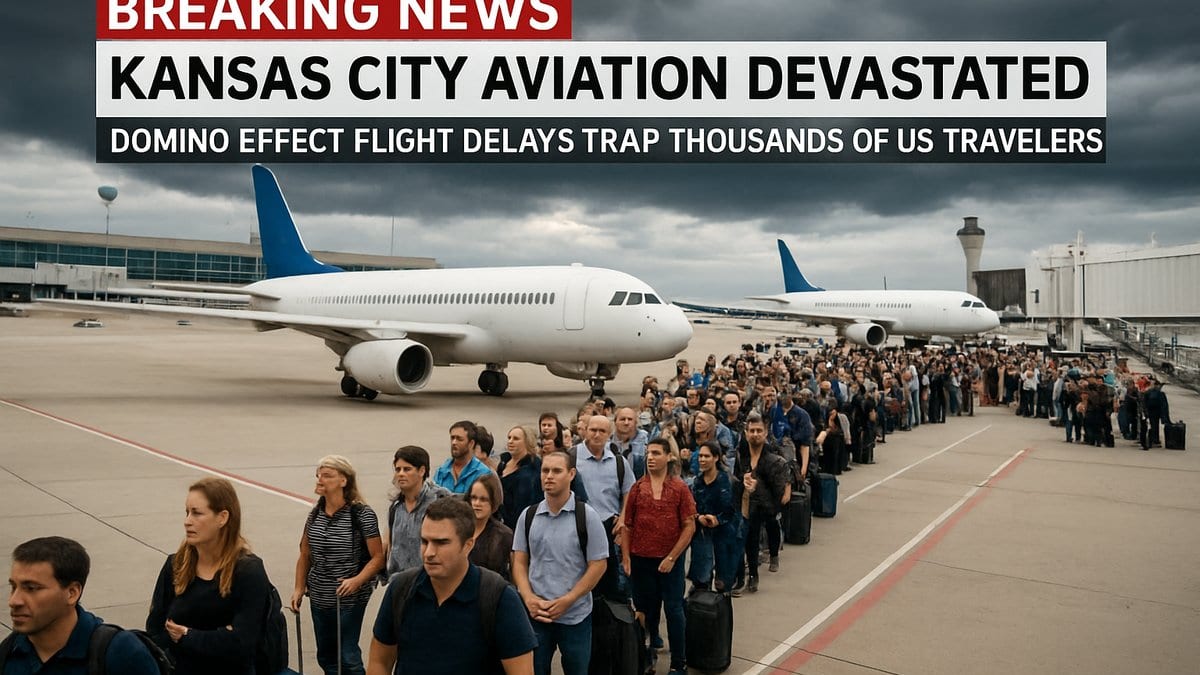
Security Scare Turns Local Disruption Into National Gridlock
The latest turmoil around Kansas City International Airport began on March 8, 2026, when terminals were cleared and flights were temporarily halted while a potential threat was investigated. Publicly available coverage indicates that passengers were ordered out to the tarmac and access roads were briefly shut, freezing operations at one of the Midwest’s key connecting hubs.
Although the incident at Kansas City ultimately concluded without a credible threat being found, the hours-long pause in departures and arrivals created a significant backlog. Aircraft and crews were left out of position, early-morning services were pushed later into the day, and tight connection windows at other airports evaporated for hundreds of passengers.
Reports from national outlets describe the Kansas City episode as one more stress point in an already fragile U.S. flight network. Carriers that rely on Kansas City as a spoke in their routing systems were compelled to reroute aircraft or consolidate flights, a move that eased pressure on ground operations locally but shifted the disruption to other cities.
Travelers connecting through hubs such as Chicago, Dallas and Denver later in the same travel cycle encountered aircraft arriving late from Missouri, compounding weather-related slowdowns and creating a textbook example of how a single local incident can evolve into a nationwide scheduling problem.
Weather, Staffing and Network Strain Amplify the Impact
The Kansas City disruption landed in the middle of a turbulent period for U.S. aviation, with March and early April 2026 marked by intense storms, a major late-season blizzard and intermittent staffing constraints at air traffic control facilities. National data compiled by travel-industry outlets shows that several days in late March recorded more than 200 cancellations and over 4,000 delays across the country.
These conditions set the stage for what analysts describe as a domino effect: aircraft scheduled to pass through Kansas City were already contending with departure holds at storm-affected airports and weather diversions in the Upper Midwest and Northeast. When Kansas City flights suddenly stopped, there was little slack left in the system to absorb the shock.
Regional carriers and low-cost airlines, which often operate tight turnarounds and lean spare capacity, were especially vulnerable. Point-to-point airlines with large networks in the Midwest and Southwest saw a single delayed aircraft in Kansas City echo across multiple cities as the same jet cycled through consecutive legs that were now running late.
Meanwhile, ground crews and gate teams at Kansas City and other affected hubs faced compressed schedules once operations resumed. Baggage handling, aircraft servicing and boarding all took longer than timetables could accommodate, contributing to rolling delays that stretched into the night and spilled into the next day’s flight program.
Thousands of Travelers Stranded or Re-Routed
Across the United States, the combined effect of Kansas City’s shutdown and the broader weather-related disruptions left thousands of passengers stuck far from their intended destinations. Travel-focused publications tracking same-day operations in late March and early April report crowded terminals, lines at customer service counters and extensive rebooking delays, particularly for travelers on multi-leg itineraries.
At Kansas City itself, the initial evacuation forced passengers to abandon screening lines and boarding gates, which then had to be rebuilt once authorities allowed the terminal to reopen. Travelers arriving later in the day encountered a patchwork of rolling delays, with some flights departing hours behind schedule and others canceled outright as airlines tried to reset their networks.
Further downstream, passengers at airports as distant as Seattle and New York reported delays on flights tied to aircraft originating from or scheduled to pass through Kansas City. Online flight-tracking dashboards showed a trail of late departures linked to earlier disruptions in the Midwest, illustrating how quickly local instability can propagate through the national grid.
The situation proved especially difficult for travelers relying on tightly timed connections, such as those linking smaller regional airports to international departures. In several cases documented by consumer travel sites, passengers from secondary markets missed overseas flights after their first leg, routed through Kansas City and another hub, fell victim to the cascading delays.
Airlines Scramble to Reset Schedules and Restore Confidence
Major U.S. airlines have responded to the latest Kansas City-driven disruption cycle with a mix of schedule adjustments, rolling waivers and operational triage. Public statements and timetable data indicate that carriers temporarily reduced frequencies on some routes touching Kansas City and nearby hubs to create recovery windows for aircraft and crews.
Some airlines issued change-fee waivers for travelers booked through the most affected dates and cities, allowing passengers to shift flights without penalty where seats were available. However, limited spare capacity during a busy spring travel period meant many travelers still spent hours on standby lists or were rebooked for departures one or two days later.
Operationally, airlines have leaned on larger hubs such as Chicago O’Hare, Dallas Fort Worth and Denver to absorb diverted or retimed flights, which in turn increased congestion at those airports. Arriving aircraft with connections to Kansas City were sometimes turned quickly for alternative routes, leaving local origin-and-destination travelers with fewer options on short notice.
Industry analysts suggest that Kansas City’s relatively modest size compared with coastal megahubs may actually magnify the impact of disruptions. With fewer redundant flights and less spare gate capacity, a multi-hour ground stop in Kansas City can take longer to unwind, prolonging delays well beyond the day of the initial incident.
What the Kansas City Crisis Reveals About U.S. Aviation Fragility
The recent crisis centered on Kansas City highlights structural vulnerabilities in the U.S. aviation system, where severe weather, infrastructure incidents and staffing shortfalls can intersect without much buffer. Kansas City International, which handled close to one million passengers in a single month during 2025, occupies an important niche as a connecting point for both business and leisure traffic across the central United States.
Transportation researchers note that while large hubs draw the most attention during national meltdowns, disruptions at mid-sized airports like Kansas City can be just as destabilizing. Many airlines rely on these airports to feed traffic into longer-haul routes, so an interruption there removes critical links in the chain that are not always easy to replace.
The March 8 security scare and its aftermath also underscore the growing complexity of crisis management in modern terminals. Even when an incident resolves quickly and without physical harm, the time required to evacuate, inspect and repopulate secure areas almost guarantees major schedule upheaval, particularly during busy travel windows.
In the wake of the Kansas City episode and the broader March weather shocks, aviation experts are renewing calls for greater operational resilience, including more flexible crew deployment, improved real-time communication tools for passengers and more conservative scheduling on days with elevated risk factors. For travelers navigating the spring rush, the message is clear: a brief halt at a single airport can still reverberate across the country, turning a routine trip into an unexpectedly long journey.