

I have done safaris on both sides of the fence, literally: inside the public Kruger National Park, driving my own small rental car and staying in basic bungalows, and inside Kapama Private Game Reserve, where I barely touched my luggage because staff whisked it away to a luxury suite and handed me a cold towel.
Both delivered lions, elephants, and late-afternoon thunderheads over the Lowveld. Yet they felt like two entirely different products. If you are torn between a private reserve like Kapama and the public Kruger, the decision will shape your days, your budget, and even how you remember Africa afterward.
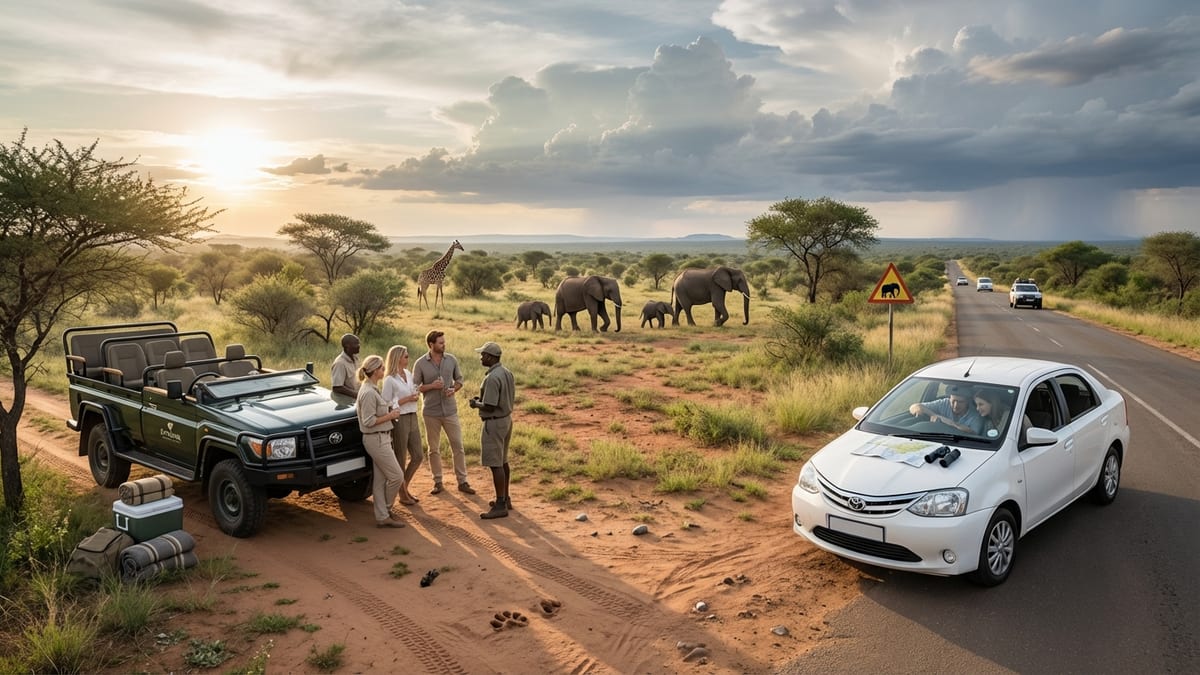
Setting the Scene: Where Kapama and Kruger Fit in the Safari Landscape
Kapama Private Game Reserve sits near Hoedspruit in Limpopo, part of the Greater Kruger ecosystem. It covers about 13,000 hectares, fenced but connected to a wider conservation area that shares very similar wildlife to the main Kruger National Park. The reserve is dotted with a handful of upmarket lodges, each with its own flavor of luxury, spa treatments, and curated game drives. I did not see a single self-drive vehicle inside Kapama. Every game-viewing moment was in an open safari vehicle with a ranger and tracker leading the way.
Kruger National Park is another scale entirely. It stretches roughly 350 kilometers north to south, with a network of tar and gravel roads, dozens of rest camps and picnic sites, and multiple entrance gates. It is run by SANParks and operates as a public park. I could rent a small sedan in Johannesburg, pay a daily conservation fee, and be face to face with elephants by late afternoon. On my Kruger trip I was responsible for almost everything: what time I entered and exited the gates, which roads I chose, and how close I was comfortable getting to a browsing giraffe.
That structure is the core difference. Kapama is a fully packaged experience. Kruger is a vast, semi-DIY playground. In Kapama, staff reminded me of game-drive times and poured my wine. In Kruger, I queued at camp reception to check in, checked my own tire pressure, and triple-checked the gate closing times so I would not be fined or locked out. Both models work, but they demand a different mindset and reward different types of travelers.
Cost, Inclusions, and Real Value for Money
The cost gap between Kapama and a public Kruger safari hit me well before touchdown. At Kapama I booked a fully inclusive nightly rate that covered accommodation, two daily game drives, most drinks, and often extras like bush coffee stops and sundowners. The total figure felt painful when I clicked “confirm,” but once I arrived, I rarely pulled out my wallet. Every activity, every snack, every transfer inside the reserve was seamlessly included. There were no conservation fee calculations or separate payments for guided drives.
In Kruger, the costs came in smaller bites but added up. First there was the rental car and fuel. Then the daily conservation fees for international visitors, which are currently several hundred rand per adult per day and apply for every night you sleep inside the park. On top of that, I paid separately for accommodation, which ranged from surprisingly affordable bungalows to more expensive guesthouses. Guided game drives and walks run by SANParks were extra again, and while they were cheaper than a private reserve, they were not negligible when I added them to my spreadsheet.
From a raw cost perspective, Kruger was easily the cheaper option on my itineraries, especially because I self-catered most meals. Groceries from supermarkets outside the park and simple braai dinners beat lodge restaurant pricing by a wide margin. However, Kruger also created a lot of “nickel and dime” friction. I had to prepay some camps six months in advance to get the rooms I wanted, keep track of how many days of conservation fees I had paid, and budget for activities. Kapama was brutally expensive per night, but the transparency was refreshing. I knew exactly what two or three nights would cost and that once I arrived, the experience itself would feel cashless and smooth.
In terms of value for money, I found Kapama better for travelers who want guaranteed structure, high comfort, and no planning stress. The per-night rate buys peace of mind along with luxury. Kruger delivers unbeatable value if you are willing to self-drive, book early, and accept simpler accommodation and a bit of chaos. When I compared what I actually spent per day, including everything, Kruger was still cheaper, but the gap was smaller than I had expected once I factored in guided activities and a decent level of comfort.
Comfort, Lodges, and Everyday Practicalities
Daily life in Kapama felt curated down to the scented candles in my room. My lodge had a spacious suite with air conditioning, a stylish outdoor shower, and a deck looking over the bush. There was a spa, a pool, and a wine list long enough to be slightly ridiculous in the middle of a game reserve. Staff offered laundry service, and my main logistical decision most days was whether to have another cappuccino before the morning drive. I slept well, ate very well, and never worried about where I could charge my camera batteries or buy bottled water.
Kruger accommodation, even in some of the nicer rest camps, was basic by comparison. My bungalows were clean but plain, with small bathrooms, simple beds, and functional but dated furniture. Air conditioning was available in some units but not all. In older camps, kitchens were a mix of old electric hobs and fridges that hummed loudly at night. There were no decor flourishes or turndown chocolates. I fetched my own bedding from housekeeping when I needed extra blankets and checked for geckos behind the curtains.
This difference spilled into basic practicalities. In Kapama, dietary needs were handled without fuss once I mentioned them on arrival. In Kruger, I had to think ahead. Some camp restaurants were closed at odd hours or offered very limited menus. Shop opening times varied, and shelves were sometimes missing staples if deliveries were delayed. There were days when I drove longer than planned and reached camp just before closing, then threw together a meal from whatever I had in the cooler. It was not difficult, but it required awareness and flexibility that Kapama deliberately shields guests from.
Where Kruger quietly outperformed Kapama was in choice. Once I was inside the park, I could decide to stay in a remote camp with fewer facilities or base myself in a bigger camp with a wider range of services. I could cook every meal or eat out frequently. Kapama’s comfort is locked in and non-negotiable. Kruger’s comfort level is adjustable if you accept that you are trading away convenience and polish.
Wildlife Experience: Sightings, Rules, and the Feel of the Bush
On game viewing alone, both Kapama and Kruger delivered what I came for: repeated Big Five sightings, impressive birdlife, and those quiet moments when the bush falls totally silent before a predator appears. However, the way I encountered wildlife in each place was very different, and that difference mattered more than I expected.
In Kapama, the rangers have radio contact and can drive off the main tracks in a controlled way. When a leopard was found on a morning drive, we were called in one vehicle at a time, each getting a turn to view it from a close but safe distance. That system meant I saw more big cats up close in two days at Kapama than in several full days of self-driving in Kruger. The ability to track with spotlights at night, follow fresh tracks, and respond to calls from other vehicles created a sense that the reserve was working with me to deliver sightings.
Kruger felt more democratic and more random. I was restricted to tar and gravel roads and had to be out of the camp or gate by specific times in the morning and safely back before nightly gate closing. I could not drive off road, and I did not have a guide calling in sightings for me on a shared radio network. Some days I saw lions within an hour of leaving camp, lying right next to the road. Other days I drove for hours and saw almost nothing but impala. When I joined SANParks guided drives, I did gain some of that shared knowledge, but the vehicles still had to stay on roads and obey strict timing rules.
For me, the tradeoff was between intimacy and authenticity. In Kapama, I sometimes felt the wildlife experience bordered on managed theater, especially when three vehicles rotated through a single sighting one after another. Yet those close encounters were emotionally powerful. In Kruger, I occasionally felt frustrated by distant sightings and crowds at popular waterholes. At the same time, every good sighting felt “earned,” the result of my own route choices and patience. One early morning I rounded a bend alone to find wild dogs trotting down the road. For twenty minutes there were no other vehicles. That level of unscripted luck almost never happens inside a tightly choreographed private reserve.
Crowds, Atmosphere, and How Wild It Really Feels
The human density difference between Kapama and Kruger hit me hardest at sundowner time. In Kapama, my ranger chose a quiet clearing, and our vehicle was often alone. I stepped out of the vehicle, walked a few meters away with my drink, and listened to the wind in the grass. Occasionally another lodge vehicle would pull up nearby, but it still felt like a controlled pocket of wilderness, with no traffic hum and no infrastructure in sight.
In Kruger, even in quieter months, the main tar roads in the south could feel busy. I queued at entrance gates at opening time. I joined impromptu traffic jams when a leopard or lion pride was spotted near a road. At popular camps the evenings were filled with the noise of generators, braai fires, and children on bicycles. It did not always feel like a remote wilderness. On some drives I had to work to remember that I was in a national park with dangerous animals, not just an unusually large rural reserve with excellent wildlife.
That said, Kruger is big enough that I could escape some of the crowds by choosing less traveled gravel roads or focusing on the central and northern regions. On one September trip I stayed in a more remote rest camp and saw only a handful of vehicles on my morning loops. The bush felt quieter and wilder there than it did on any private reserve I have visited. In Kapama, the sense of space is limited by the reserve’s fenced boundaries. Even if the wildlife can roam wider in the greater ecosystem, I was always aware I was in a curated, finite piece of land.
If you dislike crowds intensely, neither option is entirely perfect. Kapama limits the number of vehicles at sightings and keeps lodge numbers relatively low, but you are always sharing the reserve with other guests from a small group of lodges. Kruger at peak times can feel like a moving convoy on certain routes. For me, timing made the biggest difference. Visiting Kruger outside South African school holidays and targeting quieter regions gave me a better “wild” feel than I expected, whereas Kapama was consistently calm but never truly solitary.
Logistics, Access, and Three Real Decision Moments I Faced
Kapama is one of the easiest private reserves I have ever reached. The reserve sits close to Hoedspruit’s airport, and my lodge arranged a direct transfer. Within an hour of landing, I was on the vehicle for an evening drive. No rental desk queues, no navigating unfamiliar roads, no debating which gate to use. For travelers nervous about driving in South Africa or short on time, that frictionless access is a major advantage.
Kruger, by contrast, requires choices from the start. I had to decide whether to fly to a regional airport and rent a car there or drive all the way from Johannesburg. I then had to pick an entrance gate and line up my first night’s camp with my arrival time. Gate opening and closing times shift with the seasons, and I had to keep a close eye on them because arriving late can mean penalties or sleeping outside the park. That pressure shaped my daily schedules in a way I never felt in Kapama, where the lodge handled all timing and security.
The first big decision moment I faced was where to stay. On my combined trip, I chose to start with two nights at Kapama, then move into Kruger for a longer, cheaper stretch. In hindsight, I might have reversed that order. Beginning with the polished private reserve made Kruger’s basic camps feel rougher than they actually were. If I had done Kruger first and “upgraded” to Kapama at the end, I think I would have appreciated both more.
The second decision was how long to book at each. Kapama offers a very full experience in two or three nights because drives are structured and targeted. Beyond three nights, I felt the diminishing returns: similar routes, similar sightings, and more time spent lounging at the lodge. In Kruger, I could easily fill five or six days by changing camps and exploring different habitats. The variety of roads and landscapes kept it fresh. If I were planning again, I would allocate more nights to Kruger and keep Kapama as a concentrated, high-impact highlight rather than the main event.
The third decision was whether to rely entirely on guided drives in Kruger or do a mix of guided and self-drive. I tried both. The guided drives were helpful for learning about behavior and spotting at night, but they followed fixed routes and were sometimes crowded. Self-drive days gave me freedom to linger at sightings and take short detours. After testing both, I would now book one or two guided drives at the start of a Kruger stay to pick up tips, then switch almost exclusively to self-drive once I felt confident.
Seasonality, Booking Pressure, and What Sells Out First
Both Kapama and Kruger live and breathe the South African seasons. In practice, that means the dry winter months from around May to September are the easiest for game viewing in both places. Shorter grass, less dense foliage, and animals congregating around waterholes all work in your favor. During my winter visits, mornings were cold enough on open vehicles in both Kapama and Kruger that I was grateful for blankets, but the reward was crystal clear air and excellent visibility.
In the wet summer months, typically from around October to April, I found the bush in Kruger much lusher, with more birdlife and newborn animals. That green beauty comes with challenges: higher temperatures, more insects, and thicker vegetation that makes cats harder to spot. I noticed thunderstorms building most afternoons during my December visit, and I had to factor sudden heavy showers into my driving plans. Kapama was slightly more forgiving in that season because rangers could still use their knowledge to find animals hidden in tall grass, but even there I had more “sound only” experiences of lions roaring out of sight.
Booking pressure plays out differently in the two destinations. Kapama’s lodges have a finite number of suites. In peak months, certain room categories and spa time slots fill quickly, but I could still often find availability by being flexible on exact dates or lodge choice within the reserve. Kruger’s system was much more brutal. Popular rest camps and room types for prime months can open for booking nearly a year ahead, and many of the best-located bungalows in the south disappear fast. On one trip, I left my booking until a few months before and ended up with a messy itinerary that involved camp hopping more than I wanted.
I also learned the hard way that some Kruger activities, like guided wilderness walks, have very limited capacity and sell out long before game drives do. If you dream of a sunrise bush walk with armed rangers, you need to secure those early. In Kapama, walking activities are often more flexible, but I still found that specific add-ons, like romantic private dinners, booked out during popular periods. If you are traveling in the South African school holidays or over Christmas and New Year, both Kapama and Kruger reward early planners, but Kruger is far less forgiving if you leave things late.
Who Each Option Suits Best, and What I Would Do Differently
After experiencing both sides, I find myself recommending Kapama and Kruger to very different people, even though they occupy the same ecosystem. Kapama suits travelers who want a high-comfort, low-effort introduction to safari. Families with older relatives, honeymooners, and anyone anxious about self-driving in a big wildlife area will probably be happiest there. Everything from transfers to daily schedules is handled for you, and the guiding standard is usually high. If the thought of navigating gravel roads, cooking your own dinner, or planning multiple camp bookings stresses you out, Kapama will feel like a safe and rewarding choice.
Kruger, on the other hand, is made for people who enjoy independence and can tolerate a bit of unpredictability. If you are happy behind the wheel, willing to do some pre-trip research, and content with simple accommodation, Kruger will reward you with scale and variety that no private reserve can match. It also suits budget-conscious travelers who want to stretch their time in the bush. I met solo travelers and families who were staying more than a week in Kruger for the price of just a few nights in a private reserve. The tradeoff is a certain level of logistical hassle and the occasional disappointment when a hoped-for sighting does not materialize.
If I were planning my next trip knowing what I know now, I would not treat Kapama and Kruger as either-or. I would start with three or four nights in Kruger, using a mix of one or two guided drives and mainly self-drive, then finish with two or three nights at Kapama. That order lets me appreciate Kruger’s rawness and freedom first, then end on a more indulgent, guided note when I am tired of cooking and navigating. I would also book Kruger camps and key activities as soon as reservations open, rather than trying to piece things together later.
The biggest change, though, would be in my expectations. On my first safari, I expected every drive in Kruger to produce close Big Five sightings and every meal in Kapama to be a gourmet event. Reality was more mixed. I had empty drives and average meals in both. Accepting that safaris are inherently hit and miss, regardless of price tag, would have made me more patient in Kruger and more relaxed in Kapama.
The Takeaway
Having lived both versions of a South African safari, I do not see Kapama and Kruger as competitors so much as complementary answers to different questions. If your priority is ease, comfort, and a high probability of close, guided sightings in a short window of time, Kapama delivers that in a neat package. You will pay for the convenience, but you will also avoid the analysis paralysis and small stresses that come with Kruger. It is especially appealing if this is a once-in-a-lifetime trip where you would rather spend money than mental energy.
If, however, you are drawn to the idea of setting your own alarm, turning off onto a side road just because it looks promising, and braaiing under a camp tree while hyenas whoop in the distance, then Kruger will probably get under your skin in a way a private reserve cannot. It demands more from you as a visitor, but it gives you a sense of ownership over your experience. When I look back, the stories I tell most often are the ones where I got slightly lost on a dusty Kruger road, or waited alone at a remote waterhole, watching the light change.
In practice, many travelers can and should do both if time and budget allow. A few shorter nights in Kapama give you that polished, “classic” safari feel with guides and sundowners. A longer stretch in Kruger lets you explore the public side of Africa’s most famous park at your own pace. The key is to be honest about what you want to get out of the trip and how much work you are prepared to do yourself. Neither option is perfect and both have frustrations, but under the right conditions and for the right traveler, each is more than worth it.
FAQ
Q1: Is Kapama really worth the higher price compared with Kruger?
For me, Kapama was worth the money when I prioritized comfort, guiding quality, and minimal planning. When I valued time in the bush over luxury and was willing to self-drive and self-cater, Kruger gave me more days for less money and felt like better overall value.
Q2: Can I see the Big Five in both Kapama and Kruger, or is one better?
Both Kapama and Kruger offer solid chances of seeing the Big Five, but the experience is different. In Kapama, guides coordinate sightings and can drive off road, so close encounters can be more frequent in a short stay. In Kruger you rely more on luck and patience, but the thrill when you find animals yourself is hard to beat.
Q3: How far in advance should I book Kapama and Kruger?
For Kapama, I would aim for several months ahead in peak season, especially if you want a specific lodge or room type. For Kruger, I try to book rest camps and popular activities as early as possible, ideally six to twelve months in advance for busy months, because the best bungalows and walking safaris sell out fast.
Q4: Is it safe and realistic to self-drive in Kruger if I have never done a safari before?
I found self-driving in Kruger very manageable as long as I respected speed limits, stayed in my vehicle, stuck to main roads at first, and kept an eye on gate times. The roads are generally good, signage is clear, and there are enough other vehicles that I never felt completely isolated.
Q5: What about malaria risk in Kapama and Kruger?
Both Kapama and Kruger lie in areas where malaria can be present, especially in the warmer, wetter months. I always speak to a travel doctor before I go, use insect repellent, wear long sleeves at dusk, and sleep under nets or in screened rooms when provided, regardless of whether I am in the private reserve or the public park.
Q6: Which is better for families with children, Kapama or Kruger?
Kapama suited families who wanted structure, shorter drives tailored by guides, and no self-catering stress, although age limits can apply for drives or walks. Kruger worked better for families who enjoy road trips and simple camp life and are happy to cook and manage their own schedules.
Q7: Do I need a 4x4 for Kruger, or is a normal car enough?
I did all my Kruger self-driving in a standard two-wheel-drive rental car without issues. Most main roads are tarred or well-graded gravel. A 4x4 is nice to have in heavy rain or on rougher side roads, but it is not essential for a typical visit.
Q8: How many nights should I spend in each place?
In my experience, two or three nights at Kapama is enough to get the full private reserve experience without it feeling repetitive. In Kruger, four to six nights split across one or two camps gave me time to explore different areas without rushing.
Q9: Can I combine Kapama and Kruger in one trip without it feeling rushed?
Yes, and I actually prefer it that way now. With about a week to ten days, I like to spend the majority of nights in Kruger and then add two or three nights in Kapama at the end as a more relaxed, pampered finale.
Q10: If I can only choose one, which would I pick next time?
If I had to pick just one for my next trip, I would choose Kruger because I personally enjoy the independence and value of self-driving. If I were traveling with someone who was nervous about that or wanted a short, polished safari, I would choose Kapama instead.