

More news on this day
As TTF Bengaluru 2026 prepares to open its doors from March 13 to 15 at Bangalore Palace Grounds, Karnataka Tourism is positioning itself to use the country’s largest regional travel trade platform to foreground sustainable and experiential travel as core drivers of the state’s next phase of tourism growth.
Get the latest news straight to your inbox!
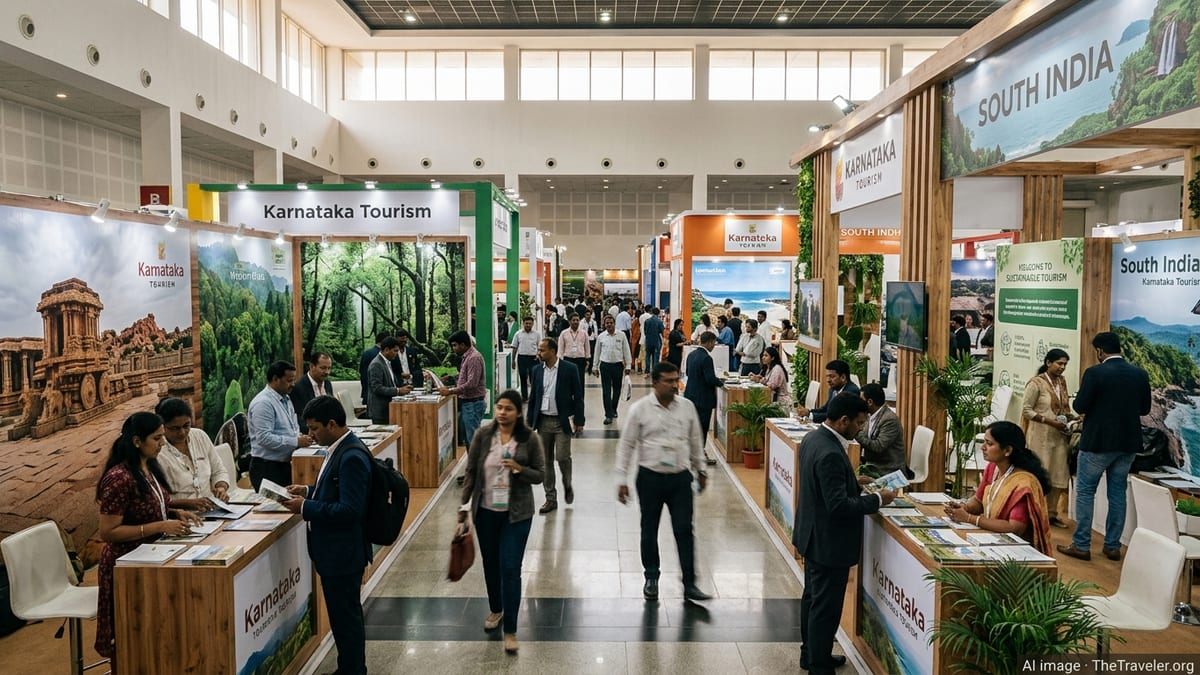
TTF Bengaluru 2026 Sets the Stage for a New Tourism Narrative
TTF Bengaluru 2026 is expected to draw hundreds of exhibitors and thousands of trade visitors to the city’s historic Bangalore Palace Grounds, reinforcing its status as a key meeting point for India’s travel industry. Organisers describe the Bengaluru leg of the Travel and Tourism Fair network as a gateway to South India’s high-growth travel market, where domestic and outbound demand is rising in parallel with new aviation connections and a strong technology-led business ecosystem.
Recent editions of TTF in Bengaluru have highlighted themes such as responsible travel, cultural circuits and regional collaboration, and the 2026 show is forecast to deepen that focus. With India’s domestic tourism market projected to expand sharply in the coming years, publicly available information suggests that exhibitors are increasingly using the platform to promote destinations and products that balance growth with environmental and social priorities.
For Karnataka, hosting the fair in its capital offers a dual advantage: it showcases Bengaluru as a major travel and aviation hub while allowing the state to present its own tourism vision directly to trade buyers. The combination of established heritage circuits, wildlife reserves, coastal stretches and emerging rural experiences provides a broad canvas for demonstrating how sustainability and experience design can work together.
Karnataka Builds on Momentum From Earlier TTF Showcases
Karnataka Tourism enters TTF Bengaluru 2026 with momentum from recent appearances across the TTF circuit. Coverage of TTF Bengaluru 2025 indicates that the state’s pavilion drew attention for its creative design and thematic storytelling, earning recognition among large pavilions for the way it presented Karnataka’s tourism assets. Reports from other TTF editions in 2025, including Ahmedabad, point to a consistent emphasis on royal heritage, nature-based attractions and eco-conscious messaging.
Publicly available information on these earlier events shows that Karnataka has used trade fairs to foreground destinations such as Mysuru, coastal Karnataka, hill stations and protected wildlife areas, often framed within narratives of responsible visitation and cultural preservation. Visual showcases, immersive installations and curated itineraries have been deployed to communicate that the state is not only rich in attractions but is also rethinking how those attractions are experienced.
This history of high-impact pavilion design and thematic focus gives context to expectations for TTF Bengaluru 2026. Observers anticipate that Karnataka will again invest in a strong on-ground presence, using design, digital tools and destination storytelling to signal that sustainable and experiential travel are not niche add-ons but central elements of its tourism strategy.
Tourism Policy Links Sustainability With Experiential Travel
Karnataka’s push at TTF Bengaluru 2026 is underpinned by its recent policy direction. Public documents such as the state’s tourism policy and related strategy papers emphasise sustainable growth, community participation and balanced regional development as key pillars. These frameworks call for the promotion of nature-based tourism, heritage conservation, responsible coastal tourism and low-impact adventure experiences, while encouraging private investment that aligns with environmental and social safeguards.
Experiential tourism has emerged as a recurring theme in state-level tourism discussions, including industry events hosted in Bengaluru that focus on shaping the sector’s next decade. According to published coverage of these forums, stakeholders are prioritising hands-on, immersive encounters such as village stays, heritage walks, culinary trails and craft-focused visits that connect visitors more closely with local communities and landscapes. Such experiences are framed as both higher-value propositions for travellers and more equitable models for residents.
At TTF Bengaluru 2026, Karnataka Tourism is expected to connect these policy priorities with specific products and circuits. Trade-facing materials are likely to highlight itineraries that combine cultural sites with eco-sensitive stays, slow travel routes across the Western Ghats, responsible beach tourism along the Arabian Sea, and spiritual or wellness-focused journeys that rely on locally rooted enterprises. The fair offers an opportunity to signal to tour operators and travel agents that these offerings are central to the state’s brand.
Trade Platform for Sustainable Partnerships and Product Development
Beyond promotion, TTF Bengaluru 2026 functions as a transactional and networking hub where sustainable and experiential concepts can be translated into concrete partnerships. Organiser information notes that the Bengaluru show regularly attracts domestic tourism boards, international destinations, hospitality brands and destination management companies, creating a dense marketplace for product negotiation and itinerary planning.
Within this environment, Karnataka Tourism is positioned to convene discussions around topics such as low-impact infrastructure, responsible group travel, and technology-supported visitor management. Industry participants are increasingly attentive to issues like carrying capacity in popular hill stations, community benefit-sharing near heritage and wildlife sites, and climate-sensitive coastal planning. The fair’s seminar sessions and informal meetings provide scope for aligning on standards and exploring joint initiatives.
Observers also expect growing attention to digital tools that support sustainability goals, including smart booking engines that surface eco-certified stays, real-time trail management systems, and visitor education platforms. TTF Bengaluru’s location in a technology-forward city reinforces the alignment between tourism innovation and environmental responsibility, with Karnataka using the platform to present itself as a testing ground for new models.
South India’s Growth Underscores Need for Responsible Travel Models
Industry analyses referenced in exhibitor materials for the TTF series project strong growth for India’s domestic and outbound travel markets through the next decade. Southern India, anchored by hubs such as Bengaluru, Chennai and Hyderabad, is seen as a particularly dynamic source region, supported by rising incomes, improved connectivity and a youthful, experience-seeking demographic.
For Karnataka, this trajectory presents both opportunity and urgency. The state’s varied tourism portfolio, spanning UNESCO-listed heritage, biodiversity-rich forests, coastal belts, coffee country and urban cultural scenes, is well placed to capture demand for distinctive experiences. At the same time, higher visitor volumes increase pressure on fragile ecosystems, heritage precincts and urban infrastructure if not carefully managed.
By foregrounding sustainability and experiential depth at TTF Bengaluru 2026, Karnataka Tourism is signalling that it intends to align growth with stewardship. The narrative emerging from policy documents, trade fair participation and regional industry events points toward a model where visitor satisfaction, local livelihoods and environmental health are treated as interconnected goals rather than competing interests.