

More news on this day
Long overshadowed by neighboring Greek islands, Karpathos is increasingly emerging as a hidden Mediterranean gem, drawing travelers with its rugged coastlines, mountain villages and a growing focus on low-impact tourism experiences.
Get the latest news straight to your inbox!
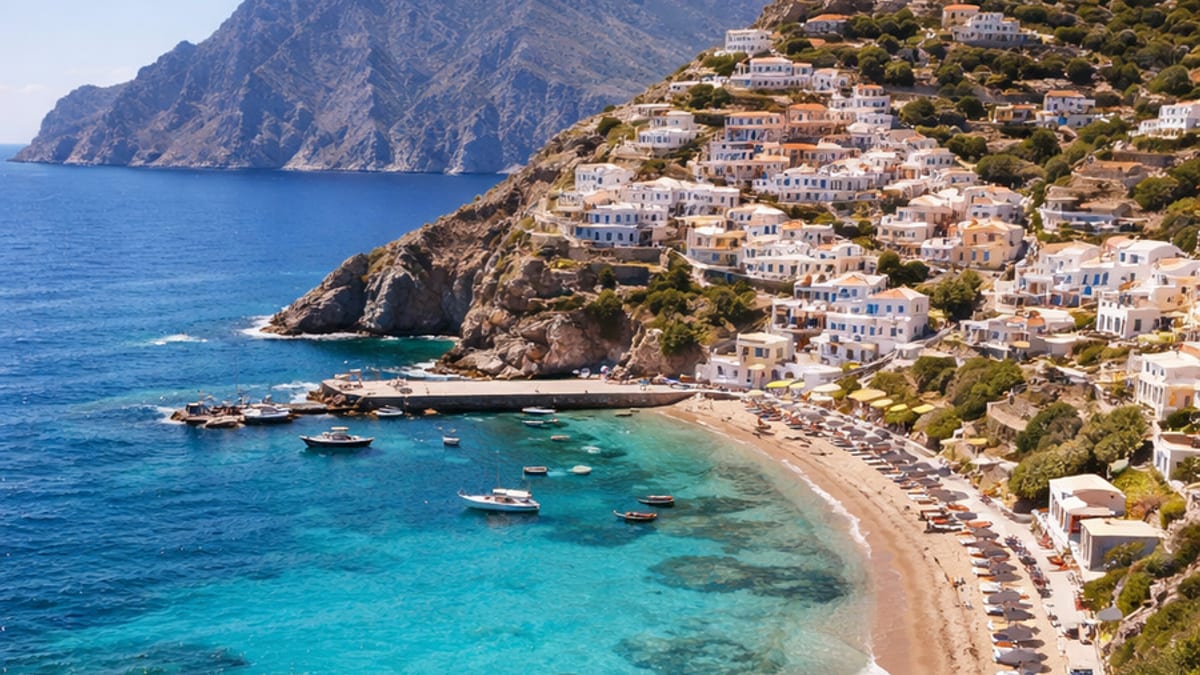
Image by Travel And Tour World
A Rugged Aegean Island Steps Into the Spotlight
Situated between Rhodes and Crete in the Dodecanese, Karpathos has long been considered a remote outpost, attractive mainly to in-the-know hikers, windsurfers and Greek holidaymakers. Recent destination rankings, including listings among Europe’s standout places to visit in 2025, have begun to push the island into wider view, highlighting its mix of wild landscapes and traditional culture.
Publicly available travel guides describe Karpathos as an island of steep mountains, narrow valleys and dramatic coastline, with beaches that range from exposed wind-battered coves to sheltered bays framed by pine forest. Well-known stretches of sand such as Apella, Kyra Panagia and Diakoftis are frequently cited for their clear water and relatively undeveloped surroundings compared with busier Aegean destinations.
Despite this new attention, reports indicate that Karpathos remains relatively low-key in terms of visitor numbers, especially outside the peak summer weeks. Independent travel sites and recent trip reports refer to a destination where construction is increasing but where mass tourism infrastructure is still limited, particularly in the interior of the island. This has allowed many rural landscapes to remain largely intact while local authorities and private operators begin to position the island around nature-based activities.
The island’s main town, Pigadia, is the center of ferry traffic, car rentals and accommodation, but beyond its harbor and waterfront promenade, large parts of Karpathos retain a distinctly rural character. Mountain roads connect scattered settlements, terraced hillsides and small chapels, offering a sense of scale and remoteness that contrasts with more densely developed Aegean resorts.
Traditional Villages Preserve a Slower Island Rhythm
A key part of Karpathos’s growing appeal lies in its network of traditional villages, many of which are perched high in the mountains or tucked into sheltered valleys. Travel guides describe settlements such as Olympos, Aperi, Othos, Volada, Pyles and Menetes as places where stone houses, narrow lanes and village squares still shape daily life, with limited impact so far from large-scale resort development.
Olympos, in the island’s north, is often singled out as a cultural highlight. Perched along a mountain ridge overlooking the sea, the village is frequently described in travel features as a living folklore museum where older residents continue to wear traditional dress and maintain customs preserved by centuries of relative isolation. Visitors typically reach Olympos by a winding mountain road or by boat-and-bus excursions from Pigadia, encountering a mix of family-run taverns, small workshops and panoramic viewpoints.
Inland villages closer to Pigadia, including Aperi and Othos, are promoted by regional tourism sites as quieter alternatives where visitors can stay in guesthouses, visit small museums and follow local walking paths through terraced fields and pine forests. These settlements provide access to the island’s agricultural heartland, where olive groves, vineyards and small-scale farming remain important parts of the local economy.
Reports from recent travelers suggest that the character of these communities is a major draw for those seeking an “older Greece” atmosphere. Even as new accommodation appears on the outskirts of some villages, most development has so far taken the form of small units rather than large all-inclusive complexes, contributing to Karpathos’s image as a destination still anchored in local life.
New Trail Networks Anchor Hiking and Eco-Tourism
In parallel with rising international attention, Karpathos is part of a regional push to expand eco-friendly outdoor tourism. Coverage in Greek and European travel media indicates that the island, together with the nearby islet of Saria, is the focus of a project backed by European Regional Development Fund resources to create or restore around 25 hiking routes.
According to published information on the initiative, the new and improved trails will link mountain ridges, coastal paths, archaeological sites and traditional villages. Planned works include restoring old footpaths, improving safety, installing coordinated wayfinding signs and removing outdated or confusing markings. The goal is to present Karpathos and Saria as premier destinations for hiking and walking tourism, with routes suitable for a range of fitness levels.
This trail development aligns with broader national discussions around alternative tourism, including nature, diving and agrotourism projects being promoted across Greece. For Karpathos, the emphasis on marked footpaths and cultural connections is intended to disperse visitors beyond the main coastal hubs, encouraging longer stays in smaller communities and supporting local businesses such as guesthouses, taverns and guides.
Adventure-focused events also form part of the island’s new profile. Local tourism platforms highlight an annual climb and adventure festival that brings together climbers, hikers and outdoor enthusiasts for guided activities, workshops and cultural encounters. The event, framed as a celebration of authentic island life, reinforces Karpathos’s branding as a place where outdoor pursuits are closely linked with local heritage and minimal-impact travel.
Marine Parks, Natura Zones and Low-Impact Experiences
Beyond its mountains and villages, Karpathos is increasingly promoted for its marine and coastal environment. Sections of northern Karpathos and the surrounding waters, including the uninhabited islet of Saria, form part of a Natura 2000 reserve and Greece’s newer marine protection initiatives. Travel features note that these protected areas harbor important seabird and marine species, as well as relatively undisturbed coastal ecosystems.
Operators focused on ecotourism describe activities such as guided snorkeling, low-impact boat excursions and small-group hikes that emphasize wildlife observation and environmental awareness. The combination of protected marine zones and strict rules on development in certain coastal stretches has helped sustain a sense of remoteness, particularly in the north, where beaches are often reached via dirt roads or on foot.
Below the surface, Karpathos has become known among divers for underwater caves, rocky reefs and clear visibility. While dedicated dive centers remain limited in number compared with larger islands, the available operations market themselves around small groups and respect for fragile habitats. Reports from recent visitors often highlight swimming with minimal infrastructure on shore, with only basic facilities and a few taverns or kiosks nearby.
This emphasis on modest-scale services is consistent with the island’s broader trajectory in low-impact tourism. Rather than marketing large marinas or cruise infrastructure, public-facing information about Karpathos centers on swimming, hiking, windsurfing, kitesurfing on the island’s windier southern beaches, and visits to small fishing harbors that retain much of their traditional character.
Balancing Growing Demand With Sustainable Development
As Karpathos gains visibility through international rankings and social media coverage, questions are emerging about how the island can manage expansion without repeating the overdevelopment seen elsewhere in the Mediterranean. Online discussions among travelers already mention new building activity around some coastal areas, even as many parts of the island remain relatively untouched.
Greek tourism policy in recent years has increasingly stressed the importance of spreading visitors across lesser-known regions and encouraging forms of travel that extend beyond peak summer beach holidays. Karpathos, with its combination of rural settlements, cultural heritage and natural assets, is often cited in this context as an example of how alternative tourism can support local communities while protecting landscapes.
Industry observers point out that much will depend on how quickly infrastructure scales up and how closely forthcoming projects adhere to low-impact principles. Investments in trail networks, public transport connections between villages, and small-scale accommodation could reinforce the island’s appeal to hikers and slow travelers. By contrast, rapid expansion of large resorts or intensive shoreline development would risk eroding the qualities that currently set Karpathos apart.
For now, publicly available information suggests that Karpathos remains at a crossroads rather than a finished product in the tourism market. Its rugged topography, traditional mountain villages and emerging web of hiking and marine experiences offer a compelling alternative to better-known Greek islands, positioning it as one of the Mediterranean’s more promising low-impact destinations for the coming seasons.