

More news on this day
As Kashmir works to regain momentum after a turbulent 2025 season, plans for a dedicated Kashmir Travel Mart 2026 are drawing attention across the travel trade as a potential turning point for the region’s tourism revival and international positioning.
Get the latest news straight to your inbox!
A Strategic Showcase in a Pivotal Year for Kashmir Tourism
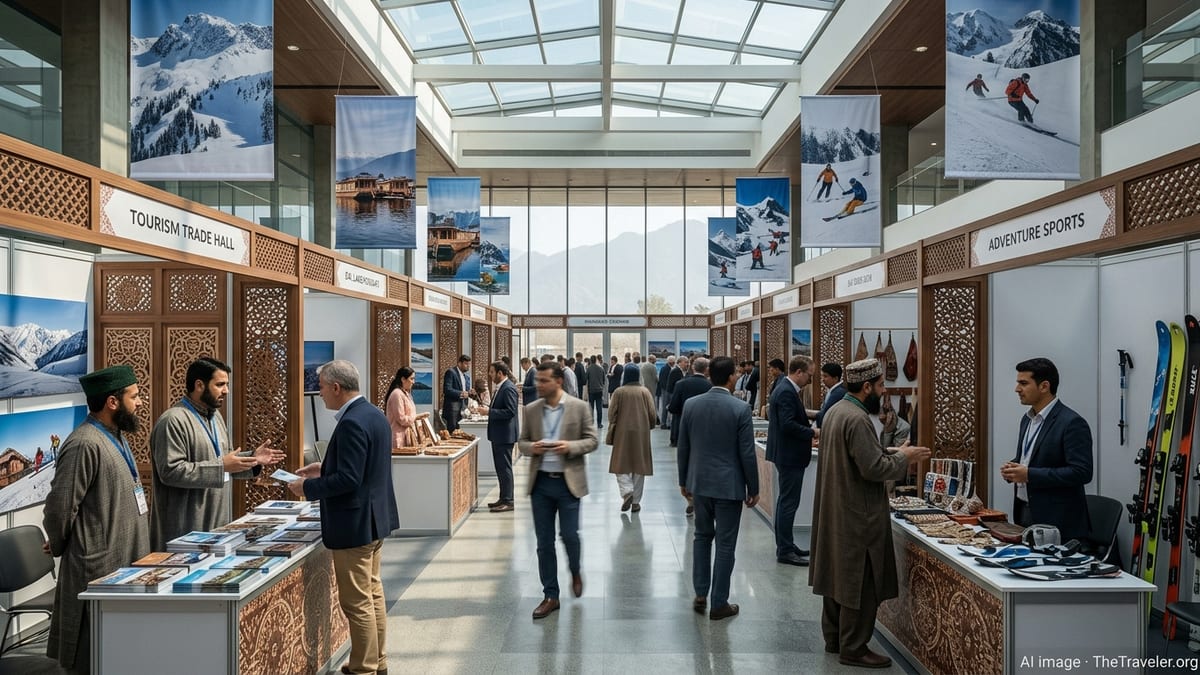
Publicly available policy documents and recent tourism coverage indicate that 2026 is being framed as a consolidation year for Kashmir’s travel industry, with a dedicated Kashmir Travel Mart expected to sit alongside a busy calendar of trade fairs, roadshows and adventure conventions. The proposed mart is viewed within the industry as a focused business-to-business platform where tour operators, hoteliers, destination managers and aviation partners can engage directly on Kashmir-specific products rather than competing for attention at generic national events.
The concept builds on Jammu and Kashmir’s recent visibility at large tourism forums in India and overseas. In early 2026, the region’s tourism department drew prominent attention at major international trade shows in Madrid and Mumbai, where Kashmir was highlighted as a safe, experience-rich destination with strong adventure and winter sports credentials. Those showings, together with a series of domestic travel marts, are being treated as a proving ground for a standalone event centered solely on Kashmir.
Economic survey data for 2025 to 2026 shows that overall tourist arrivals to Jammu and Kashmir rebounded strongly after the immediate downturn triggered by the April 2025 attack in Pahalgam and subsequent disruptions. Analysts note that a dedicated Kashmir Travel Mart would aim to lock in that recovery, shift the narrative from crisis response to long-term growth, and give trade partners clear signals about infrastructure, safety measures and new product lines coming onstream in 2026 and 2027.
Trade observers describe the proposed mart as a natural next step in the territory’s strategy to move from episodic promotion at outside events to a curated, home-based marketplace where the valley can be experienced first-hand by buyers, media and content creators through site visits, hosted itineraries and thematic showcases.
Positioning the Valley’s Untapped Products for Global Buyers
The focus of Kashmir Travel Mart 2026 is expected to go beyond the traditional circuit of Srinagar, Gulmarg and Pahalgam. Recent tourism plans, investment announcements and destination studies highlight a broader portfolio of experiences that remain underdeveloped in the international market, including alpine trekking corridors, offbeat lakes and meadows, and heritage towns and cultural precincts in both Kashmir and Jammu divisions.
Industry commentary suggests that curated zones inside the mart are likely to mirror these themes. Adventure and winter sports operators are expected to showcase skiing, snowboarding and backcountry routes linked to new infrastructure upgrades in Gulmarg and other high-altitude resorts. Cultural and spiritual tourism providers are anticipated to highlight shrines, Sufi circuits, temples and historic neighbourhoods, while rural homestay promoters and agro-tourism ventures make the case for longer, slower stays in village settings.
Data published in official surveys indicates that domestic arrivals to Jammu and Kashmir in recent years have reached multi-million levels, but foreign tourist numbers, while improving, still represent a fraction of the potential market. For many observers, that gap underscores why a trade mart dedicated to Kashmir could be critical: it gives international wholesalers and online travel platforms a one-stop venue to discover lesser-known products, negotiate contracts and address concerns about connectivity, safety and logistics directly with local stakeholders.
There is also growing attention on sustainability and community benefit within the region’s tourism planning framework. Analysts expect these themes to figure prominently in the mart’s programming, with sessions on carrying capacity in fragile mountain zones, responsible trekking, waste management in popular resorts and models for ensuring that local communities capture a fair share of tourism revenue.
Rebuilding Confidence After a Challenging 2025 Season
Kashmir’s tourism sector entered 2026 after a difficult year marked by the Pahalgam attack, temporary flight suspensions and the closure of several tourist spots for security reviews. Visitor data and media reporting show that these shocks produced a sharp but relatively short-lived fall in arrivals, followed by a gradual recovery during festival periods and the winter sports season.
Against this backdrop, Kashmir Travel Mart 2026 is being framed by commentators as part trade show and part confidence-building exercise. By inviting tour operators, meeting planners and travel media into the valley itself, the event is designed to provide first-hand exposure to updated security arrangements, reopened destinations and upgraded visitor facilities, from improved road access to modernised ski slopes and new waterfront leisure projects in the wider region.
Sector analyses note that state-backed investment under national tourism schemes has been flowing into circuits that include Kashmir’s mountain and pilgrimage destinations, supporting new trails, wayfinding, amenities and public spaces. Combined with expansions in rail connectivity and planned ropeway projects, this infrastructure push is meant to reassure travel partners that future itineraries will be more resilient to disruption and better equipped to disperse visitor flows across multiple hubs.
Observers also point out that high-profile cultural and sports events scheduled for 2026, such as marathons and adventure conventions, are being timed to reinforce the message that normalcy is returning and that the destination is prepared to host larger groups, including incentive travel and special-interest tours.
What Trade and Travelers Can Expect from the 2026 Edition
While detailed schedules and venue specifications for Kashmir Travel Mart 2026 are still in development, publicly available information on comparable events offers a broad picture of what participants can expect. The mart is likely to feature an exhibition floor with state tourism representations, private tour operators, hotel groups, homestay aggregators, transport providers and technology platforms focused on bookings, payments and digital marketing.
Alongside the exhibition, a structured buyers’ program is expected to match hosted buyers from India and overseas with Kashmir-based sellers through pre-scheduled meetings. Panel discussions, destination briefings and product launches are likely to be included to help trade visitors understand recent policy changes, new air and rail links, and the evolving regulatory environment for adventure, pilgrimage and rural tourism.
For on-the-ground experiences, industry observers anticipate pre- and post-mart familiarisation trips that may take visiting buyers and media to flagship destinations such as Srinagar, Gulmarg and Pahalgam, as well as emerging sites in other districts depending on security assessments and infrastructure readiness. These trips are typically designed to give decision-makers a realistic sense of travel times, quality of accommodations and the range of activities that can be included in multi-day itineraries.
Travel businesses and individual visitors watching the mart from afar are expected to gain indirect benefits through the packaging and promotion that follows. Successful trade deals struck at the event often translate into new bundled tours, themed circuits and seasonal offers, which can appear in travel agency catalogues and online platforms in the months after the mart concludes.
Timing, Location and Participation: Key Practical Details
As of late March 2026, formal announcements setting out the exact dates, venue and format of Kashmir Travel Mart 2026 have not yet been released in the public domain. However, recent references to a dense calendar of tourism promotion events suggest that organisers may position the mart to align with either the late-summer leisure season in the valley or the early-winter window when snow-focused products are at their most attractive.
Trade analysts expect that Srinagar would be a natural hub for the mart, with its concentration of hotels, houseboats, conference spaces and transport links via air and road. Some industry commentary also points to the possibility of satellite activities or excursions to other destinations, especially established winter and adventure resorts, to ensure that participants experience a cross-section of the valley’s landscapes.
Participation is likely to be open to a broad mix of stakeholders: local tour operators and transporters, national and international travel agencies, online platforms, hotel and resort owners, homestay collectives, adventure sports outfitters and representatives from allied sectors such as handicrafts and cuisine. Registration procedures, fees and hosted-buyer criteria are expected to follow common Indian travel mart practice, with priority given to businesses able to demonstrate concrete interest in contracting Kashmir products.
Until full details are confirmed, industry observers recommend that prospective participants monitor official tourism channels and major travel trade publications, where updates on the mart’s branding, schedule and participation guidelines are typically released first, followed by information on familiarisation trips, media accreditation and promotional partnerships.