

More news on this day
Severe late-March storms sweeping across Iceland have triggered widespread flight cancellations at Keflavik International Airport, disrupting transatlantic and European travel networks and leaving thousands of passengers stranded or rerouted across multiple continents.
Get the latest news straight to your inbox!
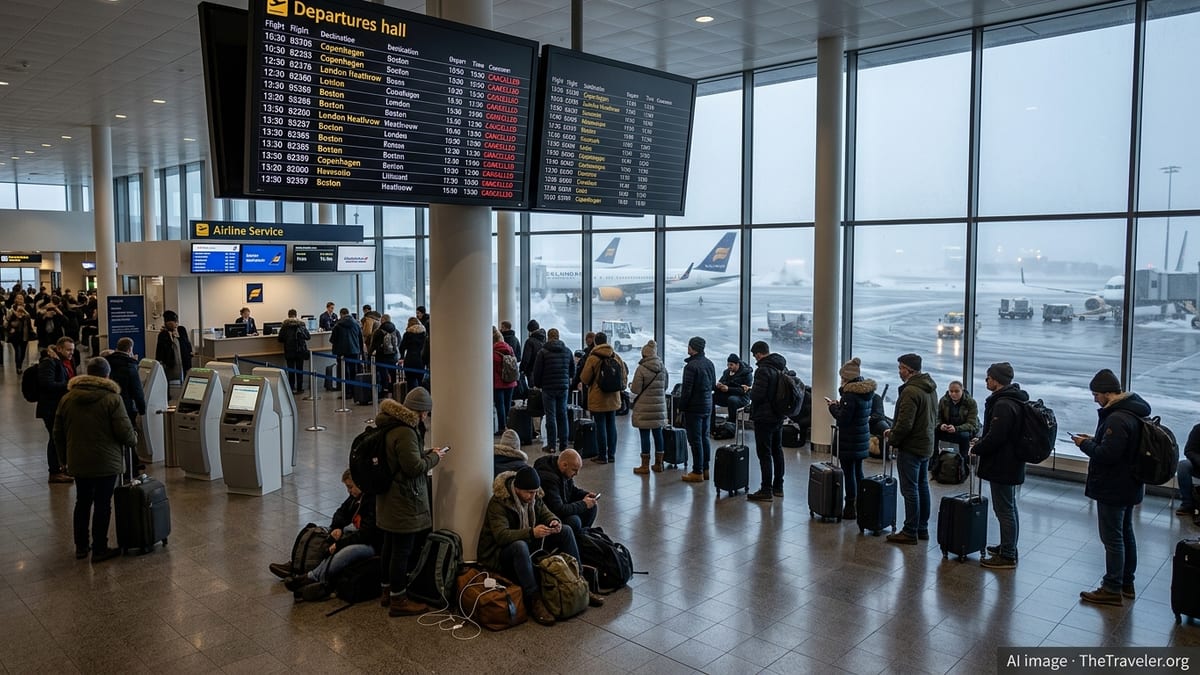
Storm System Brings Operations at Iceland’s Main Gateway to a Standstill
Keflavik International Airport, Iceland’s primary hub for international traffic, has faced significant disruption over recent days as powerful winds, blowing snow and poor visibility forced airlines to cancel or delay a large share of scheduled flights. Publicly available information from Icelandic media and aviation tracking platforms indicates that international departures and arrivals were heavily curtailed on March 20 and again around March 25 to 27, following escalating weather alerts from the national meteorological service.
The latest episode follows a pattern of increasingly frequent weather-related shutdowns at Keflavik during the late winter and early spring travel period. Online travel forums describe near “all flights cancelled” scenarios on several days, affecting services linking Iceland to major hubs in North America and Europe. Many passengers reported learning of cancellations or major delays only hours before departure, complicating efforts to rebook and reorganize onward connections.
Operational guidelines published for Keflavik highlight how sustained crosswinds, ground icing and rapidly deteriorating visibility can quickly push conditions beyond the limits set for safe takeoff and landing. While Iceland-based crews are widely regarded as experienced in flying in challenging weather, the combination of high winds and heavy precipitation this week left limited flexibility to maintain normal schedules.
Ripple Effects Across North America and Europe
The grounding of multiple flights in and out of Keflavik has had knock-on effects far beyond Iceland’s shores. As airlines cancelled transatlantic segments to Reykjavik, passengers at departure points such as Denver, Vancouver, Amsterdam and other European hubs reported last-minute notices and uncertain rebooking options. Social media and community travel boards show travelers scrambling to secure alternative routings via other European gateways or to shift plans by 24 hours or more.
Keflavik’s role as a key mid-Atlantic transfer point means disruptions can quickly become global. Many itineraries between North America and Europe rely on short connections through Iceland, using tightly timed banks of flights. When a weather system closes or severely restricts operations at the hub, entire waves of connecting passengers are left without their planned transits, often requiring multiple new bookings and, in some cases, overnight accommodation.
Reports from recent days indicate that some aircraft were able to depart during short weather windows, but often with far fewer passengers than scheduled, as many travelers could not safely reach the airport from Reykjavik and other parts of the country amid road closures and travel advisories. This pattern has intensified frustration for those who remained grounded despite their original flight technically operating, as tight ground transport timelines collided with rapidly changing aviation decisions.
Passenger Experience: Long Queues, Limited Information and Costly Workarounds
Accounts shared online by stranded passengers describe scenes of long queues at airline service desks, overloaded call centers and messaging channels, and confusion over entitlements to hotel stays or reimbursement for additional expenses. Several travelers report being repeatedly dropped from chat queues while seeking updates, or receiving generic notifications that rebooking efforts were “in progress” without clear new itineraries.
With hotel availability around Keflavik and in Reykjavik already tight during the busy northern lights season, same-day cancellations have left some visitors paying premium prices for last-minute rooms or facing the prospect of overnight stays at terminals. Others have chosen to purchase costly one-way tickets on alternative carriers from mainland Europe or North America to get home, hoping to recover at least part of the expense later.
Travel rights information widely circulated in European consumer guidance notes that compensation rules generally distinguish between cancellations caused by extraordinary circumstances, such as severe weather, and those stemming from airline-controlled issues like technical faults or staffing shortages. The current disruption appears largely weather-driven, meaning many passengers may be entitled to assistance with meals and accommodation but not to additional financial compensation for the interruption itself.
Airlines and Airport Adjust Schedules as Weather Pattern Evolves
Airlines using Keflavik have been adjusting schedules, consolidating flights and adding extra services where possible to move backlogged passengers as conditions allow. Public departure boards and flight-tracking data show periods of relative normality interspersed with blocks of cancellations, reflecting brief improvements and subsequent deteriorations in weather throughout the week.
Airport-level information indicates that general infrastructure at Keflavik has remained operational, with the main constraints tied to airfield conditions and safety margins rather than utility failures. This stands in contrast to earlier regional disruptions in recent years, when volcanic activity on the Reykjanes Peninsula caused short-lived concerns about power and heating supplies, although air traffic itself largely continued.
The latest weather episode comes as Keflavik prepares for a busy summer season, with airlines planning new seasonal routes to cities across North America and Europe. Recent scheduling information shows additional services due to begin in late spring 2026, underlining the airport’s importance as a growing hub even as it grapples with the realities of operating in a harsh North Atlantic climate.
What Travelers With Upcoming Flights Through Keflavik Should Know
For those planning to travel to or via Iceland in the coming days, publicly available advisories emphasize the need to monitor both flight status and local weather alerts closely. Conditions in Iceland can change rapidly, and a forecast of high winds or blowing snow for the Reykjanes and southwest coastal areas often signals potential disruption at Keflavik, particularly during morning and evening peak periods.
Travel experts and experienced visitors posting on public forums recommend building extra time into itineraries, avoiding extremely tight connections onward from Keflavik and considering flexible or changeable tickets when traveling during the tail end of winter. Travelers are also encouraged to ensure they have adequate travel insurance that specifically covers weather-related delays and extended stays if onward journeys are postponed.
In the short term, the expectation among aviation watchers is that flights will gradually resume as the current storm system weakens, but that residual delays and occasional cancellations may continue while airlines work through backlogs. With Iceland heading into a period of increased tourist arrivals in April and May, the latest Keflavik chaos serves as a reminder that spectacular winter landscapes and aurora viewing opportunities often come with a significant risk of disruption for global travelers.