

More news on this day
Severe late March weather and rapidly tightening safety restrictions have thrown Keflavik International Airport into turmoil, with multiple flights cancelled or heavily delayed and ripple effects spreading across Europe and North America.
Get the latest news straight to your inbox!
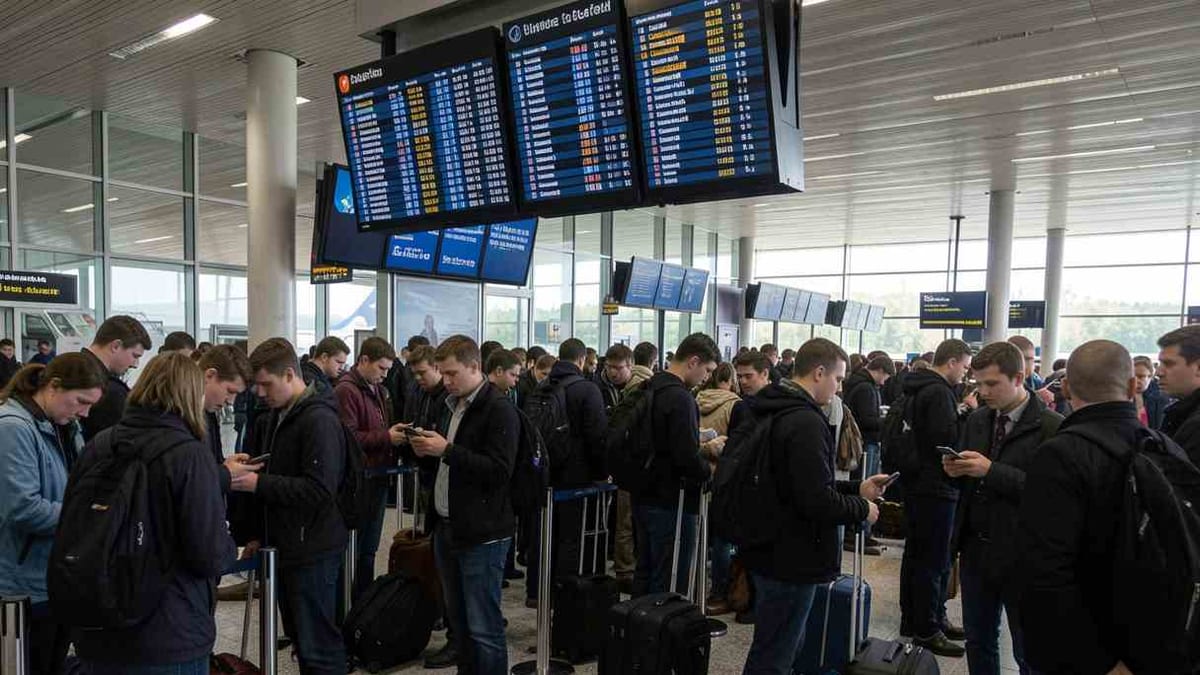
Image by Global Travel Alerts, Advisories, International Travel Alerts
Weather Alerts Converge With Operational Strain
Publicly available aviation and meteorological data for Iceland show that a powerful low pressure system has moved across the North Atlantic, bringing strong winds, low visibility and difficult ground conditions across much of the country. In the southwest, where Keflavik International Airport is located, orange level weather alerts have been in effect, with travelers reporting closed or hazardous roads between Reykjavik and the airport and rapidly changing forecasts.
Travel forums and social media posts from recent days describe a pattern of cascading delays followed by abrupt cancellations as wind speeds increased around the airport and road conditions worsened. Passengers recount departures repeatedly pushed back by an hour or more before airlines began cancelling services outright, particularly on transatlantic routes and late night departures.
Operational notices from Iceland’s aviation authorities show that Keflavik remains open as the country’s main international gateway, but ground operations have been constrained by safety protocols related to high winds and blowing snow. Under such conditions, aircraft turnarounds slow sharply, deicing demand spikes and runway use can be intermittently restricted, making it difficult for airlines to keep to schedule.
Recent air traffic statistics for Keflavik also suggest the airport has been operating close to capacity on peak days, even before the weather system arrived. When combined with staffing limits and heightened safety margins in winter conditions, this has left little room to absorb disruption, amplifying the impact of each cancellation on the wider network.
Multiple Airlines Cancel Flights As Disruption Spreads
According to live flight tracking boards and published coverage from European and North American media, airlines serving Keflavik have cancelled a broad mix of departures and arrivals, including services to major hubs such as London, Amsterdam, Copenhagen, New York and several regional European airports. Some carriers have temporarily suspended individual rotations for the day, while others have consolidated passengers onto fewer flights once conditions allow limited operations to resume.
Passenger accounts indicate that Iceland based carriers have been particularly visible in the disruption simply because they operate many of the transatlantic and European links that funnel through Keflavik. However, travelers also report cancellations and diversions involving foreign airlines that route through the airport, including services originating in mainland Europe and North America that were unable to safely reach Iceland during the worst of the storm.
Published industry data for March already highlight an elevated level of cancellations across the global network due to severe weather and geopolitical tensions. Analysts note that transatlantic routes using northern tracks are especially vulnerable when powerful North Atlantic storms coincide with tight crew scheduling, leaving airlines limited flexibility to reassign aircraft and staff once a day’s operation begins to unravel.
In this latest episode at Keflavik, some long haul flights have been delayed into the following day to avoid operating at the height of the storm, while a number of shorter European hops have been cancelled outright. Passengers on multi segment itineraries report missed connections, with some stranded overnight in Iceland or in intermediate hubs while airlines work through a backlog of rebookings.
Passengers Face Long Lines, Limited Information And Housing Crunch
Images and descriptions shared publicly from inside Keflavik in recent days describe crowded terminals, long queues at airline service desks and limited seating near departure gates. Travelers recount spending hours in line seeking rebooking options or clarity on whether flights would depart, as carriers waited for updated weather and operational assessments before finalizing their plans.
Several accounts note that passengers arriving from Reykjavik or further afield struggled to reach the airport at all during peak hours of the storm, as road closures and travel advisories came into force. Some have reported flights departing with unusually low passenger loads when roads reopened only shortly before new departure times, leaving those still en route unable to check in or clear security in time.
Accommodation near Keflavik and in the capital region has also come under pressure. Hotels and guesthouses close to the airport reportedly filled quickly as cancellations mounted, with late booking prices rising and some travelers resorting to airport benches or overnight seating areas while waiting for new flights. Others arranged last minute stays in Reykjavik and monitored conditions in the hope of reaching the airport for rebooked departures the following day.
Consumer advocacy information circulated online reminds affected passengers that compensation and care provisions depend heavily on the cause of disruption and the operating carrier. With weather cited as a primary factor in many of the Keflavik cancellations, travelers are being advised to review airline policies on meals, accommodation and alternative transport rather than assuming automatic eligibility for cash compensation.
Global Knock On Effects For Transatlantic And European Networks
The impact of the Keflavik turmoil has not been confined to Iceland. Flight tracking data and aviation analytics cited in international coverage show that cancellations and severe delays on a hub like Keflavik quickly ripple outward, disrupting aircraft rotations and crew schedules in multiple countries. Aircraft that were scheduled to operate onward legs from Iceland to North America or continental Europe have been held on the ground or repositioned, triggering further timetable changes.
Analysts point out that this disruption arrives amid an already fragile period for global aviation. Airlines are contending with elevated jet fuel costs and rerouted long haul services around conflict affected regions, leaving thinner buffers to cope with weather events. When a key North Atlantic waypoint like Keflavik experiences a concentrated burst of cancellations, carriers can struggle to restore normal operations within a single day.
Some travelers connecting through other European hubs have reported last minute aircraft swaps or gate changes as airlines attempt to realign their fleets after losing rotations to Iceland. In a few cases, passengers have been rebooked via entirely different routings that bypass Keflavik, lengthening travel times but allowing journeys to continue while Iceland deals with the immediate backlog.
Industry commentary suggests that schedule normalization could take several days, even after weather conditions at Keflavik improve. Aircraft and crews must be returned to their intended positions, and airlines must work through stranded passengers whose trips were interrupted. This recovery process can continue to generate isolated delays and overbooked flights long after the last weather alert has been lifted.
What Travelers Can Expect In The Coming Days
With forecasts indicating improving but still changeable conditions over the North Atlantic as March draws to a close, travel experts quoted in recent coverage recommend that passengers with upcoming flights to or from Keflavik build extra flexibility into their plans. This includes allowing more time to travel to the airport, monitoring airline notifications closely, and being prepared for schedule changes on short notice.
Airlines serving Iceland are encouraging customers to use digital tools for rebooking and flight status checks where possible, in order to ease pressure on airport service desks. Publicly available guidance from carriers and airports also stresses the importance of verifying that roads are open and conditions safe before setting out for early morning or late night departures, particularly from Reykjavik.
For those whose journeys are already disrupted, travel publications advise documenting delays, cancellations and additional expenses, such as hotel stays and meals, to support any later claims under airline policies or travel insurance. Passengers are also encouraged to consider alternative routings, including connecting through larger hubs that may have more capacity to absorb rebooked travelers once operations at Keflavik begin to stabilize.
While Keflavik has a long record of operating safely in severe weather, recent events underline how quickly conditions in Iceland can change and how strongly global air traffic now depends on a relatively small number of strategic hubs. As airlines work through the immediate chaos, attention is likely to focus on whether additional resilience measures, such as greater schedule buffers and more flexible crew deployment, can reduce the scale of future disruption when the next North Atlantic storm arrives.