

More news on this day
Severe late‑winter weather across Iceland in March 2026 has led to widespread disruption at Keflavik Airport, with multiple international and domestic flights grounded and travelers facing cascading delays and cancellations.
Get the latest news straight to your inbox!
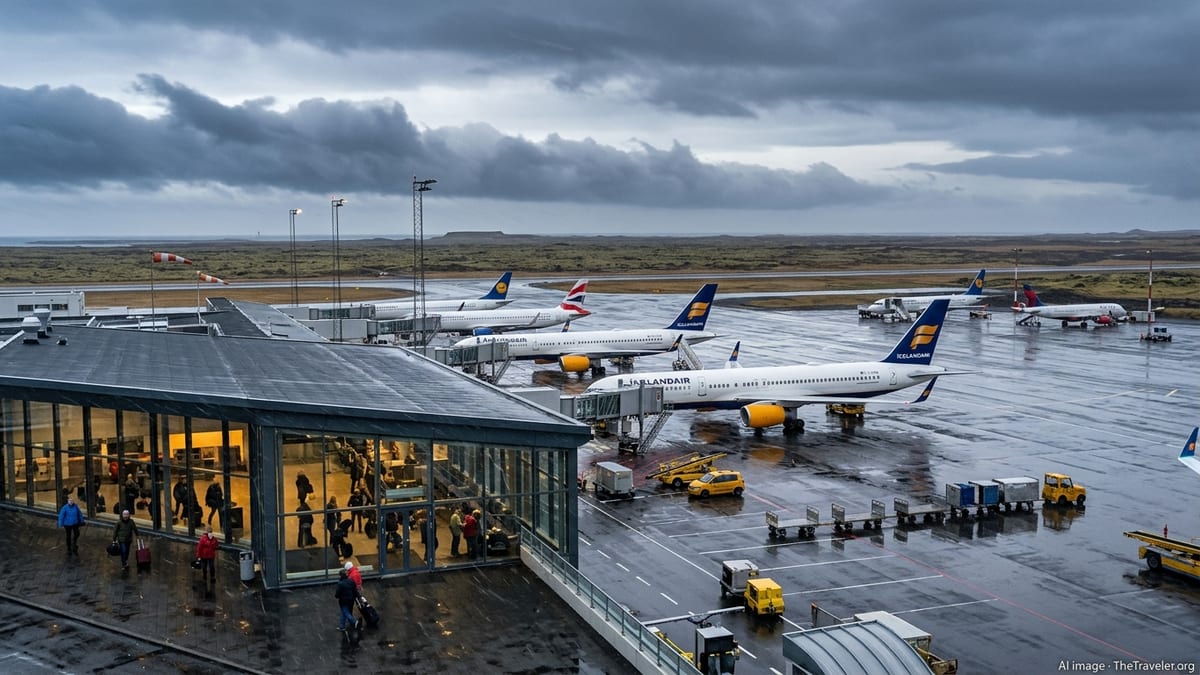
Weather Alerts Trigger Flight Cancellations and Delays
Publicly available forecasts and traveler reports indicate that a series of intense low‑pressure systems and strong winds have swept across Iceland through mid and late March, coinciding with heightened weather alerts from the Icelandic Meteorological Office. These conditions have affected both air operations at Keflavik Airport and road access along the Reykjanesbraut highway linking the capital region to the country’s main international gateway.
On several days, high winds and poor visibility led airlines to cancel or substantially delay departures to and from Keflavik, including long‑haul flights from North America and short‑haul services within Europe. Travellers have described last‑minute notifications of cancellations for morning departures, with follow‑up messages rescheduling flights into already crowded evening and next‑day waves.
Some passengers reported learning late in the evening that next‑day departures had been removed from the schedule entirely, while others were reassigned to complex multi‑stop routings through mainland Europe. In a number of cases, new itineraries were reportedly issued with misaligned connections, underscoring the strain on airline scheduling systems during the disruption period.
While airports in other parts of the North Atlantic region have also faced weather‑related disruption in March, the concentration of cancellations at Iceland’s primary hub has had an outsized impact, given Keflavik’s role as both a transatlantic transfer point and the main entry route for tourism.
Road Closures Compound Airport Access Problems
Travel discussion forums and local advisories highlight that the disruption has not been confined to aircraft movements. On particularly stormy days, Route 41 between Reykjavik and Keflavik has experienced temporary closures or severe travel advisories, effectively cutting off or restricting access to the airport during key morning hours.
Passengers with midday departures have described struggling to reach Keflavik in time after overnight or early‑morning road closures, even on flights that technically remained on the departure board. In some accounts, the reopening of the highway around early afternoon left a narrow window for travelers to clear security and reach gates, raising concerns that scheduled departures did not always reflect the practical constraints on ground access.
Publicly available guidance from Icelandic travel organizations routinely warns that strong winds, blowing snow, and ice can quickly change driving conditions on the Reykjanes Peninsula. The March storms have illustrated how even short‑duration road shutdowns can cause knock‑on delays for check‑in, baggage processing and boarding at Keflavik, contributing to missed flights and additional rebookings.
Travel planners note that this dynamic is particularly challenging for visitors unfamiliar with Icelandic winter driving, many of whom rely on rental cars or shuttle buses with fixed timetables that can be upended by rapidly changing alerts.
Passengers Report Patchy Communication and Limited Rebooking Options
Across social media and travel forums, visitors and Iceland residents alike have described a mixed experience in receiving timely information about the March disruptions. Some passengers report early warning emails or app notifications about cancellations, while others say they learned of changes only hours before departure or after arriving at the airport.
Several accounts describe situations in which flights were cancelled one evening, followed by reissued itineraries later that night or the next morning, sometimes routing travelers via alternate hubs such as Copenhagen, Amsterdam or London. In certain cases, travelers say new itineraries included connections that had already departed by the time the revised schedule reached them, creating confusion and requiring further contact with airline support channels.
Reports indicate that airline call centers and online chat services have been heavily loaded during peak disruption days, leading to long wait times. Some travelers have turned to in‑person ticket desks at Keflavik or at origin airports in North America and Europe, though those options themselves can become congested when several flights are cancelled in quick succession.
Consumer‑rights advisers point out that passengers affected by cancellations originating in or bound for Europe may have specific entitlements under applicable air‑passenger regulations, depending on the cause of the disruption and the timing of notifications. However, those frameworks are complex, and many travelers are only learning about potential compensation or reimbursement days after the initial interruption to their plans.
Operational Strain at Iceland’s Primary Aviation Hub
Industry background material shows that Keflavik Airport has long prepared for challenging winter operations, including procedures for de‑icing, crosswind landings and runway clearing. Historical analyses of Icelandic aviation have often noted that storms more commonly affect the ground side of travel, particularly road access and passenger logistics, than the core runway infrastructure itself.
The March 2026 disruptions, however, have combined several stress points at once: extended periods of high wind, bursts of heavy precipitation, and intermittent access along the main highway, all coinciding with a busy late‑winter travel period. Airlines using Keflavik as a transfer hub have had to juggle inbound and outbound waves in tight succession, where a delayed or cancelled feeder flight can quickly cascade into missed connections.
Publicly available planning documents from Nordic and European aviation bodies emphasize that Iceland’s air navigation service provider and airport operator have invested in systems to manage volcanic and winter weather challenges in recent years. Those efforts have typically focused on airspace management and contingency routing. The current weather‑driven disruption is highlighting the parallel need to maintain robust passenger‑handling capacity, clear communication channels and flexible staffing when multiple flights are grounded at short notice.
For carriers that rely on Keflavik as a transatlantic bridge, operational resilience at the airport is directly linked to their ability to offer competitive connecting itineraries between North America and Europe. Extended periods of irregular operations can therefore carry both immediate and longer‑term commercial implications.
Advice for Travelers Heading to or Through Iceland
Travel specialists monitoring March’s events are recommending that passengers with upcoming flights to or through Keflavik build in additional flexibility over the coming weeks, while late‑season storms remain a possibility. Public guidance commonly includes monitoring weather alerts from the Icelandic Meteorological Office, checking for road advisories on the Reykjanes Peninsula, and allowing extra travel time from Reykjavik or other departure points to the airport.
Many airlines operating at Keflavik encourage passengers to use mobile apps or online accounts to track real‑time flight status and to manage rebooking in case of disruption. Travelers who have booked via third‑party agencies may need to coordinate both with the airline and their agency to adjust itineraries, particularly for multi‑segment trips that involve separate tickets.
Travel forums also suggest that visitors consider spending their final night in Iceland closer to Keflavik rather than in more remote regions during periods of elevated weather risk. This can reduce the likelihood that sudden road closures or deteriorating driving conditions will prevent them from reaching the airport in time, even if flights ultimately depart as scheduled.
With tourism remaining a vital part of Iceland’s economy, publicly available commentary from the travel sector underscores the expectation that weather‑related disruption at Keflavik will continue to be managed as a recurring operational challenge. The March 2026 events are providing a fresh test of how airlines, airport services and ground transport can adapt when multiple flights are grounded across the country’s primary international gateway.