

More news on this day
Kelowna International Airport is rolling out a coordinated set of planning tools, operational tweaks and passenger guidance ahead of one of its busiest spring break seasons on record, aiming to keep crowds moving and stress levels down as more than 140,000 travelers pass through its terminal in March.
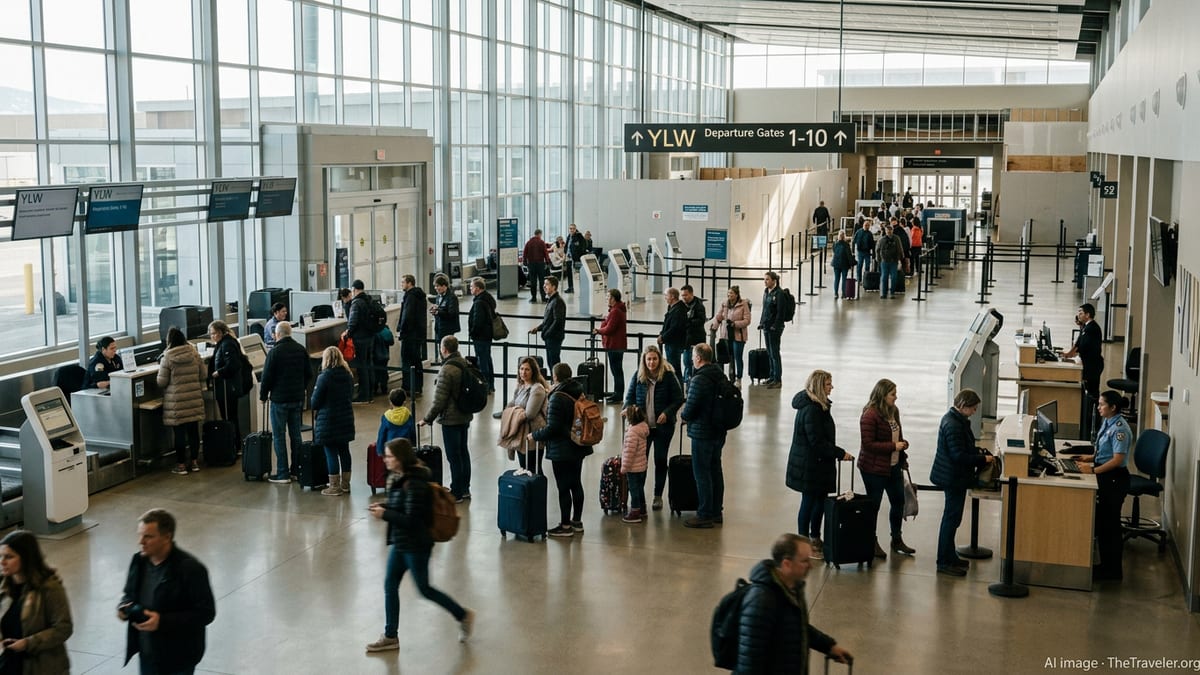
Record Spring Break Volumes Drive New Planning Focus
Kelowna International Airport is preparing for a sharp surge in traffic between March 12 and 29, when more than 140,000 passengers are expected to use the terminal during the Okanagan region’s peak spring break period. The forecast marks another step up from last year’s holiday volumes and follows a record 2.3 million passengers in 2025, underscoring how quickly demand has rebounded at the British Columbia gateway.
Airport and city officials say the spring rush is no longer a short, concentrated week but a multi-week pattern of family trips, student travel and leisure getaways. That longer peak has prompted YLW, which is owned and operated by the City of Kelowna, to frame spring break as a strategic planning challenge as much as an operational one. The airport’s latest protocols emphasize giving passengers better information before they arrive, to smooth pressure points inside the terminal.
The stress-reduction approach is being introduced as construction and expansion work continues across the airport campus. While the physical growth will add capacity over the longer term, managers are leaning on technology, data and targeted communication to relieve congestion in the near term for this year’s holiday crowds.
Real-Time Data and Digital Tools at the Core of Protocols
At the heart of the airport’s spring break strategy is a suite of digital tools designed to help travelers plan their journey from home. The airport is highlighting an online hub that publishes anticipated passenger volumes by day, peak travel windows by hour and real-time parking lot capacity, helping passengers decide when to leave and where to park before they even set out.
Security wait time information is also being pushed more prominently in the run-up to the break. By checking current screening queues and aligning arrival times accordingly, passengers are encouraged to build in extra time when data shows pressure will be highest, particularly in the early morning departure bank. Airport officials say the goal is to flatten the peaks that strain queues and seating areas.
Kelowna International is also urging travelers to complete as many pre-flight tasks as possible online, including check in, fee payments and verification of travel documents. By shifting those steps away from the check-in hall, the airport hopes to shorten counter lines and keep more space available for passengers who need in-person assistance, such as those with oversized baggage or complex itineraries.
Operational Adjustments Target Early-Morning Congestion
Behind the scenes, YLW has been adjusting staffing and processes around its busiest departure waves, when multiple narrow-body flights can be scheduled within a tight window. The airport has staggered shift start times and redeployed staff to concentrate on security screening, passenger flow and wayfinding support in the first hours of the day, when family groups and leisure travelers often arrive in large numbers.
Those adjustments build on lessons from both winter holiday and previous spring break periods, when lines occasionally backed up through the compact terminal. With construction underway on terminal expansion, maintaining throughput in the existing footprint is a key objective. Managers say that subtle changes such as repositioning self-serve kiosks, fine-tuning queue layouts and increasing on-floor staff presence during crunch times can significantly reduce perceived stress for travelers.
Aircraft movements and gate utilization are also being monitored closely, with airport operations teams coordinating with airlines and ground handlers to turn planes efficiently and avoid avoidable delays. While flight schedules are determined by carriers, the airport’s role in keeping airside processes tight is central to ensuring that bottlenecks at gates do not cascade back into the departure hall.
Parking, Ground Access and Family-Friendly Messaging
Parking supply and curbside access are another focus of the spring break protocols. With long-term parking expected to be near or at capacity during much of the period, the airport is urging passengers to consider alternatives such as being dropped off by friends or family, booking taxis or ride-hailing services, or using regional shuttles and public transit. Real-time parking updates are being paired with this messaging so drivers can quickly adjust if lots begin to fill.
For families in particular, officials are encouraging travelers to treat ground access as part of the overall journey plan, not a last-minute detail. The airport suggests that parents traveling with children give themselves extra time to unload strollers, car seats and luggage at the curb and to navigate check-in and security at a more relaxed pace. Inside the terminal, wayfinding signage and staff assistance points have been reviewed with family groups and mobility-limited travelers in mind.
The airport’s upcoming Spring Travel Show and family open house, scheduled on the YLW campus in mid-March, is also being used as a platform to share planning tips with local residents. Visitors will be able to see behind-the-scenes operations, speak with airport firefighters and learn more about how the airport prepares for high-volume periods, reinforcing the message that smooth travel is a shared responsibility between operators and passengers.
New Terminal Capacity and Long-Term Passenger Experience Goals
The spring break protocols are unfolding against a backdrop of significant infrastructure investment at Kelowna International. A new terminal expansion program and the recent opening of key facilities on the airport campus are intended to relieve long-term capacity constraints that have made busy periods feel more crowded for travelers.
City officials describe the work as part of a broader effort to build municipal advantage through targeted capital spending and operational efficiency. By combining hard infrastructure with smarter use of data and clearer communication, they aim to maintain a high level of service even as passenger totals rise. For spring break in particular, this means ensuring that additional gates, hold rooms and processing areas can be brought online in step with demand.
In the near term, airport leaders are framing this year’s spring break as an early test of both the new infrastructure and the refined planning protocols. Feedback gathered from passengers and front-line staff in late March and early April will be fed into future adjustments, as YLW positions itself for continued growth and an increasingly extended peak travel season.
For travelers, the message from Kelowna International this spring is straightforward: plan ahead with the airport’s online tools, arrive early for busy departure windows and use flexible ground transport options. In return, the airport is promising a better-managed, less stressful experience as it balances rapid growth with a renewed focus on passenger well-being.