

More news on this day
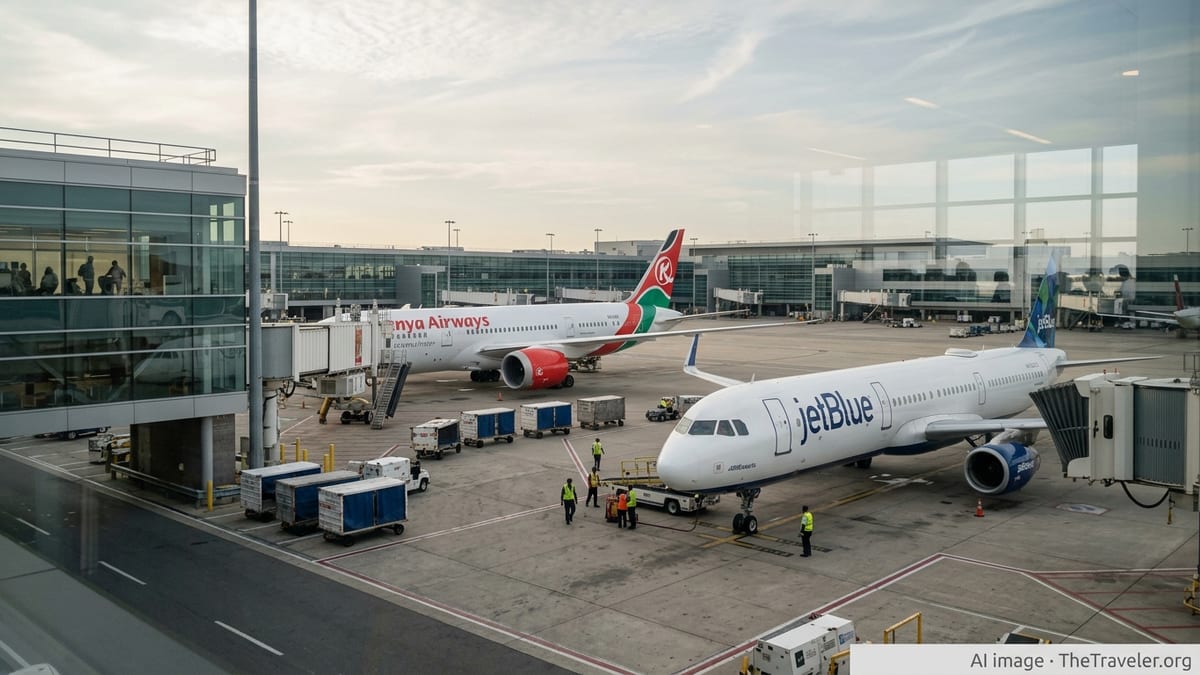
A planned codeshare between Kenya Airways and JetBlue is poised to create a smoother path between East Africa and the United States, aligning two network strategies that increasingly rely on partnerships to drive long-haul connectivity and capture growing demand for both business and leisure travel.
Get the latest news straight to your inbox!
A New Transatlantic Bridge for East African Travelers
The proposed Kenya Airways–JetBlue codeshare would give East African travelers a fresh one-ticket option into the United States by linking Kenya Airways’ Nairobi hub with JetBlue’s extensive domestic network. Publicly available information on recent Kenya Airways alliance activity shows that the carrier has leaned heavily on partnership-driven growth in North America and beyond, and a tie-up with JetBlue would extend that strategy to additional U.S. gateways.
Such an agreement would likely see Kenya Airways place its code on JetBlue-operated routes from key U.S. entry points, giving passengers from Nairobi and other East African cities the ability to connect onward to secondary American markets on a single itinerary. In practice, this would mirror existing codeshare patterns the airline has established with other partners, where long-haul African flights feed into short and medium haul services operated by a local carrier.
JetBlue, which has built its brand around customer-friendly service and dense coverage in the eastern United States, would in turn gain virtual access to Kenya Airways’ regional network across East and Central Africa. That would give U.S.-based travelers more options to reach destinations such as Entebbe, Kilimanjaro or Zanzibar through a single booking that combines both airlines’ strengths.
Building on a Growing Web of Partnerships
Recent press material from Kenya Airways highlights a clear pattern: the carrier is using codeshare and interline partnerships to expand its global footprint without adding large numbers of new long-haul aircraft. Agreements with European, Middle Eastern, Asian and African airlines have already opened new routings into Europe, Asia, India and South America, with passengers benefiting from single-ticket itineraries and coordinated schedules across partner networks.
In North America, published coverage shows that Kenya Airways has already worked with other carriers to extend its reach beyond its own nonstop to New York. A Kenya Airways–JetBlue codeshare would slot into this wider portfolio of alliances, giving the Nairobi-based airline another way to distribute its long-haul services into additional U.S. cities while maintaining flexibility over where and how it deploys its own fleet.
For JetBlue, a deeper relationship with an African flag carrier would complement its existing transatlantic initiatives and partnerships. Rather than operating its own services into East Africa, the U.S. airline could rely on Kenya Airways to provide the long-haul segment while it focuses on high-frequency domestic and short-haul international routes, especially along the East Coast and in focus cities such as Boston and New York.
Seamless Journeys and Competitive Pressures
From a traveler’s perspective, the most immediate impact of a Kenya Airways–JetBlue codeshare would be greater simplicity. Codeshare arrangements typically enable customers to check in once, tag baggage through to the final destination and rely on coordinated minimum connection times at transfer airports. For passengers flying from Nairobi or regional East African cities, that can turn what used to be complex multi-ticket journeys into a single, streamlined booking.
The move would also respond to intensifying competition in the Africa–U.S. market. Large Gulf and European carriers have long dominated flows between East Africa and North America by funnelling passengers through their hubs. As Kenya Airways adds more partners and potential new gateways in the United States, it reduces the need for travelers to backtrack through third-country hubs, which can shorten overall journey times and make African carriers more competitive on both price and convenience.
JetBlue would benefit from incremental traffic feeding into its domestic network, particularly from high-yield corporate and diaspora markets with ties to East Africa. Additional passenger flows on connecting services can improve aircraft utilization and help support new routes or frequencies that may have been marginal without long-haul feed.
Strategic Significance for Nairobi and U.S. Gateways
A Kenya Airways–JetBlue codeshare would reinforce Nairobi’s position as a regional gateway, with Jomo Kenyatta International Airport serving as the primary African hub feeding into U.S. entry points. Publicly available data on passenger flows suggests that Nairobi already plays a key connecting role between landlocked neighbors and long-haul routes; stronger integration with a U.S. carrier network would deepen that role and could help justify further investment in airport infrastructure, lounges and ground services.
On the U.S. side, likely gateway airports would stand to gain from increased passenger volumes on both international arrivals and domestic departures. Additional codeshare traffic can support more robust schedules, improve load factors across off-peak periods and enhance the business case for airport upgrades aimed at international travelers, including improved transit facilities and expanded customs processing capacity.
The partnership would also carry symbolic weight. For East African tourism boards and business communities, a branded connection into multiple U.S. cities on a single itinerary can be a powerful tool in marketing campaigns. It makes destinations across Kenya, Tanzania, Uganda and neighboring countries more visible and accessible to U.S. travelers who may previously have perceived them as complicated or time consuming to reach.
Loyalty, Fares and Traveler Experience
Frequent flyer program integration is likely to be a key area of focus if the codeshare proceeds. Many of Kenya Airways’ recent partnerships have included reciprocal mileage earning and redemption, along with status recognition across carriers. Extending such benefits to JetBlue-operated segments would give East African travelers additional reasons to concentrate their spending within a single alliance framework and could make complex, multi-city itineraries more attractive.
Fares on codeshare routes are typically structured to balance competitiveness with the added value of convenience. While some journeys may remain cheaper when booked as separate tickets on unaligned carriers, the protection and through-checking that comes with a single itinerary often justifies a modest premium for time-sensitive or risk-averse travelers. Analysts expect any Kenya Airways–JetBlue arrangement to follow this pattern, with promotional pricing likely used to stimulate demand in the early stages.
Service standards will also come under closer scrutiny as the two airlines work to present a cohesive experience. Coordination on schedule planning, onboard product positioning and customer support is central to successful codeshares. Travelers can therefore expect efforts to align key elements such as connection windows, handling of irregular operations and digital tools that allow itineraries involving both carriers to be managed seamlessly through web and mobile channels.