

More news on this day
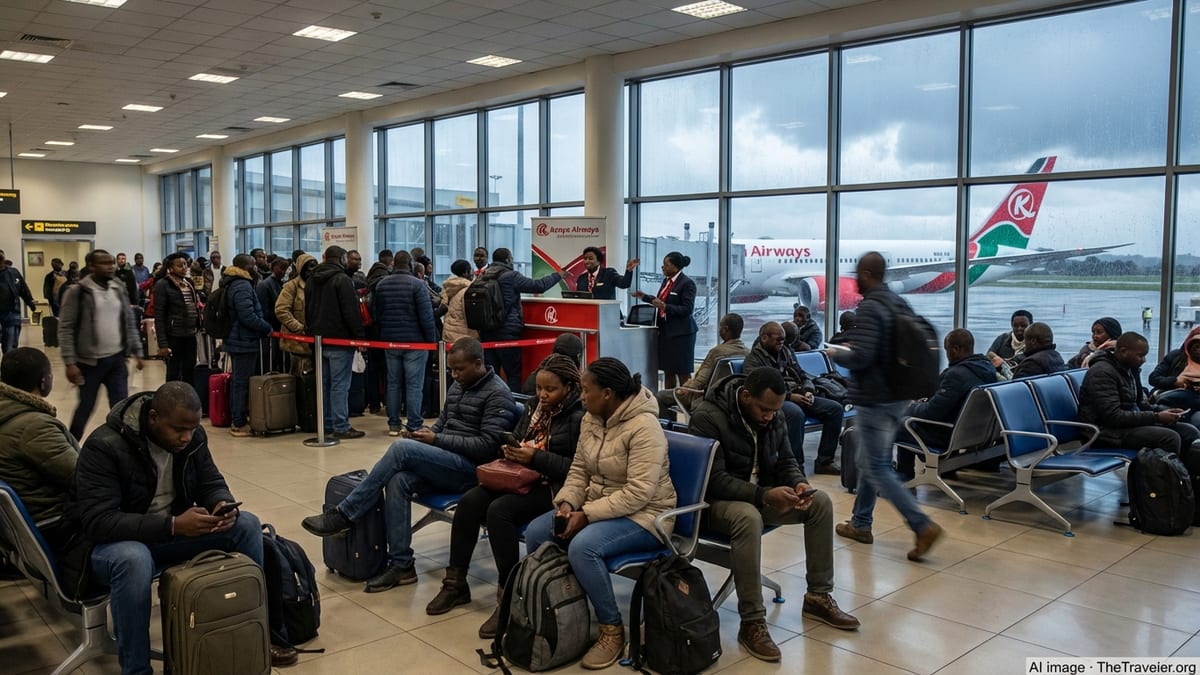
Hundreds of travelers were left scrambling for answers this weekend after Kenya Airways abruptly suspended key flights between Nairobi and New York, citing a severe winter storm in the United States and triggering a wave of missed connections, unplanned hotel stays and mounting frustration.
Blizzard Warning Halts Kenya Airways’ Nairobi–New York Link
Kenya Airways confirmed on Sunday that flights KQ 002 from Nairobi to New York scheduled for February 22, 2026, and KQ 003 from New York to Nairobi on February 23 have been suspended after authorities at John F. Kennedy International Airport halted operations during a powerful blizzard. The decision came as heavy snowfall, high winds and low visibility swept across the U.S. Northeast, forcing airlines across the region to ground aircraft and reshuffle schedules.
The carrier said the affected services are now expected to resume on February 24 and 25 once conditions improve, but the short notice left many passengers in limbo. Travelers who had already checked in or were en route to the airport suddenly found their plans upended, with limited clarity about rebooking options and onward connections.
While weather-related disruptions are common during the North American winter, the suspension highlighted the vulnerability of Kenya’s flagship long-haul route to external shocks at a time when the airline is still managing fleet constraints and a fragile financial recovery.
Airport officials in New York and Nairobi have urged passengers to stay away from terminals unless they have confirmed departure times, warning that ground handling teams are already stretched by diversions, aircraft repositioning and a backlog of delayed flights.
Travelers Report Confusion, Additional Costs and Patchy Support
Across Jomo Kenyatta International Airport in Nairobi and at JFK in New York, passengers described being caught off guard by the cancellations and struggling to secure timely information on their options. Many had booked complex itineraries involving onward connections to Europe, North America and regional African destinations, and now face multi-day delays in reaching their final stops.
Some travelers reported queuing for hours at customer service desks, only to be told to await further updates via email or text. Others said they were directed to contact call centers already overwhelmed by the volume of inquiries related to the storm. With hotel rooms near major hubs quickly filling up, stranded passengers complained of rising accommodation and meal costs and confusion over what expenses the airline would cover.
Families traveling with children and elderly relatives spoke of the added stress of finding accessible lodging and arranging last-minute changes to visas, ground transport and travel insurance. For some visitors whose U.S. stays were tightly scheduled, the lost days mean missed business meetings, medical appointments and reunions.
Consumer advocates say the episode underscores ongoing gaps in how disruptions on intercontinental routes are communicated and managed, especially when delays originate from weather or air traffic control restrictions rather than airline-controlled technical faults.
Operational Strains Add Pressure to Weather Shock
The timing of the suspension comes as Kenya Airways continues to grapple with broader operational challenges on its long-haul network. The airline has been contending with a shortage of available Boeing 787 aircraft due to prolonged engine maintenance and global supply chain bottlenecks, which have already forced route adjustments and capacity cuts across Europe, Asia and North America.
Industry briefings over the past year have detailed how up to a third of the carrier’s Dreamliner fleet has at times been grounded for overhauls, leaving limited flexibility to absorb sudden schedule changes or to add backup aircraft when disruption strikes. Executives have warned that the cost of engine maintenance and the tight availability of spare parts have weighed on both reliability and financial performance.
Against this backdrop, the Nairobi–New York corridor is strategically important. It is one of Kenya Airways’ flagship intercontinental services, linking East Africa’s main hub to a major global financial center and feeding both tourism and business traffic in and out of the region. Any extended interruption has outsized implications for revenue, connectivity and brand reputation.
Aviation analysts note that when severe weather forces a shutdown at a key destination such as New York, airlines with thin long-haul fleets and tight schedules face tougher trade-offs. Reaccommodating passengers on alternative services or partner carriers is more complex, and recovery can take longer even after skies clear and airports reopen.
Recent History of Cancellations Highlights Route Vulnerability
The latest disruption is not the first time in recent months that Kenya Airways has been forced to halt its U.S. service due to extreme winter weather. In late January, the airline cancelled Nairobi–New York flights on consecutive days after snowstorms swept across parts of the United States, citing safety concerns for passengers and crew.
Those earlier cancellations stranded travelers at both ends of the route and foreshadowed the challenges now unfolding as another major storm system affects the Northeast. For regular passengers on KQ’s transatlantic service, the pattern of weather-related breaks in service has reinforced the sense that plans during peak winter travel periods carry extra risk.
Kenya Airways has emphasized that safety remains its top priority and that it is coordinating closely with airport and aviation authorities in the United States and Kenya to manage disruptions. However, frequent fliers and travel agents say the repetitions point to the need for more robust contingency planning, including clearer rebooking policies, stronger collaboration with partner airlines and more transparent real-time communication channels.
The airline’s experience also reflects a broader trend across global aviation, as carriers confront more frequent episodes of severe weather, from snowstorms and heatwaves to heavy rainfall and flooding, which can quickly cascade into large-scale schedule upheavals.
Domestic and Regional Disruptions Fuel Passenger Frustration
Kenya Airways’ difficulties are not confined to its intercontinental routes. The carrier has previously cancelled clusters of domestic flights, including services between Nairobi and key regional airports such as Kisumu, Eldoret and Ukunda, when heavy rains and poor visibility rendered operations unsafe. These disruptions have stranded passengers within Kenya and prompted criticism from local travelers and tourism operators who depend on reliable links to coastal and upcountry destinations.
While aviation authorities and meteorological agencies often issue advance alerts for severe weather, the speed and intensity of storms can still catch passengers off guard, especially on leisure routes where travelers may be less familiar with the potential for operational shutdowns. For holidaymakers and business travelers alike, the resulting delays can mean missed tours, hotel nights and meetings, with limited recourse beyond travel insurance claims.
Regional flight suspensions also ripple through the broader East African travel ecosystem. Kenya serves as a vital transit hub for neighboring countries, and cancellations on domestic links can disrupt onward journeys for international visitors connecting through Nairobi. As a result, interruptions on short-haul routes can erode confidence in the reliability of the wider network.
Tourism stakeholders say better coordination between airlines, airports, hotels and ground transport providers is needed to ensure that when domestic services are grounded, stranded passengers can access timely assistance, clear information and at least basic accommodation support where possible.
Airport Strikes and Labor Disputes Compound Chaos
Adding to the sense of volatility, operations at Nairobi’s main airport were disrupted earlier this month by a workers’ strike that led to extensive delays and left thousands of passengers waiting for flights. The industrial action, driven by demands for improved pay and working conditions, affected both domestic and international services and underscored how non-weather factors can also paralyze travel at short notice.
The stoppage lasted two days before union leaders and the transport ministry reached a return-to-work agreement. During that period, airlines cautioned passengers to rebook or delay trips, and many found themselves camping in terminal halls or nearby hotels as departures slid by several hours or were cancelled outright.
Kenya Airways said it worked to normalize its schedule as soon as operations resumed, but the episode illustrated the fragile balance between airlines, airport authorities and labor groups in a sector still recovering from the financial scars of the pandemic and subsequent economic headwinds. For travelers, the combination of potential strikes, weather shocks and aircraft shortages adds new layers of uncertainty to long-planned journeys.
Industry observers warn that similar labor tensions have emerged at airports around the world, as workers push for better conditions in a high-pressure environment that has seen workloads intensify while airlines and airport operators push to keep costs under control.
What Stranded Passengers Can Do Right Now
For travelers affected by the latest Kenya Airways suspensions, the immediate priority is obtaining accurate, up-to-date information about their bookings. Passenger advocates urge customers not to proceed to the airport without a confirmed new departure time, since terminals can quickly become overcrowded during disruption and on-the-spot options may be limited.
Airlines typically offer rebooking on the next available flight in the same cabin or provide alternative routing where seats are available, though options on long-haul routes can be constrained when weather disrupts multiple carriers at once. Some passengers may be eligible for refunds if they choose to cancel their trips entirely, particularly where delays extend beyond a set number of hours or where outbound travel has become impossible due to visa or schedule constraints.
Travelers are also encouraged to document additional expenses such as hotel stays, meals and ground transport, keeping receipts in case their airline or travel insurer will reimburse some costs. Policies differ widely, especially when delays result from extreme weather rather than a technical issue under airline control, so reading the fine print of both ticket conditions and insurance coverage is essential.
Experts advise that those with flexible schedules consider postponing non-essential trips during major storms or when authorities issue severe weather alerts for key hubs, particularly in winter-prone regions. For those who must travel, booking through agents or platforms that can provide 24-hour support may offer an extra layer of protection when plans unravel.
Calls Grow for Stronger Passenger Protections and Climate Resilience
The latest Kenya Airways disruptions have reignited debate over how well current regulations and airline policies protect travelers when flights are grounded by events outside carriers’ direct control. While most jurisdictions treat severe weather as an exceptional circumstance that limits cash compensation obligations, consumer groups argue that clearer minimum standards for communication, care and rebooking are needed, especially on long-haul journeys that can leave travelers stranded far from home.
In parallel, aviation analysts say the industry must accelerate efforts to adapt to more frequent and intense climate-related weather events. That includes investing in more resilient schedules, enhancing forecasting and decision-support tools, and ensuring that fleets and airport infrastructure can better withstand extreme conditions without sacrificing safety.
Kenya Airways has in recent years promoted fuel efficiency and sustainability initiatives as part of its long-term strategy, but the growing incidence of weather-related disruptions shows how climate pressures are already affecting day-to-day operations and passenger experience. For travelers relying on the carrier’s extensive African and intercontinental network, the challenge is to reconcile the allure of global mobility with the reality of a more volatile atmosphere.
As operations on the Nairobi–New York route tentatively resume following the latest blizzard, many stranded passengers will finally reach their destinations days later than planned. Yet the questions raised by this episode, about resilience, accountability and traveler rights, are likely to linger long after the snow has melted.