

More news on this day
Kenya is moving to the heart of Africa’s cruise and safari market with a headline 30 percent cruise tourism discount for the 2026 season, positioning itself alongside Tanzania, South Africa, Botswana and other regional heavyweights that are deploying aggressive price incentives to lure high‑value visitors and unlock new tourism revenue streams.
Get the latest news straight to your inbox!
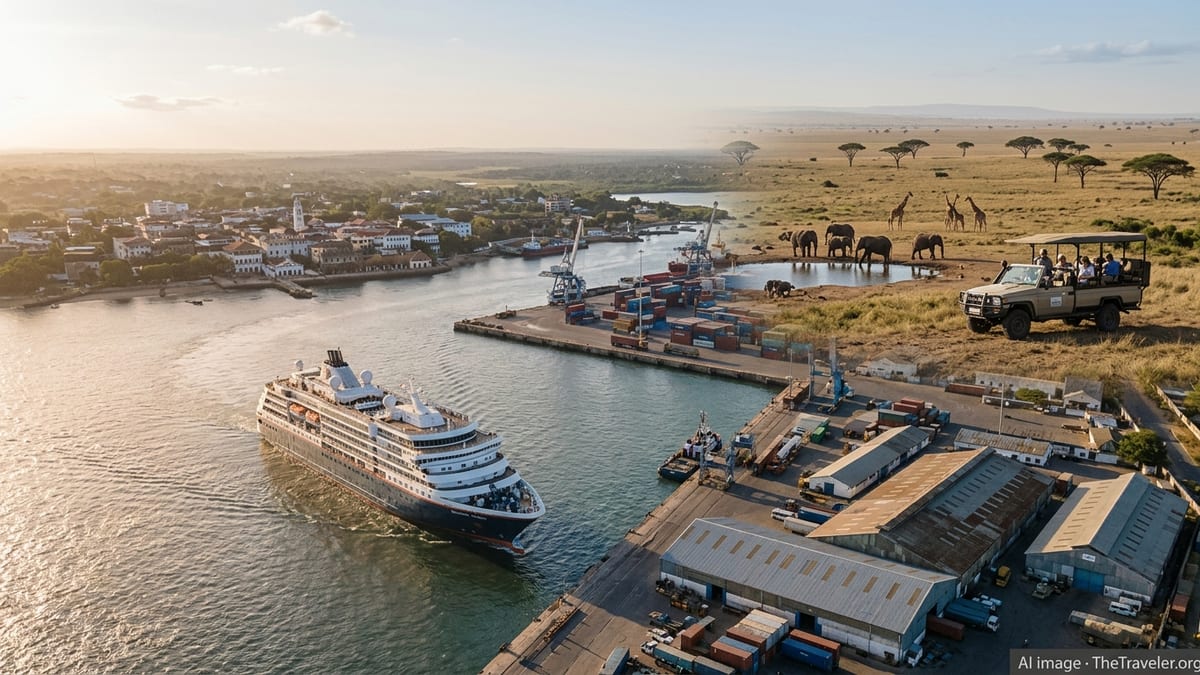
Africa’s Safari Powerhouses Pivot to Cruise Discounts
Across Africa’s established safari destinations, pricing strategies for 2026 are shifting toward coordinated discounts and bundled offers that directly target cruise passengers. Publicly available information on regional tourism campaigns shows that South Africa, Tanzania and Botswana are using headline savings of up to 30 percent on selected cruise or cruise‑linked itineraries, especially where ocean voyages are combined with short‑stay wildlife experiences in national parks and private reserves. These headline percentages are typically applied as limited‑time promotional discounts, early‑booking incentives or bundled package reductions rather than blanket fare cuts across entire cruise seasons.
Reports from tour operators and booking platforms indicate a growing pipeline of 2026 Africa programs that link port calls with safari extensions in destinations such as Kruger National Park in South Africa, the Okavango Delta and Chobe region in Botswana, and Serengeti and Ngorongoro in Tanzania. In many cases, cruise passengers are being offered 20 to 35 percent savings if they commit to both the voyage and an attached overland safari component, effectively turning ships into feeders for inland wildlife circuits.
Kenya’s decision to match this 30 percent benchmark on cruise‑related tourism spend is emerging against this backdrop of regional competition. While specific implementation details differ by country, the overall trend is clear: African safari leaders are increasingly using substantial, time‑bound discounts to shape traveler behavior, steer visitors toward shoulder seasons and encourage longer, higher‑value itineraries that combine coast, culture and wildlife.
Industry analyses tracking safari demand into 2026 suggest that interest in multi‑country and multi‑mode journeys is rising, particularly among travelers from the United States, United Kingdom, Australia and Canada. For these long‑haul markets, a transparent percentage discount can be a decisive factor when choosing between rival itineraries in East and Southern Africa.
Kenya’s Plan to Turn Cruise Arrivals into Safari Gateways
Kenya’s emerging 30 percent cruise discount initiative builds on several years of investment in coastal and cruise infrastructure, including the development of the Mombasa Cruise Terminal and a broader push to market the country as both a beach and safari destination. Publicly available coverage of Kenya’s tourism strategy highlights cruise tourism as a priority growth segment, with authorities seeking to use port calls at Mombasa and potential future calls at Lamu to funnel visitors into iconic wildlife areas such as the Maasai Mara, Amboseli and Tsavo.
Under the 2026 discount framework, the 30 percent reduction is expected to apply to selected cruise‑linked tourism services rather than to port fees alone. This may include discounted rates on shore excursions, bundled cruise‑and‑safari packages sold through tour operators, and temporary reductions on park‑adjacent accommodation for passengers booked on registered voyages. The structure is designed to make it easier for cruise guests to add at least two to four nights on safari, turning a brief coastal stop into a higher‑spend, multi‑day stay within Kenya’s protected areas.
Available budget and policy documents suggest that Kenya’s tourism planners are integrating the cruise discount with existing incentive schemes, such as duty exemptions on tourism vehicles and boats, and targeted promotional funding for new products. By aligning fiscal support with a clear percentage saving for consumers, Kenya is aiming to create a simpler value proposition for both international cruise lines and ground operators.
Kenya’s 30 percent positioning also sends a signal to the global travel trade that the country is prepared to compete directly with neighboring destinations that already headline aggressive cruise and safari offers. For cruise lines planning 2026 and 2027 deployments, predictable discounts on shore‑side services can strengthen the case for adding more Kenyan calls to Eastern Africa itineraries.
Regional Competition and Collaboration Along Africa’s Coasts
Tanzania, South Africa and Botswana are widely viewed as early movers in pairing cruise travel with discounted safari products. In Southern Africa, published itineraries for 2026 already show bundled savings that reduce the cost of combining Cape Town, the Garden Route or Durban with short stays near Kruger National Park or private reserves. In Botswana, operators are promoting percentage‑based discounts on select departures and honeymoon stays that can be attached to river or lake cruise segments, particularly where routes connect to Victoria Falls and Chobe.
On the East African coast, travel trade materials show Tanzania operators highlighting combined offers that link Indian Ocean cruise calls with access to Zanzibar, the Serengeti and Ngorongoro, often with early‑booking or shoulder‑season reductions in the 20 to 30 percent range. These discounts are frequently limited to a specific travel window but are heavily marketed to agents and consumers as a way to secure a higher‑end safari at a mid‑range price point.
Kenya’s entry into this discount‑driven space introduces both competition and potential collaboration. Regional tourism boards have increasingly explored cross‑border marketing under multi‑country themes that package Kenya and Tanzania, or South Africa and Botswana, into single, seamless journeys. A standardized 30 percent benchmark for cruise‑linked promotions could make it easier to present such combined trips to the global market, with each country contributing its own version of the incentive while maintaining control over eligibility and scope.
Observers of African tourism policy note that coordinated discounting also carries risks if it triggers a race to the bottom on pricing. To mitigate this, several countries are pairing their percentage offers with parallel investments in infrastructure, conservation funding mechanisms and quality standards. The goal is to ensure that lower headline prices do not undermine the financial sustainability of wildlife areas that depend on tourism revenue for protection and management.
What the 30% Discount Means for Travelers
For international travelers, a clearly advertised 30 percent cruise‑linked discount in Kenya can translate into meaningful savings, especially when combined with early‑bird pricing and longer itineraries. Sample safari packages marketed for 2026 across East and Southern Africa suggest that a typical nine to twelve day mid‑range safari can run into several thousands of dollars per person before flights. Applying a 30 percent reduction to eligible land arrangements or excursion components can free up budget for upgraded lodges, additional game drives or extra nights on the coast.
Travel planners and safari specialists note that such discounts are rarely applied uniformly. Instead, they are often limited to specific travel periods, selected camps or cabins, and particular cruise departures. Travelers considering Kenya’s 2026 offer are therefore advised, according to industry guidance, to pay close attention to blackout dates, minimum‑stay requirements and whether internal flights, park fees and transfers are included in the discounted portion. A 30 percent saving on accommodation alone will have a different impact than the same percentage applied to an all‑inclusive cruise‑and‑safari bundle.
The alignment of Kenya’s incentives with those in Tanzania, South Africa and Botswana may also simplify comparisons for travelers who are still deciding which country to visit. Rather than trying to decipher a patchwork of opaque promotions, potential visitors can weigh broadly similar percentage discounts against factors such as wildlife density, seasonal conditions, cultural experiences and flight connections from their home markets.
There is also a potential benefit for repeat visitors who have previously experienced safaris in one region and are now looking to explore another. The emergence of 30 percent cruise‑linked discounts across several leading destinations could encourage travelers to build multi‑country itineraries over successive years, using each new promotion as a catalyst to discover a different part of the continent.
Economic Stakes and Long‑Term Tourism Strategy
The economic context behind Kenya’s 30 percent cruise discount is significant. Public statements and government data highlight tourism as one of Kenya’s leading foreign‑exchange earners, with revenues rising in recent years on the back of post‑pandemic recovery and expanded international air connectivity. Cruise arrivals, while still a relatively small share of total visitors compared with air arrivals, are viewed as a high‑yield segment because of their potential to distribute spending across coastal cities and inland parks.
By matching or exceeding regional discount levels, Kenya is seeking to capture a larger share of cruise itineraries that already serve ports in South Africa, Namibia and the Western Indian Ocean. If the 2026 initiative succeeds in converting more cruise passengers into multi‑night safari guests, additional revenue could flow not only to national parks and conservancies but also to community‑owned conservancies, coastal entrepreneurs and small and medium‑sized tourism businesses that supply transport, guiding and cultural experiences.
The country’s tourism strategy documents emphasize diversification as a hedge against external shocks such as global economic downturns or changes in long‑haul air capacity. Cruise tourism is framed as one pillar of that diversification, alongside meetings and events, domestic tourism and niche segments such as adventure and cultural travel. A prominent 30 percent discount fits into this broader effort by drawing international attention and signaling that Kenya is prepared to compete aggressively for tourist spending in 2026 and beyond.
Across the continent, the success of such incentives will likely be judged not only by short‑term arrival spikes but also by their impact on long‑term sustainability. African destinations that can use temporary 30 percent cruise discounts to build repeat visitation, strengthen conservation finance and upgrade tourism infrastructure may gain a lasting advantage over rivals that rely solely on price promotions without parallel investment.