

Jutting into the cold blue waters of Lake Superior at the very top of Michigan, the Keweenaw Peninsula feels like the end of the road in the best possible way. This remote stretch of shoreline is where pine forests meet volcanic cliffs, lighthouses guard lonely harbors, and the legacy of a 19th century copper boom still shapes small towns and abandoned mine sites. Travelers who make the journey find a quiet, uncrowded corner of the Upper Peninsula where history, wild landscapes, and Great Lakes adventure all converge.
Orientation: Michigan’s Far Northern Peninsula
The Keweenaw Peninsula projects into Lake Superior from the northern edge of Michigan’s Upper Peninsula, roughly a six hour drive from major regional hubs like Milwaukee or Minneapolis and significantly farther from Detroit. It is often described as feeling more like a separate island than part of the mainland, with Lake Superior on three sides and only a slim connection at its base. The core visitor area usually centers on the twin cities of Houghton and Hancock, the former mining town of Calumet, and the road that continues north to Copper Harbor at the tip.
Despite its remoteness, the Keweenaw has year round communities and a small university presence in Houghton, home to Michigan Technological University. This gives the region more services and amenities than many visitors expect, including breweries, cafés, gear shops, and cultural institutions. Outside these towns, the landscape quickly gives way to dense forest, rocky shorelines, and tiny lakeside settlements where life still revolves around the water and the weather.
The peninsula’s compact size helps visitors cover a lot of ground in a few days. It is about 150 miles long and roughly 50 miles wide at its base, but the main northbound route, US 41, runs less than 60 miles from Houghton to Copper Harbor. Scenic detours along the Lake Superior shoreline, short hikes to waterfalls, and side trips to old mine sites can easily fill an itinerary. Most travelers find three to five days is a comfortable window to experience both the historic Copper Country and the wilder northern reaches.
First time visitors often underestimate how different conditions can be from the rest of the Midwest. Lake Superior moderates summer heat but also fuels fog and sudden storms. Winter snow is substantial, attracting dedicated skiers and snowmobilers but limiting some access from November through April. Planning around the seasons and travel distances is key to making the most of this far northern destination.
Remote Lake Superior Shores and Scenic Drives
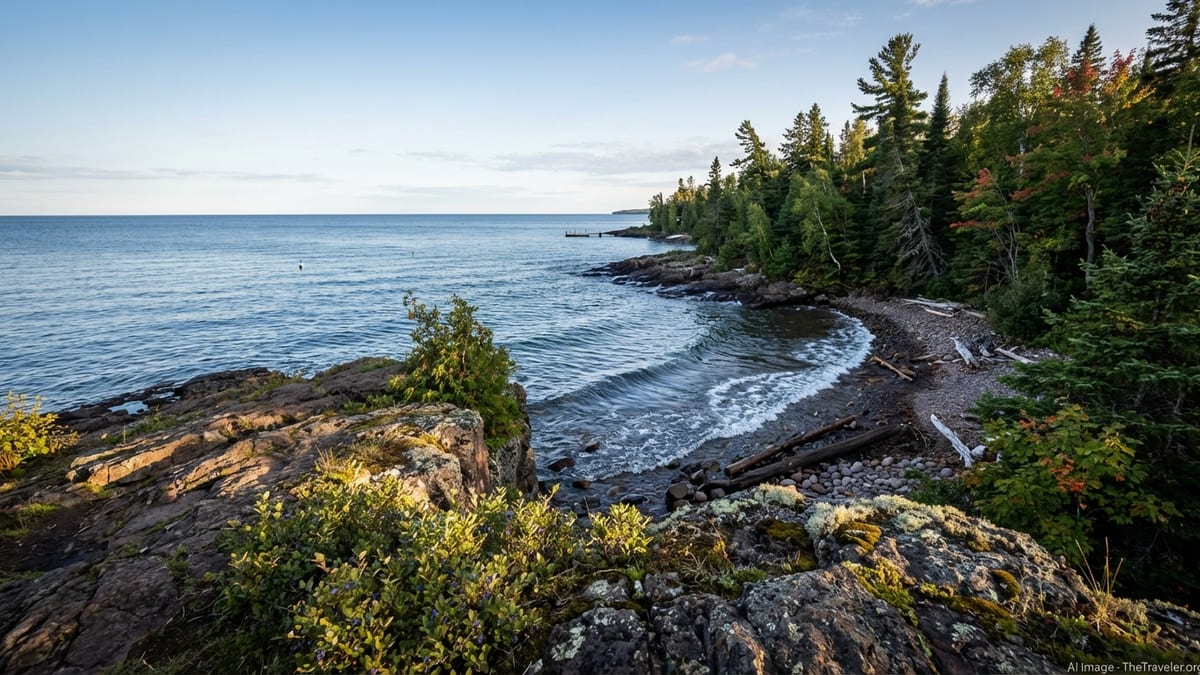
Lake Superior is the defining element of the Keweenaw Peninsula, and much of the region’s appeal lies in the variety of ways to encounter its cold, clear waters. The shoreline ranges from sandy coves and cobble beaches to dramatic basalt headlands where waves slam into sheer rock. US 41 and parallel backroads provide frequent access, with short spurs leading to public beaches, rustic campgrounds, and day use areas. Travelers can easily build a day around stopping at pullouts, walking short trails, and sitting on rocks while the lake shifts from steel gray to deep turquoise as the light changes.
One of the signature drives is Brockway Mountain Drive near Copper Harbor, which climbs to a ridge more than 700 feet above Lake Superior. The narrow road usually opens once snow has melted in late spring, rewarding drivers with sweeping views over the lake, the village below, and the forested interior of the peninsula. On clear days you can see Isle Royale on the horizon, and in autumn this is one of the best vantage points in the Upper Peninsula for fall color as the hardwoods below turn gold and crimson.
Other shoreline highlights dot the peninsula. Along the western side, near Eagle River and Eagle Harbor, travelers find photogenic waterfalls, historic churches, and a scattering of small public access sites where it is possible to walk out on rocky points or driftwood strewn beaches. The eastern side of the Keweenaw feels even quieter, with fewer services and a more intimate, wind exposed shoreline facing the open lake. Staying in or near Copper Harbor makes it easy to explore both coasts, as the paved road network loops around the tip of the peninsula.
Because of Lake Superior’s size and power, conditions can change quickly. Water temperatures even in midsummer are extremely cold, and swimming is usually brief and bracing rather than leisurely. Fog banks can roll in off the lake with little warning, reducing visibility on roads and trails. Checking local forecasts, carrying layers, and allowing extra driving time are sensible precautions when planning outings along the Keweenaw’s remote shores.
Copper History and Keweenaw National Historical Park
The Keweenaw Peninsula’s human story is inseparable from copper. Indigenous peoples have worked native copper here for thousands of years, long before industrial mining transformed the landscape. In the mid 1800s the discovery of rich, relatively pure deposits triggered one of the earliest great mineral rushes in the United States. Investors, engineers, and waves of immigrant laborers arrived to work in deep underground mines, build processing facilities, and establish company towns clustered around shafts and smelters.
Today, much of that legacy is interpreted through Keweenaw National Historical Park, a partnership based park headquartered in Calumet. Rather than a single compact site, the park links a series of heritage locations and museums across the peninsula. Visitors can walk streets lined with brick commercial buildings that once housed saloons and boarding houses, tour restored company homes and public halls, and descend into portions of former mines on guided tours offered by partner organizations. The park’s visitor center in Calumet provides an overview of this history and can help travelers choose sites based on interest and available time.
One of the most popular stops is Quincy Mine, perched on the bluff above Hancock. Once nicknamed “Old Reliable” for its long period of profitable operation, the mine now offers seasonal underground tours and access to a massive steam powered hoist that once hauled ore and miners from deep below the surface. To the north, the Delaware Mine near Copper Harbor and other smaller heritage sites offer different perspectives on mining life, from early ventures that struggled to turn a profit to the later decline of copper production in the mid 20th century.
Exploring these places reveals how copper reshaped the Keweenaw’s communities and environment. Entire hillsides were terraced and tunneled, stamp mills pounded ore along the shoreline, and tailings reshaped bays and inlets. At the same time, mining companies built schools, churches, and social halls, and attracted workers from Finland, Cornwall, Italy, and many other regions. For modern travelers, it is possible to move in a single day from stark, industrial remnants to quiet forests reclaiming abandoned sites, illustrating a cycle of boom, bust, and renewal that still defines Copper Country.
Outdoor Adventures: Hiking, Paddling, and Winter Snow
Beyond its historic layers, the Keweenaw Peninsula is a playground for outdoor enthusiasts who enjoy relatively uncrowded trails and a strong sense of wilderness. Short, family friendly hikes lead to waterfalls like Eagle River Falls and Hungarian Falls, while more strenuous routes climb rocky outcrops and ridges with views over Lake Superior. Many of these trails are maintained through a combination of state, local, and volunteer efforts, so conditions can vary slightly from season to season. Carrying basic navigation tools and being prepared for mud or blowdowns is prudent, especially after storms.
Paddlers will find opportunities on both inland lakes and the big lake itself. Sea kayaking along the Lake Superior shoreline is best suited to experienced paddlers who understand cold water safety and are comfortable with open water conditions. For a more relaxed experience, protected harbors and interior lakes offer calmer conditions suitable for beginners. Rental options and guided trips are available in a few key towns during the main visitor season, typically late spring through early fall, though selections are much more limited outside of summer.
Winter transforms the Keweenaw into one of the snowiest regions in the Midwest, thanks to persistent lake effect storms. Cross country ski trails and snowshoe routes open across the peninsula, including groomed networks near Hancock and at resorts and lodges that cater to dedicated winter travelers. Snowmobiling is also a major draw, with an interconnected trail system that links small towns and scenic overlooks. While this season offers a quieter and more contemplative experience of the landscape, it also demands serious preparation in terms of gear, vehicle readiness, and awareness of rapidly changing weather.
In all seasons, outdoor exploration in the Keweenaw rewards those who balance ambition with caution. Cell service can be spotty away from main corridors, and distances between services are longer than many visitors expect. Letting someone know your plans, carrying extra food and water, and having basic emergency supplies in your vehicle are simple steps that help keep adventures on the right side of memorable.
Gateway to Isle Royale and Life at the End of the Road
Copper Harbor, at the very tip of the Keweenaw Peninsula, is both a small community and a psychological “end of the road” for many travelers. The paved US 41 highway literally narrows as it approaches town, eventually terminating near a modest sign surrounded by forest. In summer, this remote harbor buzzes gently with visitors seeking hiking, mountain biking, paddling, and evenings by the water, while in the quieter shoulder seasons it can feel like a near empty outpost on the edge of the continent.
One of Copper Harbor’s most important roles is as a gateway to Isle Royale National Park, a remote island archipelago in Lake Superior. A seasonal passenger ferry departs from Copper Harbor to Rock Harbor on Isle Royale, typically operating from mid May into September or later, depending on the year’s schedule. Crossing time is roughly three and three quarter hours each way, and many travelers opt for overnight or multi day backpacking trips on the island rather than quick day visits, though limited day trip options do exist during peak summer weeks.
The relationship between the Keweenaw and Isle Royale is both practical and cultural. Historically, both landscapes were shaped by copper exploration, and today they share a reputation for solitude and rugged beauty. Travelers who base themselves in Copper Harbor can combine a stay on the mainland with a foray to the island, experiencing both dense Northwoods forest and the quieter, rockier shorelines of Isle Royale within a single itinerary. Advance planning is essential, as ferry space and island lodging or camping permits are limited and can book up well ahead in busy periods.
Even if you never set foot on Isle Royale, life at the end of the road in Copper Harbor has its own attractions. Trails leave right from or near town to reach scenic points, inland lakes, and historic sites. A small but growing mountain bike network draws riders seeking flowy singletrack with lake views. As evening falls, dark skies and minimal light pollution give stargazers a chance to see the Milky Way on clear nights, and in certain conditions lucky visitors may even glimpse the aurora borealis flickering on the northern horizon.
Where to Stay, Eat, and Experience Local Culture
Lodging in the Keweenaw Peninsula reflects its blend of history and wilderness. In Houghton and Hancock, visitors find midrange chain hotels, independent motels, university affiliated lodging, and vacation rentals that work well as bases for exploring both the Keweenaw and other parts of the Upper Peninsula. Farther north, historic properties such as the Keweenaw Mountain Lodge near Copper Harbor offer rustic cabins and lodge rooms in a forested setting, while small roadside motels, mom and pop resorts, and campgrounds line the main routes and lakeshores.
Because the visitor season is highly seasonal, with peak demand in July, August, and early October, booking accommodations well ahead for those windows is wise. Many smaller properties close or operate on reduced schedules in the late fall, winter, and early spring, though a dedicated handful cater to snow sports enthusiasts. Travelers visiting outside summer should confirm opening dates directly with lodging providers and have backup options in case of unexpected closures or weather related disruptions.
Food in the Keweenaw leans hearty and local, reflecting a mix of mining era immigrant traditions and contemporary Great Lakes cuisine. Regional specialties include pasties, the savory hand pies favored by miners; Lake Superior whitefish prepared in a variety of ways; and sweets flavored with locally harvested berries such as the bright red thimbleberry. In towns like Houghton, Hancock, Calumet, and Copper Harbor, you will find a mix of cafés, brewpubs, and casual sit down restaurants, some of which emphasize regional ingredients and seasonal menus. Wider dining choices are available in Houghton and Hancock, while options become more limited as you travel north.
Cultural experiences round out a visit. In addition to mine related museums, there are heritage centers that celebrate Finnish American culture, small theaters and galleries, and seasonal festivals that highlight local music, food, and outdoor activities. Even a simple stroll through Calumet’s compact downtown reveals intricate brickwork, ornate facades, and public buildings that speak to the wealth and ambition of the copper era. Throughout the peninsula, conversations with long time residents often yield stories about both the mining past and the more recent evolution toward tourism and outdoor recreation.
Planning Your Trip and Understanding the Seasons
Timing is one of the most important decisions when planning a Keweenaw Peninsula trip. Late June through early September generally offers the warmest weather, longest days, and the broadest range of open services, including ferries to Isle Royale, tour operations at heritage sites, and full dining and lodging options. Lake Superior remains cold even in midsummer, but air temperatures are comfortable for hiking, paddling, and evenings by the fire. July and August are also the busiest months, so expect more company at popular waterfalls, beaches, and historic attractions.
May, early June, and late September into early October form shoulder seasons that appeal to travelers who prefer cooler temperatures and fewer crowds. In spring, snowmelt swells waterfalls and forests leaf out in fresh green, but some backroads can be muddy and bug activity can be intense at times. In autumn, hardwood forests across the peninsula turn brilliant shades of red, orange, and yellow, especially visible from overlooks like Brockway Mountain. Cooler nights and fewer insects make this a prime time for hiking and scenic drives, though some seasonal businesses start to reduce hours or close after early October.
Winter and early spring are specialist seasons best suited to visitors who are intentionally seeking snow based recreation. Snowfall totals in the Keweenaw are among the highest in the Midwest, with frequent lake effect events. This creates reliable conditions for cross country skiing, fat tire biking on groomed trails in certain areas, and snowmobiling. However, it also means that some smaller roads become seasonal routes that are not plowed, and certain trailheads and shoreline access points may be unreachable by regular passenger vehicles. Checking up to date road and trail reports, packing appropriate clothing, and driving a vehicle equipped for snow and ice are all essential.
Regardless of season, practical considerations help trips run smoothly. Fuel stations can be spaced farther apart than in urban areas, so filling up before long drives is sensible. Mosquitoes and black flies can be bothersome in late spring and early summer, particularly in wooded and wet areas, so insect repellent and lightweight long sleeves are valuable. Lake Superior’s water level and storm patterns can influence beach conditions and shoreline access year to year, so staying flexible and having alternate stops in mind is helpful when planning daily outings.
The Takeaway
The Keweenaw Peninsula is not the kind of destination you stumble upon accidentally. It requires a deliberate journey to the far north of Michigan, a willingness to drive narrow two lane roads beneath tall pines, and an openness to weather that can shift from sunshine to cold mist in an afternoon. For travelers who embrace those conditions, the reward is a landscape and culture that feels both distinctly Upper Midwestern and quietly unique, shaped by copper, water, and forest.
Here, history is not confined to museum exhibits. It is visible in the outlines of mine shafts on distant hillsides, in rows of brick shopfronts lining Calumet’s streets, and in the stories passed down through families whose grandparents and great grandparents arrived to work in the copper mines. At the same time, the Keweenaw’s future increasingly centers on outdoor recreation and conservation, as new generations discover its trails, shorelines, and dark skies.
Whether you come for a long weekend of scenic drives and pasties, a week that includes a ferry crossing to Isle Royale, or a winter escape focused on quiet ski trails, the Keweenaw has a way of getting under your skin. Many visitors find themselves planning a return visit almost as soon as they leave, drawn back by the combination of remote Lake Superior shores, layered copper history, and wild landscapes that feel a world away from everyday life.
FAQ
Q1. Where is the Keweenaw Peninsula and how do I get there?
The Keweenaw Peninsula is in northern Michigan, projecting into Lake Superior from the Upper Peninsula. Most visitors arrive by car, driving north through the Upper Peninsula on major highways before connecting to US 41 toward Houghton and on to Copper Harbor.
Q2. How many days should I plan for a Keweenaw trip?
A long weekend of three to four days lets you see main highlights like Houghton, Calumet, and Copper Harbor. If you want to combine mainland exploration with a trip to Isle Royale National Park or spend more time hiking and paddling, planning a full week is more comfortable.
Q3. What is the best time of year to visit the Keweenaw Peninsula?
Late June through early September offers the warmest weather and the widest range of open services, including ferries and historic site tours. Early summer and early autumn are popular for fewer crowds, while winter is ideal for travelers specifically seeking snow sports.
Q4. Is swimming in Lake Superior safe in the Keweenaw?
Swimming is possible at designated beaches and calm coves, but the water is very cold even in midsummer and conditions can change quickly. Wading and short dips are common, and visitors should be cautious of waves, cold shock, and slippery rocks.
Q5. What are some must see historic sites related to copper mining?
Key stops include the Keweenaw National Historical Park visitor center in Calumet, Quincy Mine above Hancock, and other heritage sites such as the Delaware Mine. Walking through Calumet’s historic downtown also gives a strong sense of the copper era’s scale and architecture.
Q6. Can I visit Isle Royale National Park from the Keweenaw?
Yes. A seasonal ferry operates between Copper Harbor and Rock Harbor on Isle Royale, typically from mid May into September or slightly later depending on the year’s schedule. Reservations are strongly recommended, especially in peak summer.
Q7. What kind of wildlife might I see on the Keweenaw Peninsula?
Common wildlife includes white tailed deer, porcupines, foxes, and a wide variety of birds, especially during migration. Black bears and moose are present but less frequently seen. As always, observe wildlife from a distance and store food securely.
Q8. Is the Keweenaw a good destination for families?
Yes. Families enjoy accessible waterfalls, short hikes, calm inland lakes, and engaging mine tours that bring history to life. The relatively compact geography allows for manageable day trips with young travelers, as long as you plan for weather and drive times.
Q9. Do I need four wheel drive to explore the Keweenaw?
Most major attractions, including towns, scenic drives, and many trailheads, are reachable by standard passenger vehicles in summer and early autumn. In winter or on rough, unpaved side roads, higher clearance and appropriate tires become more important, and some seasonal roads may be closed to regular traffic.
Q10. How can I experience local culture and food in the Keweenaw?
Sampling pasties, Lake Superior whitefish, and locally made berry products is a good start. Visiting mining museums, Finnish American heritage centers, local festivals, and independent cafés or breweries provides additional insight into the region’s history and contemporary community life.