

Michigan’s Upper Peninsula packs two of Lake Superior’s most dramatic destinations into a relatively small corner of the map: the Keweenaw Peninsula and Pictured Rocks National Lakeshore. Both deliver wild coastline, deep forests, and serious snow, yet they feel very different on the ground. Choosing between them is less about which is better and more about which best fits the kind of trip you want, from road-trip rambles and historic towns to cliffside cruises and backcountry trails.
Getting Oriented: Two Very Different Lake Superior Shores
The Keweenaw Peninsula is the northernmost reach of Michigan, a long finger of land that juts roughly 65 miles into Lake Superior. It is part of the larger Copper Country region, shaped by 19th century copper mining and today dotted with small towns, lighthouses, and state parks along both its rocky shores. Driving here feels like entering a self-contained world, with Lake Superior rarely out of sight for long and forested two-lane roads linking beaches, trailheads, and old mine sites.
Pictured Rocks National Lakeshore, by contrast, is a defined protected corridor along Lake Superior between the towns of Munising and Grand Marais. Managed by the National Park Service since 1966, it stretches for roughly 40 miles and protects colorful sandstone cliffs, waterfalls, sand dunes, and beaches. You are not exploring a full peninsula with multiple communities, but rather a linear lakeshore park with a clear beginning and end and a strong focus on scenery and outdoor recreation.
In simple terms, the Keweenaw is a broader region where Lake Superior shapes daily life, while Pictured Rocks is a focused national lakeshore where the cliffs are the main event. If you imagine your trip as a road-based journey with variety and local character, the Keweenaw may appeal more. If you picture yourself hiking to overlooks or boarding a boat to gaze up at towering cliffs, Pictured Rocks will likely be your priority.
Both areas sit several hours’ drive from major airports and services, and both reward travelers who are comfortable with limited cell coverage, quickly changing weather, and long stretches of road without gas stations. They work well in combination on a longer Upper Peninsula loop, but each can stand alone as a dedicated long weekend or week-long holiday.
Scenery and Landscapes: Cliffs, Beaches, Forests, and Mines
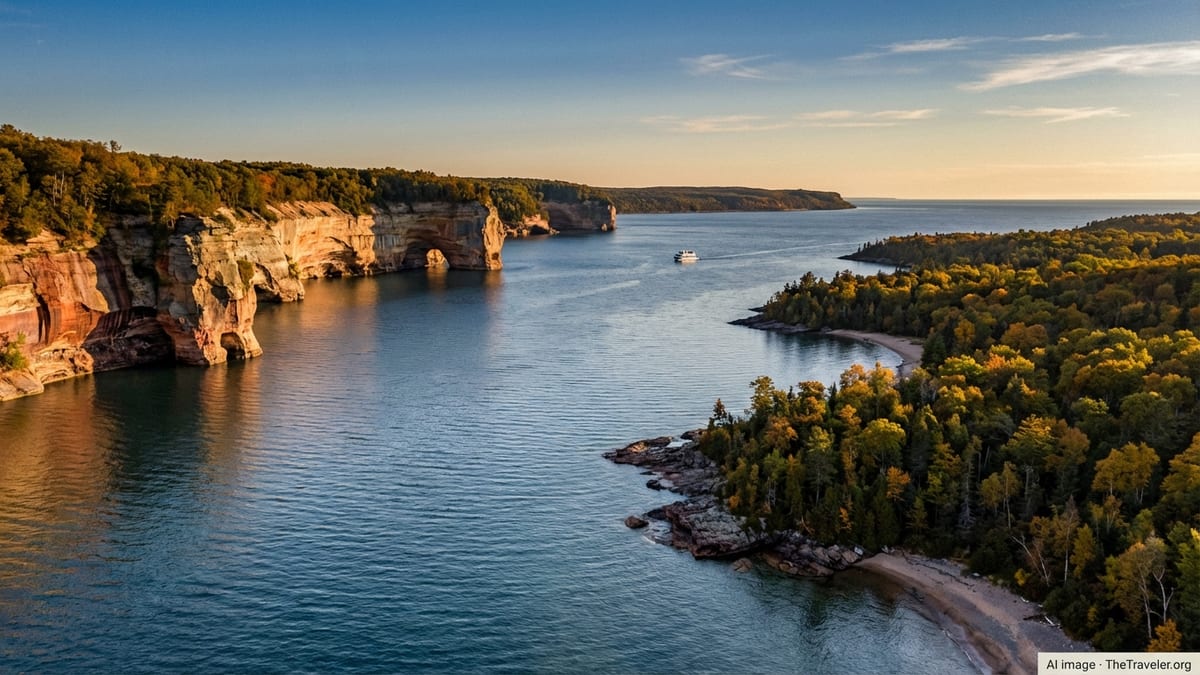
Pictured Rocks is famous for its sandstone cliffs that rise up to about 200 feet above Lake Superior. The rock face is streaked with mineral colors in shades of turquoise, rust, and gold, creating the “painted” effect that gives the lakeshore its name. Boat tours from Munising glide beneath arches and past formations that resemble turrets and profiles, while kayakers paddle into shallow caves on calm days. Inland, waterfalls such as Munising Falls and Sable Falls drop over the same sandstone, and the Grand Sable Dunes tower above the lake at the eastern end of the park.
The Keweenaw’s shoreline is less about tall cliffs and more about contrasts between rugged rock and quiet coves. Along the north shore, you find wave-battered basalt outcrops and cobble beaches, especially near places like Eagle Harbor and Eagle River. On the west side, F.J. McLain State Park and other access points offer sweeping views of the sun setting into Lake Superior, with the silhouette of the Keweenaw Waterway Upper Entrance Light in the distance. Forested ridges run down the spine of the peninsula, providing elevated viewpoints and autumn color drives.
One of the Keweenaw’s defining features is its industrial heritage layered into the landscape. Decommissioned mine shafts, tram remnants, and historic company towns sit amid second-growth forest. The Keweenaw National Historical Park preserves many of these sites, where interpretive signs sit a short walk from Lake Superior’s shoreline. This mix of natural and cultural scenery creates a different mood from the largely undeveloped, protected character of Pictured Rocks.
If your primary image of a Lake Superior trip is standing on a boat deck staring up at sheer, vividly colored cliffs, Pictured Rocks clearly has the edge. If you want a shifting mix of lighthouses, small harbors, rocky points, and inland hills that feels like an ongoing discovery, the Keweenaw’s scenery is more varied and often less crowded.
Outdoor Activities: What You Can Actually Do There
At Pictured Rocks, outdoor activities are tightly tied to the lakeshore itself. In summer, visitors hike nearly 100 miles of trails, including a roughly 42 mile segment of the North Country Trail that traverses the park. Day hikes lead to landmarks such as Miners Castle, Chapel Rock, and Twelvemile Beach. Boat tours and guided kayaking trips from Munising showcase the cliffs from the water, which is widely considered the best vantage point. Backpacking, beach camping with permits, and waterfall walks round out the options, while in winter the area attracts snowshoers, cross-country skiers, and ice climbers drawn to frozen waterfalls and ice formations.
The Keweenaw Peninsula offers a broader menu of activities spread across a larger region. In summer, hiking and mountain biking trails crisscross the hills near Copper Harbor and extend through community forest lands and state recreation areas. Road cyclists take advantage of scenic paved loops, and paddlers explore the Keweenaw Water Trail, a continuous route that circles the peninsula with frequent access points and the safety of alternate shorelines when weather shifts. Fishing, agate hunting on beaches, and casual swims at smaller coves round out lake-focused pursuits.
Winter transforms both destinations, but especially the Keweenaw, which is known for heavy lake effect snow. Local snowmobile clubs and communities maintain extensive trail networks, and cross-country ski systems operate near towns like Houghton and Calumet. The terrain also supports backcountry skiing and snowshoeing with lake views. While Pictured Rocks also receives significant snowfall and offers winter trails and ice climbing, the Keweenaw generally provides more infrastructure for snowmobiling and community-based winter events, which may appeal to visitors specifically seeking a snow destination.
If your ideal trip revolves around a national park style experience with defined trailheads, ranger information, and marquee viewpoints, Pictured Rocks is the better match. If you prefer to choose among multiple small hubs, sample various trail systems, and mix low-key activities such as lighthouse visits and shoreline drives into your hiking days, the Keweenaw is more flexible.
Towns, Culture, and Atmosphere
Munising and Grand Marais anchor Pictured Rocks on either end. Munising has the greater array of lodging, boat tour operators, and visitor services, and it feels very much like a small town calibrated to national lakeshore tourism. Restaurants, gift shops, and outfitters cluster along the main roads, and the Munising Falls Visitor Center provides an introduction to the area. Grand Marais is quieter and more compact, with a harbor, a few restaurants and inns, and easy access to beaches and dunes. Once you leave these towns to drive County Road H-58 or step onto a trail, you quickly transition into a largely undeveloped landscape.
On the Keweenaw Peninsula, the atmosphere changes as you move north. Houghton and Hancock, straddling the Keweenaw Waterway, form the main service hub and host Michigan Technological University, which adds a year-round student presence. As you continue to Calumet, Laurium, and smaller communities such as Eagle River and Eagle Harbor, the historic copper mining story becomes more visible in brick downtowns, mine ruins, and interpretive centers. Copper Harbor, at the far northern tip, feels like a classic end-of-the-road village with inns, simple motels, a few restaurants and pubs, and trailheads beginning almost in town.
The cultural dimension is where the Keweenaw most clearly differs from Pictured Rocks. Here you can spend a morning touring a former mine site or walking historic streets and an afternoon on a lakeside trail. Local festivals, small museums, and strong community identities mean that your nights can be as much about local flavor as they are about outdoor adventure. At Pictured Rocks, evenings often center on quiet time at your lodge, a meal in Munising or Grand Marais, and anticipation of the next day’s hike or boat tour.
Travelers who enjoy talking with local business owners, learning regional history, and sampling different small-town vibes over the course of a week will likely find the Keweenaw particularly rewarding. Those who want a simpler basecamp experience oriented almost entirely around nature may feel more at home at the edge of Pictured Rocks.
Access, Logistics, and Crowds
Reaching either destination requires a drive across Michigan’s Upper Peninsula or in from northern Wisconsin and Minnesota. Pictured Rocks sits a bit closer to the main east west corridor of Highway M 28, which makes Munising relatively straightforward to reach for travelers crossing the peninsula. Grand Marais is quieter and a bit more out of the way, reached via M 77 and the scenic, mostly paved County Road H 58. Within the park, only certain roads are plowed in winter, and seasonal closures can limit vehicle access to interior trailheads until late spring.
The Keweenaw Peninsula demands a longer drive north, and many visitors arrive via US 41 or M 26 through Houghton and Hancock before continuing to smaller communities. Once on the peninsula, you will depend on two-lane highways and local roads for most of your travel, and winter storms can quickly make conditions challenging. Local authorities frequently remind drivers to allow extra time, maintain safe speeds, and carry winter emergency supplies during storm periods, reflecting how quickly lake effect snow can accumulate.
Crowding patterns also differ. As a national lakeshore with growing name recognition, Pictured Rocks sees heavy visitation in peak summer and on fall foliage weekends. Boat tours, lakeshore overlooks, and popular trailheads can feel busy, and parking lots may fill by midmorning in July and August. Permits for backcountry camping in prime areas can sell out well ahead of holiday periods. Shoulder seasons, particularly late spring and late fall, are quieter though some services are limited.
The Keweenaw, while not undiscovered, typically feels more spread out. Popular areas such as Copper Harbor’s trail networks or certain beaches can be active on sunny weekends, but you are unlikely to encounter the same level of concentrated crowds at individual viewpoints. Because visitors are dispersed across multiple towns and attractions, the experience often feels more relaxed, especially for travelers who enjoy spontaneous stops without advance reservations.
Where to Stay and What It Costs
Lodging near Pictured Rocks clusters in and around Munising, with additional options in Grand Marais and along main access roads. Expect a mix of roadside motels, small inns, vacation rentals, and a limited number of lakeside properties. Inside the national lakeshore, accommodation focuses on campgrounds and backcountry sites that require reservations and, in some cases, permits. Seasonal pricing is common, with summer rates higher and winter stays often more affordable but with fewer restaurant and tour options available.
On the Keweenaw Peninsula, accommodation spreads from Houghton and Hancock all the way up to Copper Harbor. You can choose from simple motels, historic hotels, cabin clusters, campgrounds, and a growing number of short term rentals. The wider geographic spread increases your chances of finding availability at busy times, though very popular weekends, such as fall color peak or university events, can still book out quickly. Prices vary, but visitors often find a broader range of budget choices in the Keweenaw simply because there are more communities and properties to compare.
Camping options are strong in both destinations. Pictured Rocks offers drive in campgrounds within or adjacent to the park and a network of walk in backcountry sites that must be reserved. The Keweenaw features state parks, township campgrounds, and private campgrounds scattered along lakeshores and inland lakes, creating opportunities to balance rustic nights with stays in town. For both areas, planning ahead for summer and autumn trips is increasingly important, especially if you hope to secure scenic waterfront sites.
In terms of food and supplies, Munising and Houghton Hancock act as primary stocking points, with grocery stores, outfitters, and a range of restaurants. Smaller communities in both regions may have limited hours or seasonal closures, so building some flexibility into your itinerary and carrying basic provisions is wise.
Best Seasons and Weather Realities
Summer is the most popular time to visit both the Keweenaw Peninsula and Pictured Rocks. Daytime temperatures are usually comfortable, especially compared with hotter regions farther south, and Lake Superior keeps humidity relatively moderate. This is the prime season for boat tours, kayaking, hiking, and camping. That said, even in July and August, travelers should be prepared for sudden temperature drops, chilly evenings, and the possibility of strong winds or storms off the lake.
Autumn brings some of the Midwest’s most striking foliage as hardwoods in both regions turn shades of red, orange, and gold. In the Keweenaw, high ridges and inland roads offer classic scenic drives with long views, while at Pictured Rocks the combination of colorful forest and sandstone cliffs provides dramatic contrast. Early October is often a good bet for color, though timing varies year to year. Cooler temperatures and thinner crowds make this an appealing time for hikers and photographers.
Winter is a defining season, especially for the Keweenaw, which regularly records some of the heaviest snow totals in the Great Lakes region. Deep snowpack supports extensive snowmobile, ski, and snowshoe networks, and communities lean into winter culture with local gatherings and events. Pictured Rocks also transforms, with ice curtains forming on cliff faces and winter trails welcoming skiers and snowshoers, but access is more limited because only certain park roads are plowed and lake effect storms can temporarily close routes. For both destinations, winter visitors must travel with caution, prepare for severe cold, and check local road and weather reports frequently.
Spring can feel drawn out and variable. Snowmelt swells waterfalls at Pictured Rocks and softens forest trails in the Keweenaw, while cool temperatures and lingering snow patches are common into May. Bugs emerge as temperatures rise, especially in low lying forested areas. Travelers looking for solitude and lower prices may appreciate late spring, but should expect some muddy trail conditions and a slower roll out of seasonal services.
Choosing Based on Traveler Type
For first time visitors to Michigan’s Upper Peninsula, the decision between the Keweenaw Peninsula and Pictured Rocks often comes down to which core experience matters most. If you want a signature, easily recognized landscape and are comfortable centering your days around a single park and its trails, Pictured Rocks is a strong introduction. Its cliffs, waterfalls, and dunes are visually striking and relatively concentrated, so even a two or three day stay can feel rich and complete.
Travelers drawn to variety, small town culture, and a mix of history and nature often gravitate to the Keweenaw. Here, a week can include mine tours, museum visits, lighthouse stops, hikes on forested ridges, paddling segments of the water trail, and evenings in different harbor villages. The region rewards those who like to explore and do not mind a bit of driving between experiences, and it can feel more like a self-directed adventure than a traditional national park vacation.
Families with young children may appreciate the defined trail network and ranger presence at Pictured Rocks, where shorter hikes to overlooks and waterfall walks are easier to plan. At the same time, the Keweenaw’s beaches, relatively low key campgrounds, and roadside picnic spots can be ideal for a more free form family road trip. In both places, Lake Superior’s cold water, changing conditions, and strong currents mean that adults should closely supervise any swimming and follow local safety guidance.
For repeat visitors or those with more time, combining both destinations into a single loop is very feasible. You might, for example, begin at Pictured Rocks for two or three days of national lakeshore hiking and a boat tour, then drive west to spend four or five days working your way up and around the Keweenaw. This approach highlights how differently Lake Superior’s shorelines can feel within a single region.
The Takeaway
In the end, there is no wrong choice between the Keweenaw Peninsula and Pictured Rocks National Lakeshore. Both showcase Lake Superior at its most compelling and both demand that visitors respect the scale of the lake, the volatility of its weather, and the remoteness of the Upper Peninsula. What differs is the character of your days and evenings: a focused national lakeshore experience built around cliffs and waterfalls, or a broader regional journey through small towns, historic landscapes, and varied shorelines.
If your priority is to see the painted cliffs that have made Pictured Rocks famous, center your itinerary there and allow at least two full days for hiking and a boat or kayak outing, adjusting for weather. If you imagine a mix of scenic drives, lighthouse stops, community festivals, and trail time, choose the Keweenaw and give yourself several days to reach Copper Harbor and back with room for detours.
For many travelers, the ideal Lake Superior trip involves both: the iconic cliff views of Pictured Rocks and the wide open horizons and layered history of the Keweenaw. Whether you pick one or link the two, planning with the seasons, booking key accommodations in advance, and leaving space for the lake’s moods will help you get the most from this distinctive corner of Michigan.
FAQ
Q1. Which is better for a first time visitor, the Keweenaw Peninsula or Pictured Rocks?
For a short first visit focused on iconic scenery, Pictured Rocks is usually the better choice. Its cliffs and waterfalls are concentrated and easy to experience over two or three days, especially when paired with a boat tour from Munising. The Keweenaw rewards a longer stay and travelers who enjoy exploring multiple small towns and landscapes.
Q2. Can I visit both the Keweenaw and Pictured Rocks in one trip?
Yes, many travelers combine both areas on a week long Upper Peninsula trip. A common approach is to spend two or three days at Pictured Rocks and four or more days exploring the Keweenaw, using Houghton, Calumet, and Copper Harbor as bases. The driving distance between Munising and Houghton is manageable in a half day, allowing time for stops.
Q3. Which destination has better hiking?
Both offer excellent hiking but in different ways. Pictured Rocks has a well defined network of lakeshore and waterfall trails plus a long stretch of the North Country Trail, all with a strong national park style feel. The Keweenaw offers a patchwork of trails near different communities, including forested ridges and shoreline walks, which appeal to hikers who like variety and do not mind driving between trailheads.
Q4. Is one destination less crowded than the other?
Pictured Rocks tends to feel more crowded in peak summer and fall because visitors concentrate on specific overlooks, boat tours, and popular trailheads. The Keweenaw spreads visitors across a larger region, so even when lodgings are busy, many beaches and backroads remain relatively quiet. For a solitude focused trip, the Keweenaw generally offers more room to roam.
Q5. How do winter conditions compare between the Keweenaw and Pictured Rocks?
Both regions receive significant snow, but the Keweenaw is especially known for deep lake effect snowfall that supports extensive snowmobile and ski networks. Pictured Rocks becomes a quieter, more limited access destination focused on winter hiking, skiing, and ice formations. In either place, winter travelers should be prepared for severe cold, slick roads, and occasional storm related closures.
Q6. Which area is better for families with younger children?
Families who prefer clear, signed trails and ranger information often find Pictured Rocks easier to navigate, with short hikes to overlooks and waterfalls near Munising and Grand Marais. The Keweenaw can also work very well for families, particularly those who enjoy flexible road trips with beach stops, lighthouse visits, and low key nature walks, but it requires more planning to match activities to ages.
Q7. Where will I find more lodging and dining options?
The Keweenaw, anchored by Houghton and Hancock and extending north through several towns, generally offers more total lodging and dining choices, from basic motels to historic inns. Pictured Rocks lodging is more concentrated in Munising and Grand Marais with a smaller selection, especially right at the lakeshore. In peak seasons, advance booking is important in both destinations.
Q8. Is swimming safe at the Keweenaw Peninsula and Pictured Rocks?
Both destinations have beaches where people swim in summer, but Lake Superior remains very cold, and conditions can change quickly. Strong currents, sudden waves, and steep drop offs are possible. It is important to follow posted guidance, enter the water cautiously, and keep a close eye on children. Many visitors limit themselves to brief dips and shoreline wading.
Q9. Do I need a car to explore either destination?
Yes, a car is effectively essential for both the Keweenaw and Pictured Rocks. Public transportation is limited, and most trailheads, overlooks, and small communities are only practical to reach by private vehicle. Having your own car also allows you to adapt plans quickly when weather or lake conditions change.
Q10. If I love photography, which should I choose?
Photographers will find compelling subjects in both. Pictured Rocks excels for dramatic cliff and waterfall compositions from boat decks and lakeshore overlooks. The Keweenaw offers more variety, including lighthouses, historic mine structures, winding forest roads, and expansive sunset views over Lake Superior. If time allows, visiting both provides the widest range of images.