

Choosing between Kingston and Ottawa for an Ontario getaway can feel like deciding between two very different versions of Canada. One is a small limestone city on Lake Ontario, a relaxed gateway to the 1000 Islands with a strong student and sailing culture. The other is the nation’s capital, where grand institutions line the Rideau Canal and festivals fill the calendar year-round. Both are rewarding, but which is better for you depends on what you want from your trip. This guide breaks down how Kingston and Ottawa compare on atmosphere, sights, food, nature, seasons and budget so you can decide where to spend your valuable travel days.
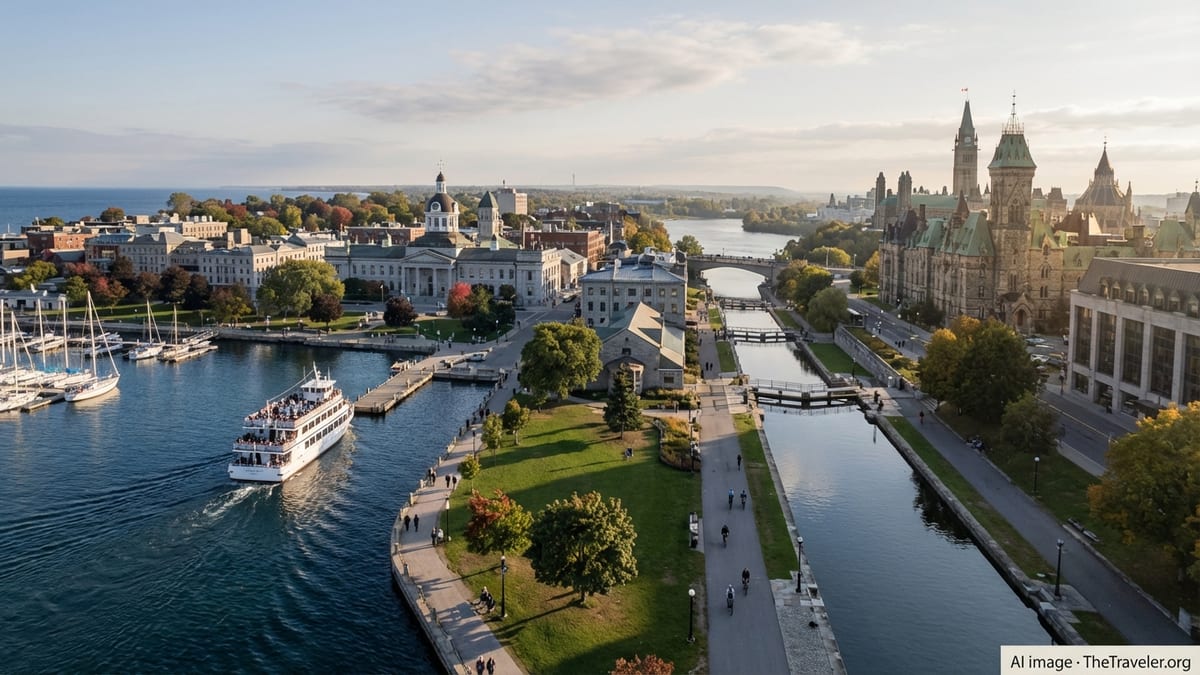
City Vibes and First Impressions
Arriving in Kingston, the first impression is often of stone and water. Historic limestone buildings cluster around a compact downtown that meets the shore of Lake Ontario, with marina masts and 1000 Islands cruise boats framing the horizon. It feels like a walkable university town with a strong sense of place, shaped by Queen’s University, the Royal Military College and a busy summer tourist season. The pace is unhurried, and you can easily navigate the core on foot in a day.
Ottawa immediately feels larger and more formal, but still manageable by big-city standards. Parliament Hill rises above the Ottawa River, while the Rideau Canal cuts a graceful line through downtown. Neighbourhoods like ByWard Market, Centretown and the Glebe each have distinct personalities. As Canada’s capital, Ottawa has the energy of a working government city Monday to Friday, then softens on evenings and weekends when locals spill into parks, patios and along the canal.
For travelers who prefer an intimate, easily digestible city where the water is never far away, Kingston’s scale and waterfront charm are a major draw. Visitors who want a more urban experience, a denser skyline and a feeling of national significance tend to gravitate toward Ottawa. Both cities are safe, welcoming and relatively easy to navigate, but they cater to slightly different travel temperaments.
Travel logistics favor both in different ways. Kingston sits along the Highway 401 corridor and is a common stop between Toronto and Montreal, with a train station on the main rail line. Ottawa is served by a larger airport with more direct flights, as well as frequent train and bus connections from major Ontario and Quebec cities. If you rely on air travel, Ottawa is simpler; if you are road tripping or taking the train between Toronto and Montreal, Kingston fits seamlessly into the route.
Historic Sights and Cultural Highlights
History fans will find rich stories in both cities, but the experiences feel distinct. Kingston’s heritage leans heavily on its role as a former capital of the Province of Canada and as a military and maritime hub. Fort Henry National Historic Site, overlooking the entrance to the Rideau Canal and St. Lawrence River, brings 19th century garrison life to life with guided tours and summer performances. Downtown, preserved limestone architecture, the city hall and the waterfront testify to Kingston’s 19th century prosperity.
Ottawa’s historic core centers around Parliament Hill and the national institutions that surround it. Visitors can explore the parliamentary precinct on guided tours when available, walk past statues of prime ministers and monarchs, and watch ceremonial events on the hill. The Bytown Museum near the Ottawa Locks offers context on how a rough canal construction settlement became the capital. Ottawa’s history is framed around nation-building and governance, while Kingston’s feels more anchored in military, maritime and local stories.
Culturally, Kingston punches above its weight for its size, with venues hosting live music, theatre and festivals, influenced by the student population and creative community. Museums such as the Great Lakes Museum and specialty sites like the Museum of Health Care shed light on niche aspects of Canadian history, while Fort Henry and the city’s penitentiary heritage tours appeal to visitors interested in social and military history.
Ottawa, as the capital, has a broader and more intensive cultural offering. National museums covering history, art, nature, technology and aviation sit within or just beyond the downtown area, and temporary exhibitions frequently rotate through. This concentration of major institutions gives travelers the chance to see high-caliber collections and exhibitions without leaving the city core. If museums and galleries are a top priority for your trip, Ottawa generally offers more depth and variety than Kingston.
Food, Nightlife and Local Flavor
Kingston’s dining scene is one of its surprise strengths. For a relatively small city, it supports a high density of independent restaurants and cafes, from casual lakeside patios to chef-driven bistros in renovated heritage buildings. Proximity to surrounding farms and the presence of Ontario’s oldest continuously operating public market give chefs access to fresh ingredients that appear on seasonal menus. The waterfront and downtown patios feel especially lively from late spring through early fall, when cruise passengers, students and locals mingle.
Nightlife in Kingston leans relaxed and youthful. University students fuel a bar and pub culture that can be energetic on weekends, especially during the school year, but visitors will also find lower-key wine bars, craft beer taprooms and intimate live music venues. The city’s musical history, including ties to well-known Canadian bands, contributes to a sense that music is part of local identity rather than an afterthought.
Ottawa’s food scene is broader and more varied, reflecting its larger population and more international community. Visitors will find everything from high-end fine dining and government expense account restaurants near Parliament to diverse eateries in neighbourhoods like Chinatown and Little Italy. Casual options abound in the ByWard Market area, where patios, pubs and late-night snacks cluster around pedestrian-friendly streets.
When it comes to nightlife, Ottawa offers more options in terms of clubs, cocktail bars and live performance venues, though the atmosphere can still feel more subdued than in Canada’s largest cities. The ByWard Market is the focal point for evening activity, especially in summer, while events and festivals add extra energy throughout the year. Travelers who prioritize a dense cluster of evening venues and variety will find Ottawa more satisfying, while those who prefer a compact, walkable cluster of character-filled spots may prefer Kingston.
Outdoor Experiences and Waterfront Access
For travelers drawn to the water, Kingston has a clear edge in terms of immediate, everyday access. The city’s downtown sits directly on Lake Ontario, and waterfront parks stretch for long distances, allowing easy strolls with constant lake views. Visitors can walk or cycle along paths that link marinas, beaches and green spaces, or simply sit on the shoreline to watch sailboats and ferries come and go.
Kingston is also considered a gateway to the famed 1000 Islands region. Sightseeing and dining cruises depart from the downtown waterfront in the warmer months, offering an effortless way to experience rugged granite islands and historic cottages without leaving the city. Kayaking, sailing, stand-up paddleboarding and even scuba diving are accessible through local outfitters when conditions permit, making Kingston an appealing base for low-key soft adventure.
Ottawa’s defining outdoor feature is the Rideau Canal. In warm months, paths along the canal are popular with walkers, runners and cyclists. Boat tours, paddling and boating on sections of the canal and nearby rivers offer water access, though the experience feels more urban than Kingston’s open-lake environment. Nearby green spaces such as Major’s Hill Park and the Experimental Farm provide room to breathe within the city, and the Gatineau Park area across the river in Quebec offers extensive hiking and cycling trails within an hour’s reach.
Winter dramatically shifts the outdoor calculus in Ottawa. When conditions are right, sections of the Rideau Canal transform into a vast skating surface, and the city’s Winterlude festival brings outdoor sculptures, performances and family activities to central locations. While Kingston experiences the same cold Ontario winters and has its own skating and outdoor options, Ottawa offers a more concentrated winter tourism experience built around its canal and festival programming.
Seasonal Appeal and Best Times to Visit
Both Kingston and Ottawa are year-round destinations, but the best time to visit can differ depending on what you hope to do. In Kingston, late spring to early fall is ideal for enjoying the waterfront, boat cruises and outdoor patios. The 1000 Islands cruise season, lakeside parks and farmers’ market are all in full swing during this window, and the city often feels at its liveliest in July and August when festival and event calendars are fuller.
Fall in Kingston has its own charm, with cooler temperatures, changing leaves along the shoreline and a slightly calmer pace after the high summer season. The university calendar means the city rarely feels empty, even outside peak tourism months, and shoulder seasons can offer better accommodation value and lighter crowds while keeping most core attractions accessible.
Ottawa’s seasonality is more pronounced, with a strong winter identity layered on top of a classic spring-to-fall tourism arc. Late spring and summer are ideal for strolling between Parliament Hill, national museums and the ByWard Market, with festivals and cultural events occurring frequently. Warm evenings make patio dining pleasant, and the canal paths see steady traffic from cyclists and joggers.
Winter, particularly from January into February, is a special time in Ottawa when conditions cooperate. The Rideau Canal Skateway becomes a focal point for residents and visitors, and winter festivals celebrate ice, snow and Canadian cold-weather culture. Some travelers find the deep cold challenging, but for those prepared with proper clothing, Ottawa in winter can feel like a quintessential Canadian experience. Compared with Kingston, Ottawa simply offers more concentrated winter tourism infrastructure, making it the stronger choice if your trip is anchored around cold-weather activities.
Budget, Convenience and Trip Length
When comparing costs, travelers will find both Kingston and Ottawa more affordable than Canada’s largest cities, though Ottawa tends to be slightly more expensive overall, especially in downtown accommodations near Parliament and major attractions. Kingston’s hotel and guesthouse rates can be more forgiving, particularly outside of peak summer weekends and major event dates.
Dining budgets will stretch a bit further in Kingston, where mid-range independent restaurants and pubs offer good value. Ottawa’s broader range of options includes many reasonably priced spots, but central locations with tourist traffic and government clientele can command higher prices. In both cities, stepping a few blocks away from major landmarks usually yields more budget-friendly menus.
In terms of convenience, Kingston excels for short, relaxed stays or stopovers. Its compact core allows visitors to see the waterfront, historic downtown and key attractions within one or two days without needing a car if they stay centrally. This makes it a logical choice for travelers seeking a low-effort break or adding a side trip between Toronto and Montreal.
Ottawa rewards a longer stay. With multiple major museums, national sites and diverse neighbourhoods, a two to four day visit allows time to explore beyond the obvious highlights. Public transit and rideshares ease movement across the city, though central sights are walkable from many hotels. Travelers who can devote several days to one place and want a sense of depth will likely find Ottawa a better fit, while those with only a night or two might extract more satisfaction from Kingston’s concentrated charms.
Which City Is Better for Different Types of Travelers
Solo travelers often appreciate Kingston’s friendly scale and ease of navigation, especially those new to international travel or seeking a low-stress environment. The downtown core’s walkability, abundant cafes and approachable nightlife can make meeting people and feeling comfortable simpler than in a larger city. Ottawa, however, gives solo travelers more structured options in the form of guided tours, museum visits and organized events, which some find reassuring and engaging.
Couples looking for a romantic or relaxing escape frequently gravitate toward Kingston’s waterfront promenades, sunset cruises and intimate restaurants in heritage buildings. The proximity of the 1000 Islands, lakeside parks and historic sites lends itself to slow, meandering days. Ottawa can be romantic in a different way, particularly with evening walks around Parliament Hill, dining in the ByWard Market and winter canal skating hand-in-hand, but the atmosphere feels more urban and institutional.
Families may find Ottawa’s national museums and organized kid-friendly programming compelling. Interactive exhibits, large green spaces and frequent festivals offer ready-made activities for children and teens, alongside practical services like family dining options and public transit. Kingston still works well for families who value being near the water, booking cruises and spending time in parks, but the sheer volume of large-scale attractions geared to all ages is higher in Ottawa.
For culture and history enthusiasts, Ottawa is difficult to beat simply because of the concentration of national institutions and political landmarks. Those deeply interested in military, maritime or penitentiary history may prefer Kingston’s more specialized storytelling and on-the-ground feel. Outdoor enthusiasts, especially those focused on boating, sailing and lake-based recreation, will usually find Kingston the stronger base, while hikers and cross-country skiers might look to Ottawa for its access to canal paths and nearby parklands across the river.
The Takeaway
There is no single right answer in the Kingston versus Ottawa debate. Each city offers a distinct lens on Ontario and on Canada as a whole. Kingston delivers a compact, waterfront-driven experience rich in local history, student energy and easygoing charm. Ottawa offers a broader canvas, where national institutions, landmark architecture and a robust festival calendar shape the experience throughout the year.
If your ideal trip prioritizes intimate streetscapes, easy walks along a lake, close access to the 1000 Islands and a relaxed, small-city feel, Kingston will likely suit you better. If you want to immerse yourself in Canadian history and culture on a national scale, spend time in museums, and experience events built around the Rideau Canal and Parliament Hill, Ottawa stands out as the stronger choice.
Many travelers ultimately find that these cities complement rather than compete with each other. A well-planned itinerary can include both, perhaps starting with a couple of slower days in Kingston to settle into the rhythm of Ontario life, then transitioning to Ottawa for a deeper exploration of Canada’s story. Whether you choose one or combine the two, understanding how they differ helps you match your destination to your travel style and make your time in Ontario feel truly well spent.
FAQ
Q1. Which city is better for a first-time visitor to Canada, Kingston or Ottawa?
For a first-time visitor to Canada, Ottawa is usually the better choice because it offers national museums, Parliament Hill, the Rideau Canal and a broad introduction to Canadian history and culture in one place.
Q2. Is Kingston or Ottawa more walkable for tourists?
Both are walkable in their central areas, but Kingston’s compact downtown and waterfront make it especially easy to explore entirely on foot, while Ottawa’s attractions are more spread out though still manageable from a central base.
Q3. Where will I find better waterfront experiences, Kingston or Ottawa?
Kingston generally offers better waterfront experiences with direct access to Lake Ontario, frequent 1000 Islands cruises and a long shoreline of parks and paths right beside downtown.
Q4. Which city has more museums and cultural institutions?
Ottawa has more museums and cultural institutions overall, including several national museums and galleries, while Kingston offers a smaller set of specialized and local-focused museums.
Q5. Is Kingston cheaper to visit than Ottawa?
Kingston often works out a bit cheaper for accommodations and dining, particularly outside peak summer weekends, while Ottawa can be slightly more expensive near major attractions and during busy event periods.
Q6. Which city is better to visit in winter?
Ottawa is usually better in winter thanks to the Rideau Canal Skateway when conditions allow and organized events and festivals that celebrate the season, while Kingston offers a quieter cold-weather experience.
Q7. How many days do I need in Kingston versus Ottawa?
Kingston works well for one to two full days, especially on a road or rail trip, while Ottawa rewards at least two to four days to properly enjoy multiple museums, neighbourhoods and key sights.
Q8. Which city is better for families with children?
Ottawa generally suits families better because of its numerous interactive museums, green spaces and frequent family-oriented festivals, though Kingston can also work well for relaxed outdoor time and boat trips.
Q9. Is it easy to combine Kingston and Ottawa in one trip?
Yes, it is relatively easy to combine them, as they are connected by highway and rail and can comfortably form a multi-day itinerary that shows both small-city waterfront life and the national capital.
Q10. If I love outdoor activities, which city should I choose?
Choose Kingston if you prefer lake-based activities like boating, sailing and shoreline walks, and choose Ottawa if you want canal-side cycling, winter skating and access to nearby hiking in surrounding parklands.