

More news on this day
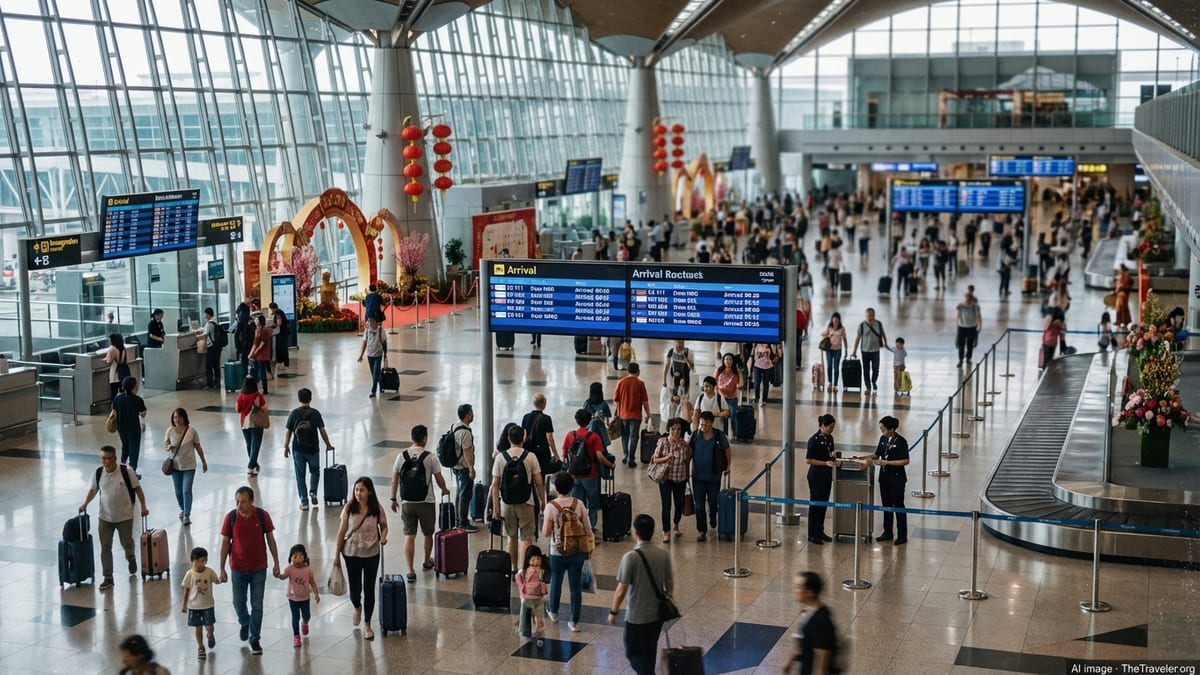
More than 8,000 visitors streamed through Kuala Lumpur International Airport in just two hours on the first day of Chinese New Year, turning Malaysia’s main gateway into a vivid snapshot of the country’s resurgent tourism sector and its ambitions ahead of Visit Malaysia 2026.
Record-Busy Morning at Malaysia’s Main Gateway
Malaysia’s tourism push was on full display on February 17, the first day of Chinese New Year, when more than 8,000 tourists arrived at Kuala Lumpur International Airport in roughly a two-hour window. Tourism, Arts and Culture Minister Tiong King Sing said Terminal 1 received about 6,500 visitors while Terminal 2 handled around 1,500, describing the surge as a powerful sign of renewed confidence in Malaysia as a holiday and business destination.
Tourism Malaysia reported that between 7 a.m. and 10.30 a.m., 32 flights brought a total of 8,840 passengers through both terminals, underscoring how heavily the morning peak was concentrated. The figures, while preliminary, point to a festive rush that operators say rivals some of the airport’s busiest pre-pandemic periods.
Officials noted that overall arrival numbers for the first two days of Chinese New Year are still being compiled, but early data suggests that the strong start has set the tone for what could be one of the most active holiday seasons at KLIA in recent years.
Operational Stress Test for KLIA Terminals 1 and 2
The holiday crush functioned as a live stress test for KLIA’s capacity and staffing. Within a short span, immigration halls, baggage carousels and customs checkpoints had to accommodate thousands of passengers disembarking in quick succession from widebody and narrowbody aircraft. Airport managers said the coordinated deployment of additional frontline officers and support staff helped prevent serious bottlenecks during the morning peak.
Terminal 1, which handles the bulk of full-service international traffic, bore the brunt of the surge. Extra counters were opened at both immigration and check-in areas, while ground handlers were placed on heightened readiness to turn aircraft around quickly. At Terminal 2, the low-cost carrier hub, operators reported brisk but manageable flows at arrival halls as passengers queued for trains, buses and ride-hailing services to Kuala Lumpur and other destinations.
Malaysia Airports, which manages KLIA, had flagged ahead of the festive break that passenger volumes could spike by nearly 40 percent during the Chinese New Year window compared with normal days. In response, it worked with police, airline partners and auxiliary staff to strengthen crowd management, traffic flow and queue control, including stricter enforcement of curbside time limits at pick-up zones.
Festive Atmosphere Meets Post-Pandemic Travel Rebound
Inside the terminals, the operational push was matched by a distinctly festive atmosphere. Arriving travellers were greeted by red lantern installations, Chinese New Year music and traditional lion dance performances, turning the airport into an extension of Malaysia’s multicultural celebrations. Volunteers and tourism personnel handed out mandarin oranges and small welcome gifts as families posed for photos in front of seasonal displays.
For many passengers, the trip marked their first major overseas holiday since the pandemic, lending an emotional undertone to the crowds. Airport officials observed large numbers of family groups and multigenerational travellers, as well as students and workers returning home for reunions in Kuala Lumpur, Penang, Johor and East Malaysia.
The surge also reflected a broader rebound in Malaysian air travel. Passenger movements across Malaysia Airports’ global network reached over 153 million in 2025, with Kuala Lumpur International Airport alone handling more than 63 million that year. December 2025 was described as the most demanding month to date, setting the stage for the robust demand that has carried into the current festive season.
Hotel Bookings and Visitor Spend Point to Broader Tourism Boom
The influx at KLIA is being mirrored by strong indicators on the ground. Industry data and ministry briefings show that hotel occupancy rates in major destinations such as Kuala Lumpur, Penang, Langkawi and Kota Kinabalu are running high for the Chinese New Year period, with many city hotels fully booked on peak nights. This suggests that arrivals are translating into meaningful spending across accommodation, dining, retail and attractions.
Tourism operators report that popular urban landmarks, from Petronas Twin Towers and Bukit Bintang to heritage districts and food streets, are experiencing dense visitor traffic. In key resort destinations, beachside properties and family-oriented hotels are seeing longer stays and higher average room rates compared with the same holiday period a year earlier.
Beyond leisure, the busy terminals also reflect a rise in business and incentive travel. Travel agents note that more corporate groups from China, India and Southeast Asia are choosing Malaysia for conferences, team gatherings and incentive trips, often timed to overlap with major festivals. The dual appeal of Chinese New Year celebrations and modern infrastructure in Kuala Lumpur is helping to draw such groups through KLIA.
China, India and Regional Markets Drive Arrivals
Officials say the holiday spike is being fueled by a mix of regional and long haul markets, with China, India and nearby ASEAN countries making up a large share of arrivals. After a slower than hoped return of Chinese visitors in the first years following border reopenings, Malaysia has recorded a clear upturn in travel from China, supported by visa exemptions and expanded air connectivity.
Carriers including Malaysia Airlines, AirAsia and several Chinese airlines have added or reinstated services linking Kuala Lumpur with major and secondary Chinese cities. Early morning flights from hubs such as Shanghai, Guangzhou and Chengdu were among those touching down at KLIA on the first day of Chinese New Year, bringing in tour groups, family visitors and independent travellers.
Indian travellers are also playing a significant role in the rebound, encouraged by competitive fares and growing awareness of Malaysia’s cultural attractions and film tourism locations. Within ASEAN, Singapore, Indonesia, Thailand and Vietnam remain steady contributors, with Kuala Lumpur serving as both a destination and a convenient transit point for onward travel.
Visit Malaysia 2026 Campaign Builds Momentum
The busy start to Chinese New Year at KLIA is being viewed in Putrajaya as a welcome early boost for the Visit Malaysia 2026 campaign. The national tourism drive aims to attract significantly higher visitor numbers over the next two years, anchored by improved connectivity, refreshed attractions and targeted marketing in key source markets.
Tourism Malaysia has been using the festive period to spotlight new and upgraded experiences, from revamped shopping and dining zones at KLIA to refreshed urban precincts and nature-based attractions. The agency is working with airlines, online travel platforms and tour operators to package multi-destination itineraries that combine Kuala Lumpur with coastal, island and highlands escapes.
Authorities argue that the strong Chinese New Year traffic shows that the infrastructure built up over recent years, including retail transformations and capacity enhancements at KLIA, is now translating into visible gains. They see the holiday peaks as a proving ground for systems that will have to handle even larger flows once Visit Malaysia 2026 campaigns ramp up fully.
KLIA’s Expanding Capacity and Commercial Transformation
Airport figures over the past 18 months highlight how Kuala Lumpur International Airport has quietly reclaimed its status as a regional hub. The facility handled more than 93 million passenger movements in the previous year across its network, edging close to pre-2019 levels. At KLIA itself, operators have pointed to new hourly throughput records and sustained growth in both international and domestic segments.
Parallel to this traffic recovery, KLIA is undergoing a sweeping commercial and infrastructure refresh. Hundreds of new retail and dining outlets have opened across both terminals as part of a multi-year commercial reset, aimed at elevating the airport’s standing among Asia’s leading gateways. Duty-free zones, local artisanal boutiques and modern food courts now compete for passenger attention in both departure and arrival areas.
Technology upgrades are also reshaping the passenger journey. Automated immigration gates, biometric boarding trials, self-service check-in kiosks and enhanced wayfinding systems are being gradually rolled out to ease congestion and improve the overall airport experience. Operators say these upgrades were instrumental in maintaining acceptable wait times even as thousands of Chinese New Year travellers converged on the terminals in quick succession.
Airlines Scale Up Festive Schedules to Meet Demand
Airlines serving KLIA entered the Chinese New Year period with expanded schedules, anticipating a sharp rise in domestic and international demand. Malaysia Aviation Group, the parent company of Malaysia Airlines and Firefly, announced that it would operate more than 2,400 flights during the festive window in February, including nearly 200 additional services focused on homecoming routes and popular leisure destinations.
Low-cost carriers based at Terminal 2 also increased capacity through added frequencies, larger aircraft and seasonal services linking Kuala Lumpur with East Malaysia, Indonesia, Thailand and Vietnam. The combined lift has allowed KLIA to function as a central bridge for Malaysians returning to hometowns and for foreign tourists using Kuala Lumpur as a gateway to the wider region.
Industry analysts say the responsiveness of airlines and the airport operator to seasonal patterns is critical to sustaining Malaysia’s tourism growth. The ability to flex up capacity around Chinese New Year and other festivals, while keeping operations smooth, is seen as a benchmark of KLIA’s readiness for the higher traffic targets envisioned under Visit Malaysia 2026.
Keeping the Experience Smooth Amid the Crowds
Behind the headline numbers, a significant amount of planning is required to keep journeys relatively seamless when thousands of people arrive in such a compressed timeframe. In the weeks leading up to Chinese New Year, KLIA’s operations team coordinated closely with immigration authorities, customs, police, airlines and ground transport providers to align shift rosters, contingency plans and passenger communications.
On the day itself, additional wayfinding staff and volunteers were deployed in arrival halls to direct passengers toward baggage belts, onward transfers and key facilities. Real-time monitoring of queue lengths allowed managers to open or close counters dynamically. Outside the terminals, stricter enforcement of short curbside dwell times and the use of staging areas for taxis and ride-hailing vehicles helped prevent long traffic snarls.
While some passengers still encountered longer lines at immigration and baggage reclaim during peak minutes, overall feedback captured by airport surveys and social media monitoring pointed to an experience that, although crowded, remained largely orderly. For authorities aiming to win repeat visits and positive word-of-mouth in a competitive regional tourism landscape, maintaining this balance between volume and service quality will be crucial as the holiday season continues.