

More news on this day
Hundreds of KLM passengers were left stranded across Europe and the Gulf region today as the Dutch carrier delayed 24 flights and cancelled 21 more, with Amsterdam, Berlin, Dubai, Luxembourg and Dublin among the worst affected routes.
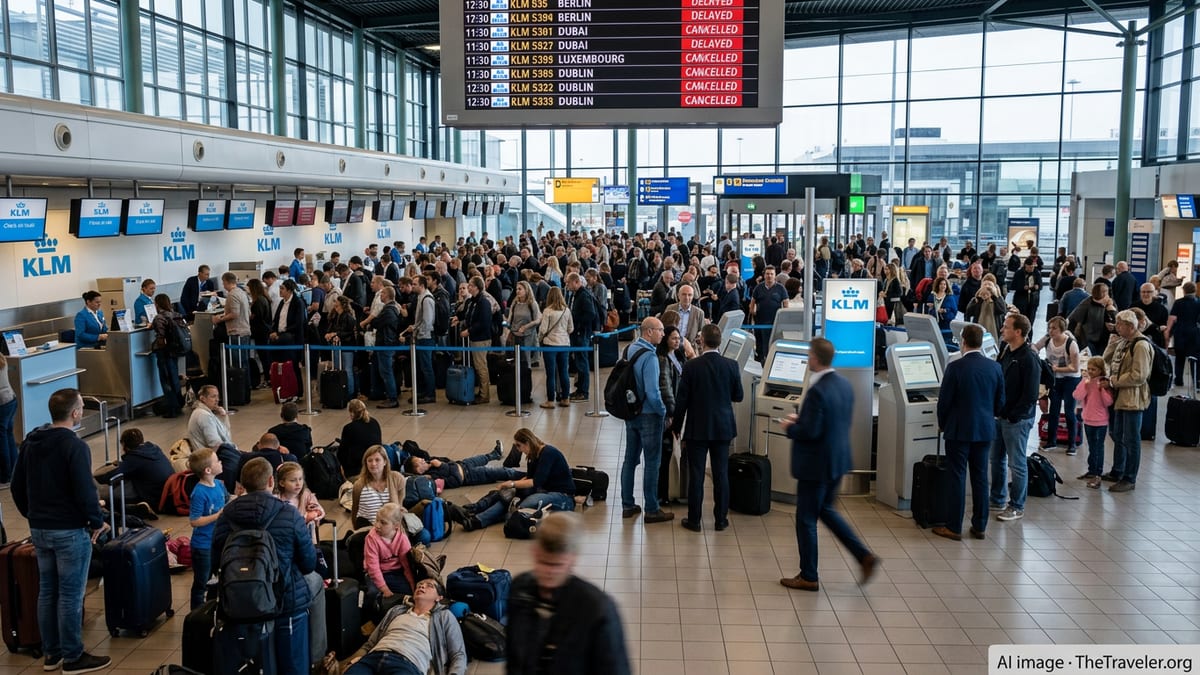
Widespread Disruption Centered on Amsterdam Schiphol
The latest wave of disruption is centered on Amsterdam’s Schiphol Airport, KLM’s primary hub, where a compressed schedule and ongoing airspace constraints have pushed the carrier’s operations to a breaking point. Flight-tracking data and airport updates show short-haul European rotations bearing the brunt, with flights to and from Berlin, Luxembourg and Dublin among those either heavily delayed or removed from today’s board altogether.
Passengers reported long queues at transfer desks and customer service counters as morning delays cascaded into the afternoon. Some travelers described missed connections to long-haul services and being rebooked on itineraries departing a full day later, while others were advised to seek hotel accommodation at their own expense pending clarification from the airline.
Schiphol, which has experienced repeated bouts of disruption over the past winter season due to staffing constraints and weather-related capacity cuts, is once again struggling to absorb irregular operations. Even a relatively modest number of cancellations and extended delays has proved enough to snarl tightly timed connections across KLM’s extensive European network.
The carrier has acknowledged “significant operational disruption” around its Amsterdam hub and is directing affected customers to its travel alerts page and mobile app for rebooking and refund options.
Middle East Tensions and Airspace Rerouting Hit Dubai Services
Flights linking Amsterdam and Dubai have been particularly vulnerable, as KLM continues to route around sensitive airspace in parts of the Middle East and Gulf region. The airline has already suspended or adjusted several services to and through the area in recent days, and today’s schedule shows further knock-on disruption, with additional delays and cancellations on Dubai-bound rotations.
Regional instability and intermittent airspace restrictions have forced carriers to adopt longer routings, add fuel stops or cancel flights outright. For KLM, which relies on carefully timed hub connections, even small shifts in flight time or crew availability can render a rotation unworkable, contributing to today’s cancellation of multiple Dubai segments as well as related feeder flights from cities including Berlin and Dublin.
Travelers heading to or transiting through Dubai reported being offered rerouting via partner airlines or alternative European gateways where capacity allowed. Others were advised to postpone their trips or accept refunds, highlighting the limited spare capacity on an already stretched network.
Airport authorities in Dubai have been managing their own congestion following earlier stoppages and a backlog of stranded passengers, complicating efforts by European carriers to restore regular operations to and from the emirate.
Ripple Effects Across Berlin, Dublin, Luxembourg and Beyond
While the operational epicenter remains Amsterdam, today’s disruptions have rippled across KLM’s short-haul network. At Berlin, passengers on morning departures to Schiphol faced lengthy delays, only to learn that onward connections had already departed or been cancelled. Similar scenes played out at Dublin, where several Amsterdam-bound flights left hours behind schedule, leaving travelers scrambling to secure seats on later services.
Luxembourg, a smaller spoke in KLM’s network, saw at least one roundtrip cancelled and others delayed, disproportionately affecting business travelers who rely on same-day returns via Amsterdam. In some cases, passengers were rebooked on trains or rival carriers for the regional leg of their journey, underscoring how quickly a hub disruption can spill over into ground transport and competing airlines’ operations.
With dozens of flights disrupted and many aircraft and crews out of position, the airline has warned that knock-on effects could linger into tomorrow, even if no new cancellations are announced. Travelers with itineraries touching Amsterdam, Berlin, Dublin, Luxembourg or Dubai have been urged to monitor their flight status frequently and to allow extra time for connections.
Other European hubs, including Paris and Frankfurt, have also been contending with a turbulent March for air travel, with weather events and regional tensions combining to unsettle schedules across the continent and beyond.
What Affected Passengers Can Expect From KLM
Under European air passenger regulations, travelers whose flights are significantly delayed or cancelled are entitled to various forms of assistance, depending on the cause and length of disruption. In practical terms, that typically includes meals and refreshments during extended waits, hotel accommodation when an overnight stay is required, and ground transport between the airport and accommodation when necessary.
For many of today’s stranded passengers, the first step has been to secure a confirmed alternative itinerary. KLM has encouraged customers to use its website and mobile app to rebook on the next available flight, often including options on partner airlines where seats permit. However, those traveling during peak periods or on already busy routes such as Amsterdam to Dubai may face limited alternatives, particularly when entire rotations have been pulled from the schedule.
Once rebooked, travelers can request refunds for unused flights or for trips that no longer serve their purpose. In cases where delays exceed several hours or where cancellations are not attributable to extraordinary circumstances such as severe weather or airspace closures, passengers may also be eligible for monetary compensation under EU rules. Determining eligibility can be complex, and many affected travelers are expected to file claims in the coming days.
Consumer advocates are advising passengers to keep boarding passes, booking confirmations and receipts for meals, hotels and ground transport, as these may be necessary to support refund and compensation requests with the airline.
Stranded Travelers Face Long Waits and Uncertain Timelines
For those stuck in terminals from Amsterdam to Dubai, today’s numbers translate into real-world frustration. Families returning from school holidays described sleeping on terminal benches after being informed that no hotel rooms remained available under the airline’s contract. Solo travelers spoke of waiting in customer service lines for several hours only to be directed to digital self-service tools.
Social media posts from Schiphol and other affected airports showed departure boards filled with red “cancelled” and “delayed” notices beside KLM flight numbers. Some passengers questioned why flights were not cut from the schedule earlier to avoid false hope, while others praised frontline staff for trying to manage an overwhelming situation with limited information and resources.
With KLM warning that operational challenges, regional airspace constraints and crew rostering issues may continue to affect its schedule, passengers planning to travel in the coming days are being urged to check their flight status repeatedly before leaving for the airport and to build in generous connection times when routing through Amsterdam. For hundreds already stranded, the focus remains simple: finding a seat on any flight that will finally get them moving again.