

More news on this day
KLM has extended its suspension of all flights between Amsterdam and Tel Aviv until at least April 2026, as heightened security risks and renewed conflict in the Middle East continue to disrupt air travel across the region and leave thousands of passengers scrambling to adjust their plans.
Get the latest news straight to your inbox!
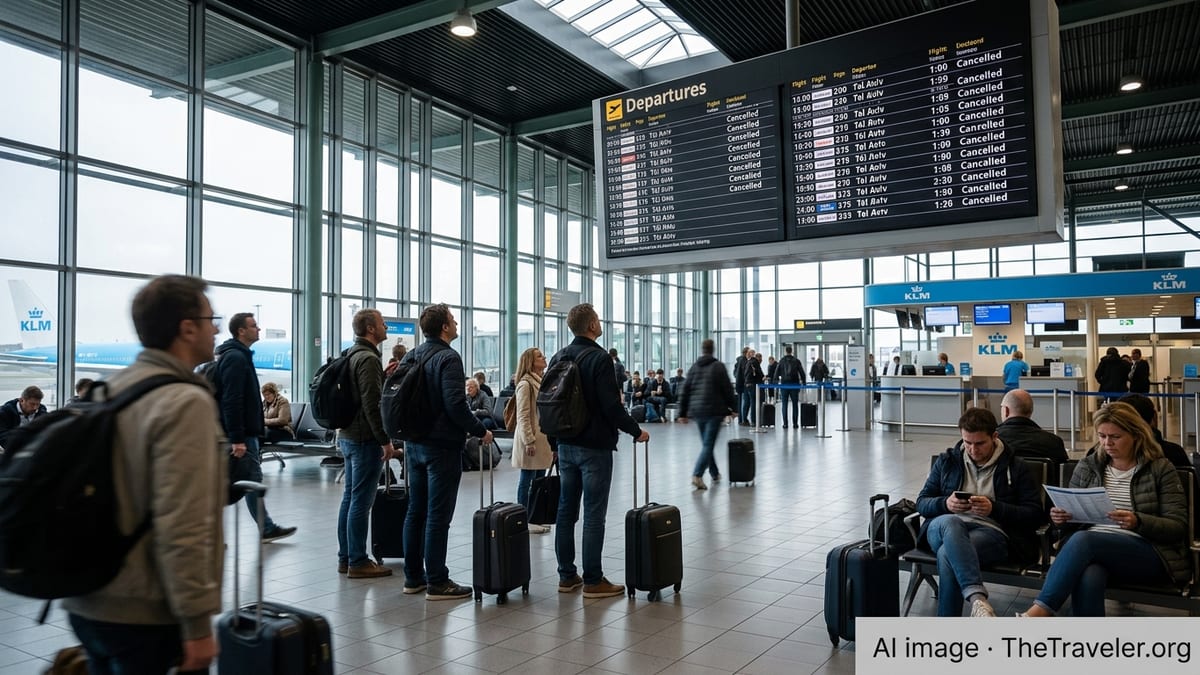
Extended Suspension as Security Situation Deteriorates
According to publicly available information from airline advisories and industry analyses, KLM’s decision follows a series of escalating security incidents affecting Israeli airspace and key transport hubs in recent weeks. Ben Gurion Airport near Tel Aviv has operated on a sharply reduced schedule, with international services repeatedly curtailed or rerouted after missile and drone activity in and around Israel.
Reports indicate that a growing number of major carriers serving Europe–Middle East routes have either suspended operations to Tel Aviv or are operating only limited flights with tight security restrictions. KLM, part of the Air France–KLM group, had already paused service several times since the outbreak of the Israel–Gaza conflict in 2023, and recent cross-border attacks have prompted a renewed, longer suspension window into 2026.
Industry summaries of 2026 flight schedules show that while some airlines plan cautious resumptions to Tel Aviv later this year, KLM has opted for a more conservative stance by extending the halt until at least April 2026. Travelers are being advised to assume that no KLM-operated flights on the Amsterdam–Tel Aviv route will operate before that timeframe and to seek alternatives accordingly.
Analysts note that airlines tend to err on the side of caution when the security picture is volatile, as sudden changes can trigger airspace closures, diversions, and last-minute cancellations. The extension of KLM’s suspension through April 2026 underscores the degree of uncertainty that still surrounds flying into and out of Israel.
What This Means for Existing Bookings
For passengers who already hold KLM tickets to or from Tel Aviv in the coming months, the extended suspension will almost certainly translate into cancellations, rebookings, or significant changes to existing itineraries. Travel-industry briefings indicate that affected customers are generally being offered the choice of rerouting via alternative carriers, postponing their trips, or requesting refunds in line with KLM’s disruption policies.
In practice, rebooking options may be limited, as many airlines have reduced capacity to Israel or are focusing first on repatriation and essential travel. Travelers with complex itineraries that connect via Amsterdam to long-haul destinations may face additional challenges piecing together new routings on other airlines, especially during peak travel dates.
Passengers who booked through online travel agencies or third-party platforms are likely to encounter an extra layer of administration, since changes must typically be processed through the original booking channel. Travel advisors report that obtaining timely responses can be difficult during large-scale disruption events when call centers and customer-service channels are overwhelmed.
Given these constraints, experts recommend that travelers closely monitor the status of their reservations and any airline notifications, including schedule changes that may appear in booking apps and confirmation emails, and be prepared for multiple itinerary revisions before travel can be confirmed.
Guidance for Travelers Currently Planning Trips
For those still in the planning phase of trips to Israel or onward connections via Tel Aviv, the extension of KLM’s suspension through April 2026 has significant implications. With one of Europe’s largest network carriers out of the Tel Aviv market for at least several more weeks, overall seat availability into Israel from European hubs is expected to remain constrained.
Travel risk assessments issued in recent weeks continue to flag ongoing volatility in the region, and some governments are maintaining elevated security advisories for Israel and neighboring countries. Prospective visitors are being encouraged in public guidance materials to carefully evaluate whether travel is essential, to consider flexible arrangements, and to stay alert to rapid changes in the security environment.
For travelers who conclude that their journeys are necessary, planning may involve seeking itineraries on alternative carriers that are still operating to Tel Aviv, often with tight booking conditions and higher fares. In many cases, routing through different European or regional hubs, such as airports served by Israeli carriers, may offer more reliable options than banking on a near-term resumption of KLM flights.
Travel professionals also underline the importance of booking flexible or refundable fares where possible, paying close attention to change and cancellation rules, and ensuring that any travel insurance purchased explicitly covers disruptions related to conflict or security events, which are sometimes excluded under standard policies.
Rising Tensions and Wider Middle East Air Travel Disruption
KLM’s move cannot be viewed in isolation. Reports from aviation tracking services and regional media show that routes across the broader Middle East have been significantly affected by the latest surge in tensions, with temporary reshaping of air corridors and frequent last-minute adjustments to schedules.
In addition to Tel Aviv, a number of major Gulf and Levant hubs have recently experienced periods of disruption, ranging from brief airspace closures to reduced operations and cancellations. Some airlines based in the region have temporarily trimmed their networks or shifted capacity away from conflict-affected areas, while others are running special flights designed to help foreign nationals leave the region.
Airlines and route planners are also contending with the need to avoid specific airspace segments considered higher risk, which can lengthen flight paths between Europe, the Gulf, and Asia. This has knock-on effects such as longer travel times, higher fuel consumption, and tighter aircraft utilization, all of which can feed back into reduced schedules and fewer available seats.
Industry observers point out that the situation remains highly fluid. Even if the security outlook improves in the coming weeks, rebuilding full flight programs will likely be gradual, as carriers assess demand, monitor risk, and work through the backlog of disrupted passengers before adding back more capacity to Tel Aviv and neighboring destinations.
Key Steps Travelers Should Take Now
With KLM flights to Tel Aviv off the schedule until at least April 2026, affected travelers are being urged in public advisories and consumer guidance columns to take proactive steps rather than waiting for carriers to contact them at the last minute. The first priority is to confirm whether an existing booking is directly impacted by the suspension and, if so, to familiarize oneself with the airline’s current options for rebooking or refunds.
Experts recommend documenting all communication with airlines or travel agencies, including screenshots of cancellation notices and updated itineraries. This can help if there are later disputes over eligibility for refunds, vouchers, or additional assistance, particularly on itineraries involving multiple carriers or separate tickets.
Travelers who still need to reach Israel are also encouraged to map out alternative routes in advance, identifying which carriers currently operate into Tel Aviv and through which hubs. In many cases, securing a seat on a different airline early can be easier than waiting for automatic rebooking processes, especially if demand spikes once more flights resume.
Finally, many travel commentators suggest building in additional flexibility around departure and return dates, allowing for sudden schedule changes or extended stays if airspace restrictions are reintroduced. In a region where conditions can shift quickly, maintaining flexible plans and staying well informed has become essential for anyone attempting to fly into or out of Tel Aviv in the coming months.