

More news on this day
A KLM service operating as Flight 123 was forced to return to Amsterdam Schiphol shortly after takeoff following a reported bird strike, leading to an emergency landing, a delay of around four hours and no injuries among passengers or crew.
Get the latest news straight to your inbox!
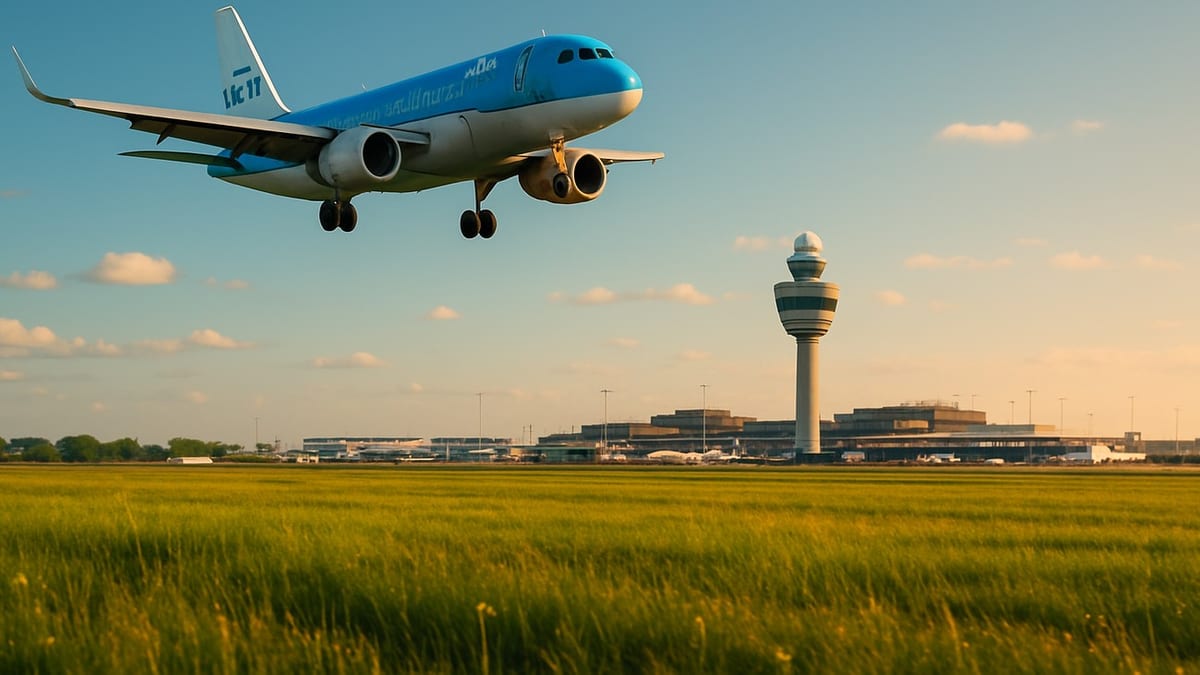
Incident Shortly After Departure From Schiphol
Publicly available flight-tracking data and aviation reports indicate that KLM Flight 123 departed Amsterdam Schiphol on a routine European service when it encountered a bird strike during the initial climb. The aircraft had been airborne only a short time when the crew halted the climb and entered a holding pattern near the Dutch coast while checks were carried out.
According to published coverage of the incident, vibrations and abnormal indications suggested that at least one engine may have been affected. Treating the situation as a precautionary technical event, the crew opted to discontinue the flight and request an immediate return to Schiphol. Emergency services were put on standby as the jet lined up for landing.
The aircraft touched down safely back in Amsterdam, where it was met by airport emergency vehicles in line with standard procedures for a suspected engine issue. Ground inspections were initiated to assess the extent of any damage from the bird impact and to determine whether the aircraft could continue in service.
Four-Hour Delay but No Reported Injuries
Despite the dramatic nature of an in-flight bird strike and emergency return, publicly accessible information shows that there were no injuries among passengers or crew on Flight 123. Cabin reports describe a controlled return to Schiphol, with the aircraft landing without further incident.
The unplanned return led to a disruption of approximately four hours for travelers booked on the service. After the aircraft was taken out of rotation for technical checks, KLM arranged a replacement aircraft to operate the flight to its intended destination later in the day, allowing passengers to complete their journeys.
Operational data from Schiphol and airline scheduling information suggest that the knock-on impact remained relatively contained, with only limited delays to subsequent rotations. For many passengers, the primary consequence was the missed onward connection or late arrival at their final destination, but the absence of injuries kept the incident firmly in the category of a safety precaution rather than a serious accident.
Bird Strikes a Recurring Challenge at Major Hubs
The event involving Flight 123 highlights a longstanding challenge for large hub airports such as Amsterdam Schiphol. Bird activity around expansive runway systems and adjacent wetlands makes the risk of bird strikes a familiar concern in day-to-day airline operations. Aviation databases list multiple historic cases in which KLM and other carriers have experienced bird encounters during takeoff or landing phases near Amsterdam.
Schiphol airport information shows that a range of wildlife management measures is in place, including habitat control, monitoring of bird movements and the use of specialized teams to deter flocks from the runway environment. Even with these measures, occasional bird strikes remain unavoidable, particularly during seasonal migrations when bird populations around the airport can increase.
Experts note that the vast majority of such encounters result in only minor damage or routine inspections, but any suspected impact on engines typically triggers conservative decision-making. In the case of Flight 123, the decision to return rapidly to Schiphol, rather than continue toward its destination, follows widely accepted safety practices in commercial aviation.
Safety Protocols and Passenger Experience
Available aviation safety guidance explains that after a suspected bird strike, flight crews follow checklists designed to verify engine performance, structural integrity and key systems. If there is any uncertainty, a diversion or return to the departure airport is generally preferred. For Flight 123, the emergency return allowed ground technicians to carry out more detailed inspections than would have been possible in flight.
Passengers on the disrupted service faced an extended wait at Schiphol while KLM sourced another aircraft and crew. Travel forums and social media posts following similar incidents suggest that passengers are typically offered rebooking options, refreshments and, where applicable, assistance with missed connections. In this case, the four-hour disruption kept the delay within the same operational day, limiting the need for overnight accommodation.
For travelers, such incidents can be unsettling, but aviation safety data consistently show that bird strikes causing serious accidents are extremely rare in modern commercial flying. The outcome of Flight 123, with a safe landing and zero injuries, aligns with this broader record.
Broader Context of Operational Disruptions in Europe
The bird strike affecting KLM Flight 123 comes at a time when European travelers are already facing a series of operational challenges, including congested airspace, staffing pressures and weather-related disruptions. Recent coverage of Amsterdam Schiphol and other major hubs has highlighted busy spring schedules and tight turnaround times, which can magnify the impact of any unplanned event.
Industry analysis notes that when a single aircraft is removed from service unexpectedly, as occurred after the Flight 123 bird strike, airlines must reposition equipment and crews to protect the wider schedule. This can lead to short-term delays and occasional cancellations, even if the original incident is resolved without injuries or major damage.
For passengers using Schiphol as a transfer point, the incident serves as a reminder of the value of allowing sufficient connection times and monitoring flight status updates closely. While the response to the Flight 123 bird strike demonstrated the aviation sector’s conservative approach to safety, it also underscored how quickly routine journeys can be disrupted by external factors such as wildlife near busy runways.