

More news on this day
Hundreds of passengers were left stranded in the Netherlands and across Europe on Monday as KLM Royal Dutch Airlines delayed 24 flights and cancelled 21 services, disrupting operations at Amsterdam Schiphol and affecting routes to Berlin, Dubai, Luxembourg, Dublin and several other cities.
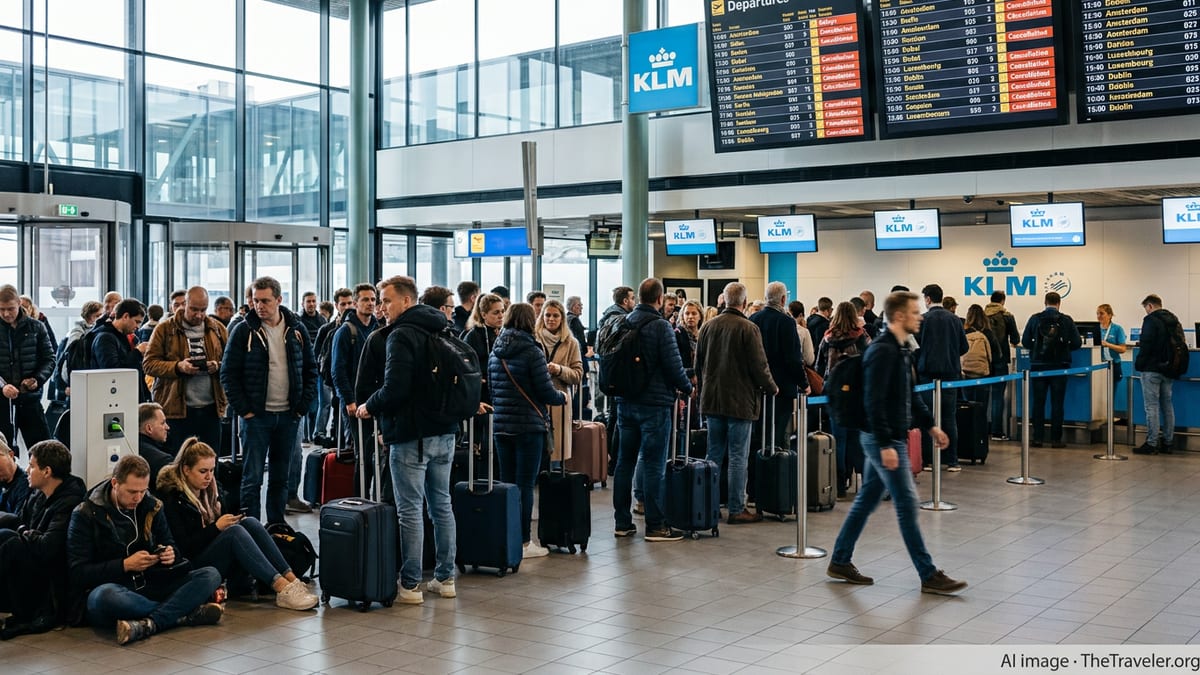
Widespread Disruption Hits Amsterdam Schiphol
The latest wave of operational disruption struck Amsterdam Schiphol early on March 9, compounding an already difficult period for European air travel. KLM, the airport’s largest carrier, reported 24 delayed departures and arrivals alongside 21 outright cancellations, forcing last minute schedule changes and leaving many travelers scrambling for alternatives at the terminal.
Airports across Europe have been dealing with rolling knock-on effects from recent storms, staffing bottlenecks and airspace restrictions, and today’s KLM disruption appears to be part of that broader pattern rather than a single isolated incident. Airline staff at Schiphol were seen redirecting passengers to rebooking counters and advising others to monitor the KLM app for automatic re-routing, as departure boards filled with red and orange status alerts.
Schiphol’s status as a major transfer hub amplified the impact. Many of the affected passengers were not originating or ending their journeys in Amsterdam, but were instead relying on tight connections between European and long haul flights. With a significant portion of today’s delayed and cancelled services feeding into onward routes, the knock-on effect is expected to ripple across the network for at least the rest of the day.
Airport authorities urged passengers with upcoming flights to check their status before traveling to Schiphol, warning that additional schedule adjustments remained possible as the day progressed.
Key Routes Affected: Berlin, Dubai, Luxembourg and Dublin
Among the most affected links in KLM’s schedule today were services between Amsterdam and several strategically important destinations, including Berlin, Dubai, Luxembourg and Dublin. Short haul European routes such as Amsterdam to Berlin and Amsterdam to Luxembourg experienced both delays and cancellations, disrupting business and government travel at the start of the workweek.
In Berlin, passengers booked on KLM’s regular shuttle to Amsterdam reported receiving late night and early morning notifications of delays, while some morning flights were cancelled entirely. Similar reports emerged from Luxembourg and Dublin, where travelers expecting smooth connections via Schiphol were instead advised to remain on standby for rebooking options or overnight accommodation.
Long haul travelers were hit hardest on the Amsterdam to Dubai corridor, an important link between Europe and the Gulf. KLM has already been operating a modified schedule to Dubai amid wider regional airspace and airport constraints, and today’s cancellations tightened capacity even further. Several passengers connecting from European cities into KLM’s Amsterdam to Dubai service found themselves stranded in the Netherlands after their feeder flights were delayed or withdrawn from the schedule.
While many affected customers were rebooked onto later KLM flights or partner airlines where seats were available, capacity on popular business and leisure routes remained extremely limited, leaving some travelers with little choice but to accept departures 24 hours or more later than planned.
Passengers Face Long Queues, Limited Information
Inside Schiphol’s departure halls, the disruption quickly translated into long queues at customer service desks and self service kiosks. With dozens of flights affected simultaneously, rebooking volumes surged and call center lines quickly became congested, pushing many passengers to seek in person assistance in the terminal.
Several travelers described confusion over whether to proceed to the airport or remain at home or in their hotels. While KLM continued to advise customers to rely on digital tools and to avoid unnecessary trips to the airport for cancelled flights, some passengers reported that notifications arrived too late to prevent them from traveling to Schiphol or their origin airports.
The atmosphere in the departure area oscillated between frustration and resignation. Families with young children and older passengers found the uncertainty particularly challenging as they waited for updated departure times or hotel vouchers. Others opted to abandon air travel altogether, turning instead to rail connections toward destinations such as Berlin, Brussels and northern Germany in a bid to salvage their travel plans.
Consumer advocates reminded travelers that under European passenger rights regulations, those whose flights are significantly delayed or cancelled may be entitled to meals, accommodation, rebooking and in some cases financial compensation, depending on the cause of the disruption and the length of the delay.
Operational Strains and Airspace Constraints
Today’s KLM disruption comes against a backdrop of mounting operational pressure on European airlines. Carriers have been juggling a combination of adverse weather, congestion at major hubs and evolving airspace restrictions linked to geopolitical tensions in the wider Middle East. KLM has already acknowledged that it is avoiding certain regional airspace and has adjusted or suspended some services in recent days, including flights involving Dubai and other Gulf destinations.
These routing constraints can lengthen flight times and complicate crew scheduling, leaving airlines with less margin to recover when delays begin to accumulate. When paired with busy transfer banks at hubs like Amsterdam, even modest upstream delays can cascade into missed connections, aircraft rotations out of position and ultimately cancellations.
Industry observers note that the current strain is not limited to KLM. Other European and Gulf carriers have also reported disruption, particularly on flights linking Europe with the Middle East and Asia. However, KLM’s central role at Schiphol means that any concentrated disruption in its schedule has disproportionate effects on connecting passengers, especially those traveling between secondary European cities and long haul destinations.
As of this afternoon, aviation data showed that Amsterdam continued to rank among Europe’s most delayed hubs, with KLM and its partners battling to stabilize operations before the evening peak.
What Impacted Travelers Should Do Now
For passengers whose KLM flights were cancelled or delayed today, the immediate priority is to secure a new routing or confirmed seat. Travel experts recommend first checking the KLM app or website for automatic rebooking options before joining physical queues at the airport. Digital channels often display new itineraries or give customers the option to select alternative flights without needing to speak directly with an agent.
If no suitable rebooking is available online, passengers already at the airport may have more success at dedicated transfer desks inside the secure area rather than landside ticket counters, particularly for those in transit from non Schengen destinations. Travelers who have not yet left home or their hotel are advised to contact KLM remotely and avoid heading to the airport unless their replacement flight is clearly confirmed.
Those facing overnight stays should retain receipts for meals, local transport and accommodation, as these may later be claimable from the airline under applicable passenger rights rules. It is also advisable to keep boarding passes, booking references and any written communication from KLM confirming the disruption, as these documents can speed up claims for refunds or compensation.
With airspace and operational challenges likely to persist in the short term, frequent travelers are being encouraged to build extra margin into connecting itineraries through Amsterdam and other European hubs, especially when onward flights involve the Middle East or long haul routes where rerouting options are limited.