

More news on this day
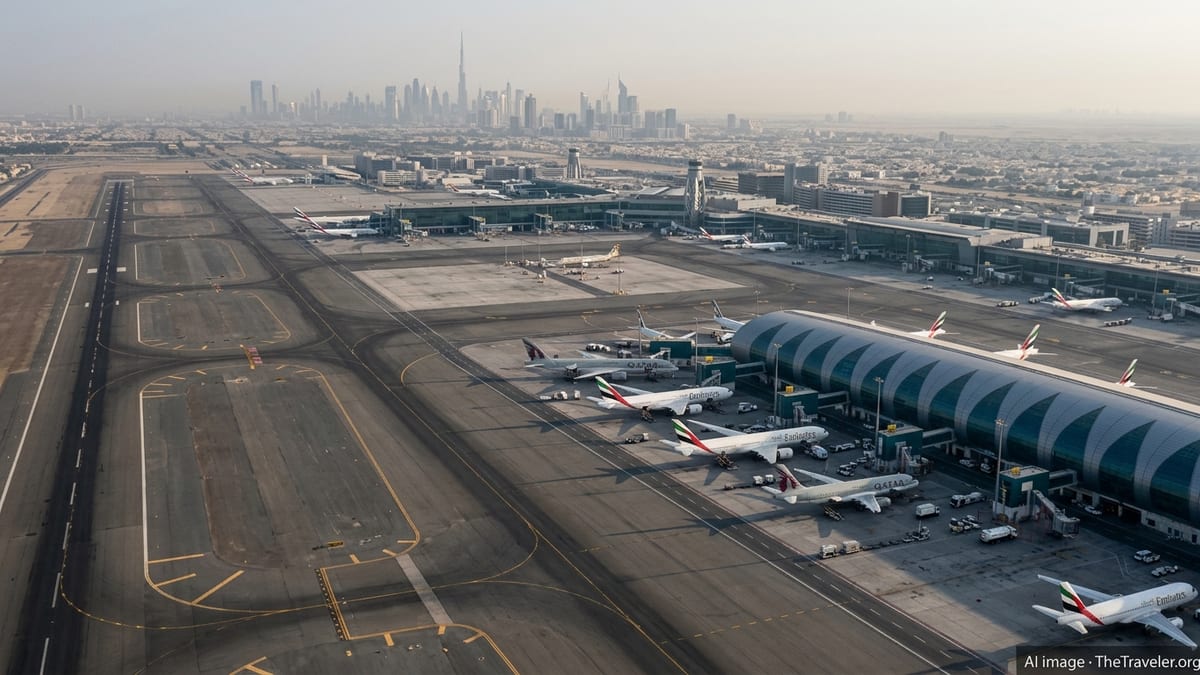
Travel across the Gulf is facing fresh turbulence as KLM suspends flights to key hubs in the United Arab Emirates and Saudi Arabia due to heightened regional security risks, compounding the disruption already affecting airports and airlines throughout the Middle East.
Get the latest news straight to your inbox!
Security Tensions Trigger KLM Suspension
Publicly available security briefings and regional coverage indicate that escalating missile and drone activity linked to the Iran conflict has pushed several international carriers to reassess their Gulf operations in March 2026. In this context, KLM has suspended flights between Amsterdam and Dubai, as well as services to major Saudi destinations, citing elevated security risks along key air corridors and around major airports.
A regional aviation briefing dated mid March notes that KLM halted all flights to Dubai until at least 28 March, while other carriers trimmed or cancelled services to Dubai and Riyadh over similar concerns about the safety of airspace and ground operations. The suspensions follow waves of Iranian missile and drone attacks that have targeted or affected multiple Gulf states, including the UAE and Saudi Arabia, and that have at times forced temporary airport closures and airspace shutdowns.
Analysts tracking the situation report that air defense interceptions near major cities, occasional debris near airports, and shifting no-fly zones have created an unpredictable operating environment for airlines. In such conditions, conservative risk assessments by international carriers have produced a patchwork of suspensions, reroutings, and reduced schedules rather than normal commercial operations.
For KLM, pausing flights into the UAE and Saudi Arabia removes exposure to these fast-changing hazards but also severs a long-established link between Amsterdam Schiphol and some of the Gulf’s busiest gateways, affecting both point-to-point traffic and onward connections into Africa and Asia.
Impact on Passengers and Travel Plans
The immediate effect of KLM’s decision is being felt by passengers who had planned spring travel to or through Dubai and Saudi cities on the Dutch carrier. Travel advisories issued in early March warn that cancellations and last-minute schedule changes are likely across the region, with travellers urged to monitor flight status closely and consider flexible rebooking options.
Reports from traveler forums and corporate risk advisories suggest that many passengers holding KLM tickets to Dubai or Saudi Arabia are being offered rerouting through alternative hubs or, in some cases, postponement or refunds. However, the simultaneous scaling back of services by other airlines has limited the number of available seats, particularly on short-notice departures out of the Gulf.
Business travellers and expatriate residents appear especially affected, as many had relied on KLM’s Amsterdam link for direct access to European corporate centers and onward transatlantic flights. Some travel managers are reportedly diverting staff itineraries to route through alternative hubs in Europe or via open corridors in the wider region, adding extra flight segments and longer transit times.
Leisure travellers, meanwhile, are confronting uncertainty over upcoming holidays that involve stopovers in Dubai or Saudi Arabia. With the outlook for full schedule restoration still unclear, travel agents are advising clients to build additional time into itineraries, to purchase flexible tickets where possible, and to keep documentation from airlines in case of future claims for disruption-related costs.
Strain on Alternative Routes and Regional Hubs
The withdrawal of KLM services into the UAE and Saudi Arabia is adding pressure to alternative routes that remain open. Industry analyses describe Saudi Arabia as one of the few major East–West corridors still handling near-normal volumes, as airlines seek to bypass higher-risk airspace while keeping long-haul Europe–Asia links operational.
As carriers reroute traffic, airports in cities that sit just outside the main areas of concern have seen increased transfer volumes. Reports indicate that some Gulf travelers heading to or from Europe on KLM have been redirected to connect via less affected hubs, while others are using regional ground links across the Arabian Peninsula to reach airports where flights are still departing regularly.
This shift is also reshaping cargo and logistics flows. Briefings on the situation highlight that Saudi Arabia’s land transport network is emerging as a critical contingency corridor, with trucking operations expanding to move goods that would normally fly on passenger aircraft into and out of UAE and Saudi airports. For time-sensitive freight, including e-commerce and essential supplies, the loss of belly-hold capacity on suspended passenger flights has created bottlenecks and forced some shippers to seek charter alternatives.
Within the UAE, partial resumptions of limited services by local carriers have not yet restored pre-crisis connectivity. As long as international airlines such as KLM maintain suspensions, the region’s traditional role as a seamless transfer point between continents remains constrained, with knock-on effects reaching far beyond the Gulf.
Tourism, Corporate Travel and Regional Confidence
The double impact of security concerns and reduced international air links is weighing on tourism outlooks for both the UAE and Saudi Arabia. Dubai, Abu Dhabi and major Saudi cities such as Riyadh and Jeddah typically rely on frequent long-haul connections to feed hotel occupancy, conferences and large-scale events. With KLM suspending flights and several other foreign carriers limiting services, inbound visitor numbers from Europe are expected to soften in the short term.
Travel and hospitality analysts note that the timing is particularly sensitive, coming as Gulf destinations seek to expand their appeal beyond traditional markets and to position themselves as year-round hubs for leisure and business. Any perception of instability, combined with practical obstacles to reaching the region, can prompt potential visitors to defer or redirect trips to other destinations that are easier to access.
Corporate travel policies are also shifting. Risk consultants advise businesses with staff based in or traveling to the UAE and Saudi Arabia to review their duty-of-care frameworks, audit planned trips, and consider temporarily limiting non-essential travel. Some multinational companies are reportedly using remote working arrangements or regional relocation to reduce exposure while the situation unfolds.
Despite these headwinds, observers point out that Gulf tourism sectors have shown resilience in previous regional crises, often rebounding quickly once flight schedules normalize and security perceptions improve. The speed at which carriers such as KLM are able to safely restore operations will play a key role in determining how long the current drag on tourism and corporate travel persists.
What Travellers Should Watch in the Coming Weeks
For travellers with upcoming plans involving the UAE or Saudi Arabia, the main message from publicly available advisories is to remain flexible and well informed. Airlines are continuing to adjust schedules as security assessments evolve, and sudden changes to airspace access can trigger new rounds of cancellations or rerouting with little notice.
Passengers booked on KLM services are encouraged by consumer advocates and travel specialists to monitor the airline’s official channels frequently, ensure their contact details are up to date in booking profiles, and consider travel insurance that explicitly covers disruption from security-related events. Those with tight onward connections elsewhere may wish to allow additional layover time in case of delays.
More broadly, regional risk assessments suggest that aviation disruption across the Gulf could remain elevated as long as missile and drone activity persists and as governments adjust defense postures. Travellers may see longer routings, altered departure times, and higher demand on remaining routes into and out of the region.
For now, KLM’s suspension of flights to the UAE and Saudi Arabia stands as one of the most visible signs of how geopolitical tensions are reshaping global mobility in real time, turning once-routine connections between Europe and the Gulf into complex routing puzzles for airlines and passengers alike.