

More news on this day
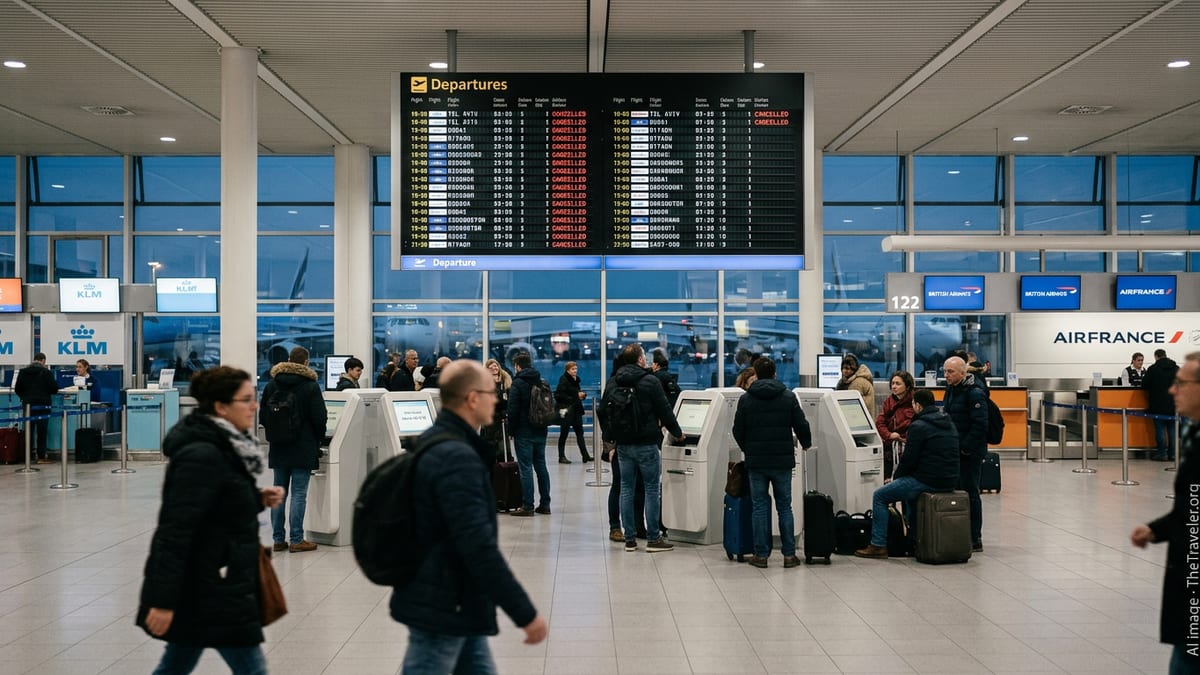
KLM has become the latest major European airline to extend cancellations to key Middle East destinations, as escalating regional conflicts, missile interceptions and rolling airspace closures force carriers to suspend routes and reroute long-haul traffic across Europe, Asia and Africa.
Get the latest news straight to your inbox!
KLM Widens Middle East Suspensions Amid Rising Security Risks
KLM has expanded its suspension of services across the Middle East, moving beyond its earlier Tel Aviv pause to now include Dubai, Riyadh and Dammam in response to the deteriorating security environment and the heightened risk of interceptions in regional airspace. The Dutch flag carrier said it has cancelled all flights to and from these destinations through early March, with warnings that further changes are possible depending on military developments and airspace restrictions.
The airline’s latest travel alert notes that winter-season operations to Tel Aviv have already been suspended, while services to Dammam and Riyadh remain halted through at least March 12. Separate corporate statements indicate all flights to Tel Aviv, Dubai, Riyadh and Dammam are currently off the schedule through March 5, reflecting the fast-moving nature of the crisis and the difficulty in planning even short-term operations.
KLM is coordinating closely with partners Air France and Delta Air Lines to provide alternative routings where possible, shifting passengers via remaining viable hubs in Europe and North America. The carrier is offering rebooking, refunds and flexible date changes for affected travelers, urging customers to check their booking status frequently as schedules are updated in near real time.
Executives and safety teams at the airline have framed the decision as a precautionary measure rooted in risk assessments that factor in missile launches, drone activity and complex military operations across multiple Middle Eastern flight corridors. KLM has underscored that it will not operate in airspace where the risk of interception or misidentification of civilian aircraft is assessed as unacceptably high.
British Airways, Air France, Aegean, Finnair and ITA Tighten Restrictions
KLM’s move comes as British Airways, Air France, Aegean Airlines, Finnair, ITA Airways and other European carriers progressively tighten or extend their own cancellations to Middle East destinations. British Airways has already kept its Tel Aviv services suspended for an extended period, with the route absent from near-term schedules following repeated flare-ups around Israel and recent missile and drone incidents that have triggered emergency interceptions.
Air France has cancelled flights to and from Tel Aviv, Beirut, Dubai and Riyadh into March, citing the security situation at destination airports and along approach corridors. The French carrier continues to review operations daily, working with national and European regulators on risk assessments for flights that would normally cross Iranian, Iraqi, Israeli and Gulf airspace.
Greek carrier Aegean, which has traditionally maintained dense connectivity into Israel and parts of the eastern Mediterranean, has also scaled back services, with Tel Aviv flights repeatedly cancelled during the latest escalation. Nordic operator Finnair, which has built a long-haul strategy on eastbound connections, has halted flights to Doha and Dubai until later in March, warning customers that rerouting options are limited because so many airlines are competing for safe alternative paths and airport slots.
Italian flag carrier ITA Airways has similarly pruned its Middle East schedule, suspending some services to Israel and Gulf destinations and notifying passengers of waiver policies that allow fee-free changes or refunds. Across the continent, smaller and leisure-oriented airlines are following suit, either suspending services outright or sharply reducing frequencies into the region.
Conflict, Missile Interceptions and Sweeping Airspace Closures
The wave of cancellations follows a sharp escalation in conflict involving Iran, Israel and the United States beginning in late February, which triggered one of the most extensive sets of airspace closures across West Asia in recent memory. Authorities in Iran, Israel, Iraq, Qatar, Bahrain and the United Arab Emirates, among others, imposed heavy restrictions or outright closures to civilian traffic as missile salvos and drone swarms crossed the region.
Military air defenses have been on high alert, with interceptors frequently launched to engage incoming projectiles over or near major metropolitan areas, ports and critical infrastructure. Aviation risk specialists note that such interception activity introduces substantial hazards for commercial aviation, as fragments from intercepted missiles and drones can fall along busy flight paths, while radar clutter and the risk of misidentification complicate the operating environment for civilian crews.
European Union regulators responded with conflict zone advisories urging airlines to avoid large swathes of West Asian airspace, particularly over Iran, Iraq, Israel and parts of the Gulf. While these advisories do not constitute outright bans, they have led most major European and Asian carriers to reroute or cancel flights, especially overnight rotations that would cross the region during peak military activity.
Air traffic data from industry trackers shows that thousands of flights have been cancelled or significantly rerouted since the closures began, with global air cargo and long-haul passenger networks both heavily affected. Flights that continue to operate between Europe and Asia are often adding one and a half to two hours of flying time as they skirt conflict zones via Central Asia, the Caucasus or the southern Arabian Sea.
Impact on Travelers and Key Hubs from Tel Aviv to Dubai
For passengers, the most immediate impact is the disappearance of direct options to key Middle East destinations such as Tel Aviv, Dubai, Doha, Riyadh and Dammam from many European cities. Travelers who once relied on one-stop connections via Gulf hubs now face last-minute cancellations, longer routings and limited availability on remaining services operating through alternative gateways like Istanbul or select European capitals.
At airports in Israel and across the Gulf, schedules have been repeatedly rewritten as airlines respond to updated risk assessments and airspace bulletins. Tel Aviv’s Ben Gurion Airport has seen waves of cancellations from European, Asian and North American carriers, even as some regional and Israeli airlines attempt to maintain skeleton services subject to security clearances and rapidly changing NOTAMs.
Dubai, Doha and Abu Dhabi, which together manage a significant share of global east-west connecting traffic, have also experienced grounded flights, with local carriers temporarily suspending or sharply curtailing operations to certain conflict-adjacent destinations. As a consequence, passengers attempting to travel between Europe and Asia, or between North America and Africa via traditional Gulf hubs, may find themselves rebooked on complex multi-stop itineraries or delayed by days.
Consumer-rights organizations and flight-compensation specialists report a surge in queries from stranded travelers seeking clarity on their entitlements under European passenger protection rules. Most major European airlines have introduced flexible waivers for affected routes, enabling rebooking within specified windows or full refunds, but availability is constrained and call centers remain under heavy pressure.
What Passengers Flying to or via the Region Should Do Now
Travel experts advise that anyone planning to travel to or via the Middle East in the coming weeks should treat published schedules as tentative and remain in close contact with their airline or travel agent. Given the potential for sudden airspace closures or new interception activity, even flights that appear confirmed can be cancelled or rerouted at short notice.
Passengers are urged to monitor airline travel alerts and sign up for real-time notifications via apps or text messages. Where possible, choosing routings that avoid current hotspots and relying on major European or non-Gulf hubs for connections may increase resilience, as these hubs tend to have more rebooking options and larger partner networks.
For those who must travel to impacted destinations such as Tel Aviv, Dubai or Riyadh, checking the latest security advisories from national authorities and confirming local ground conditions is essential. Travelers should also allow extra time between connections, ensure that accommodation and insurance arrangements are flexible, and be prepared for last-minute changes that could extend journey times significantly.
With KLM now aligned with British Airways, Air France, Aegean, Finnair, ITA and a growing list of global carriers in extending cancellations to the region, industry analysts warn that disruption could continue well beyond the initial March timelines. The pace of any restoration of services is likely to depend not only on ceasefire prospects, but also on a sustained reduction in missile launches and interception operations that currently make key air corridors too risky for civilian traffic.