

More news on this day
KM Malta Airlines has unveiled its largest summer schedule to date for the 2026 season, adding a new link to Tel Aviv, Israel, and reinforcing connections with Italy, France, the Netherlands, Switzerland, Austria, Belgium and other key European markets as Malta positions itself for another strong tourism year.
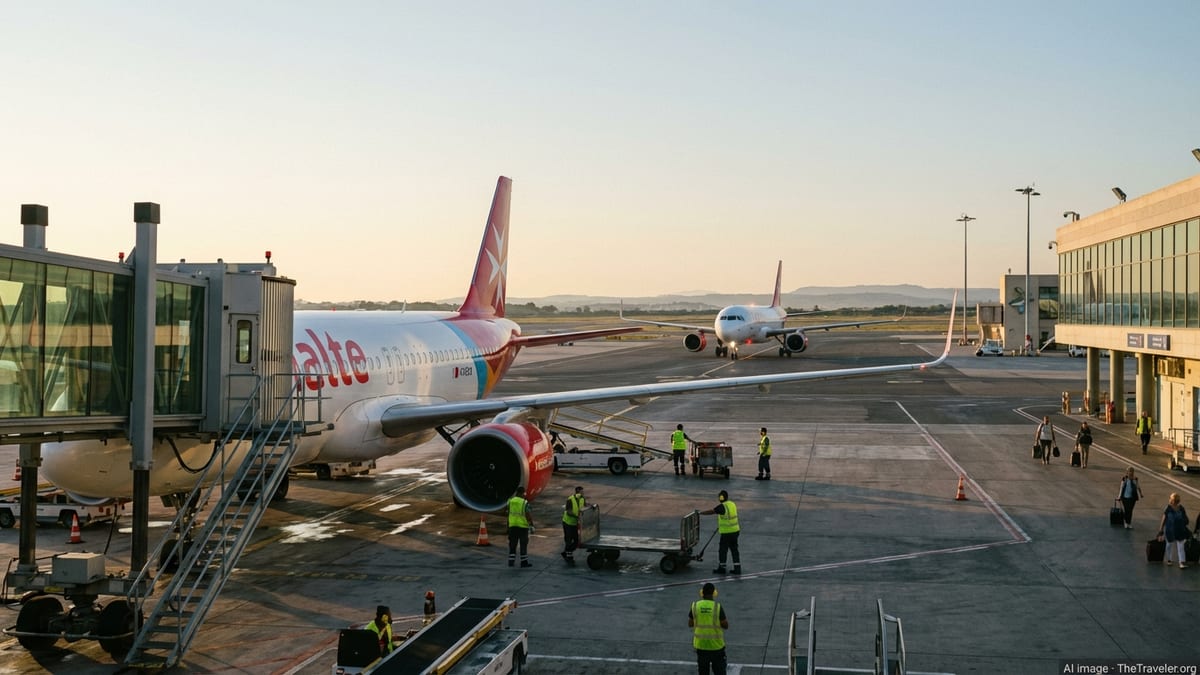
New Tel Aviv Route Marks Strategic Entry into Israel
Israel will officially join KM Malta Airlines’ network from May 27, 2026, when the carrier launches a twice-weekly service between Malta International Airport and Tel Aviv’s Ben Gurion International Airport. The flights are scheduled to operate on Wednesdays and Sundays throughout the summer season, giving Maltese travelers and inbound visitors a new direct option between the central Mediterranean and one of the region’s most important business and technology hubs.
The move represents a strategic return for Malta’s national carrier to the Israeli market after earlier services under Air Malta were withdrawn as part of a wider restructuring of the national airline. KM Malta Airlines executives have framed the new Tel Aviv flights as a carefully timed reopening, aligned with renewed demand from both leisure and business travelers, and with a broader effort by Malta to deepen its ties with Israel in tourism, trade and innovation.
Ben Gurion International Airport is Israel’s primary international gateway, handling the vast majority of the country’s passenger traffic. By adding Tel Aviv, KM Malta Airlines is tapping into a high-yield market that offers strong two-way flows: outbound travel from Israel toward Malta and continental Europe, and inbound travel from Malta and beyond to Israel’s cultural and commercial capital.
The new route will also feed into the airline’s growing web of codeshare and interline partnerships, helping to position Malta as a convenient one-stop connection point between Israel and cities across Western and Central Europe. Industry observers note that this network-based approach allows KM Malta Airlines to compete beyond the limited size of its home market by offering onward connectivity through partner hubs.
Largest Summer Schedule Yet with Nearly 8,000 Flights
The Summer 2026 timetable, running from March 29 to October 31, is being billed by KM Malta Airlines as its most ambitious seasonal program since the carrier succeeded Air Malta in March 2024. Across the season, the airline plans 7,948 flights, averaging 262 services per week and offering around 1.34 million seats on 19 routes spanning Europe and the Mediterranean.
For a relatively small flag carrier operating a single-type fleet of Airbus A320neo aircraft, the scale of the schedule underscores how quickly KM Malta Airlines has shifted from cautious launch phase to growth mode. When the airline was established, its mandate was to run a leaner, more financially sustainable operation than its predecessor, focusing closely on route profitability and year-round load factors. The 2026 summer build-up suggests that the early network has performed strongly enough to justify both capacity increases and a new destination.
Executives say the network has been designed to match robust demand in core markets while still maintaining discipline on frequencies and seasonality. In practical terms, this translates into multiple daily services on key trunk routes, selective expansion in high-potential cities and a measured reintroduction of seasonal destinations that complement Malta’s tourism calendar. The schedule is structured to support both point-to-point traffic into Malta and connecting flows routed through partner airlines at major European hubs.
Industry analysts also point to the role of Malta’s broader tourism strategy in shaping the airline’s growth. The national carrier’s schedule is closely aligned with efforts to attract higher-spending visitors, lengthen average stays and reduce reliance on a narrow set of source markets. By expanding capacity and broadening geographic reach, KM Malta Airlines is helping underpin these goals while maintaining Malta’s air connectivity resilience.
Strengthening Links with Italy, France and the Netherlands
The Summer 2026 schedule reinforces KM Malta Airlines’ commitment to Italy, France and the Netherlands, three of Malta’s most important tourism and business markets. Rome and Milan remain cornerstone routes, with Rome among the cities receiving two daily flights, providing frequent connections suitable for both weekend getaways and same-day business travel. Italy has long been one of Malta’s top source markets for visitors, and strong air links are vital for sustaining that flow.
In France, Paris is also scheduled to benefit from twice-daily frequencies, reflecting the city’s importance as both a tourism generator and a major European hub for onward connections. Higher frequencies support flexible itineraries for leisure travelers and provide more opportunities for seamless transfers, whether to regional French cities or long-haul destinations in Africa, the Americas and Asia via partner airlines.
The Netherlands, anchored by Amsterdam, is another core pillar of the network. Amsterdam’s role as a major European gateway means that KM Malta Airlines’ flights do more than link Dutch and Maltese leisure travelers. They also create an important artery for connecting passengers from Scandinavia, North America and parts of Asia who choose to reach Malta via Dutch hub carriers. Maintaining strong frequencies on this route is therefore key to sustaining diversified inbound tourism to Malta.
By concentrating capacity in these well-established markets, KM Malta Airlines is effectively building a stable foundation on which it can add selective new routes like Tel Aviv. The strategy aims to balance growth with risk management, ensuring that incremental capacity is supported by proven demand patterns.
Expanded Presence in Belgium, Switzerland and Austria
Belgium, Switzerland and Austria are also in focus for Summer 2026, as the airline deepens its reach into central Europe. Brussels, which already serves both as a key origin market and as the political heart of the European Union, will gain an additional Tuesday morning flight. This brings overall frequencies to a higher level and offers improved scheduling for business travelers heading to or from EU institutions, corporate headquarters and Malta’s growing community of professionals linked to European affairs.
Switzerland remains an important high-yield market for Malta, driven by a mix of leisure visitors, expatriates and financial services traffic. The airline’s Zurich service supports connections to Europe’s Alpine region and to long-haul destinations reachable through Swiss and other partner carriers. By maintaining strong frequencies on Zurich, KM Malta Airlines is reinforcing its appeal to travelers who prioritize premium service, reliability and straightforward access to connecting flights.
Austria, served via Vienna, plays a similar network role. Vienna’s status as a central European hub makes it a useful gateway for passengers from neighboring markets in Central and Eastern Europe who wish to reach Malta with a single connection. Demand from Austrian leisure travelers for Mediterranean sun-and-sea holidays continues to be solid, and Malta’s cultural heritage and English-speaking environment add further appeal.
Together, the services to Brussels, Zurich and Vienna broaden KM Malta Airlines’ geographic reach beyond its strongest Western European markets, helping to diversify tourism flows and reduce overdependence on any single country. The new Tel Aviv route will slot into this framework, giving central European travelers another convenient one-stop route into Israel via Malta.
UK, Germany and Core Hubs See High-Frequency Service
Beyond southern and central Europe, the Summer 2026 schedule confirms the enduring importance of the United Kingdom and Germany within KM Malta Airlines’ network. London remains the airline’s single most significant city pair, with the carrier now adding an extra Thursday afternoon service to London Gatwick. Altogether, this brings weekly London flights across Heathrow and Gatwick to 23, underlining the depth of the Malta–UK market for tourism, visiting friends and relatives, and business travel.
Germany, another top source market for Malta, is anchored by Munich, which, together with London, Paris and Rome, is slated for twice-daily flights. This level of frequency is critical for facilitating connections via large European hubs, enabling Maltese passengers to reach secondary German cities and long-haul destinations while offering German travelers more flexibility when planning Maltese holidays or short business trips.
These high-frequency routes are central to the airline’s stated strategy of combining direct point-to-point services with robust access to major European passenger hubs. By tightly scheduling early-morning departures and late-evening returns where possible, KM Malta Airlines is seeking to optimize daily aircraft utilization while still delivering schedules that are attractive for both leisure and corporate travelers.
Crucially, these hub links also complement the new Tel Aviv service. Passengers flying from Israel to Malta will be able to connect onward to London, Munich, Paris, Rome and other cities within a single itinerary, using Malta as their intermediate stop. This positions the island as a niche but effective connecting point in the wider European aviation landscape.
Seasonal Adjustments and the Return of Catania
While the overall Summer 2026 program represents significant growth, KM Malta Airlines is also continuing to refine its network through targeted seasonal adjustments. One notable example is the Catania route, linking Malta to Sicily. After announcing plans to halt winter flights and operate the route only during the peak months from 2025 onward, the airline will reintroduce Catania as a summer-only destination in 2026.
Services to Catania are expected to run between July and September, a period when leisure demand on this short intra-Mediterranean sector is strongest. The strategy reflects the airline’s emphasis on concentrating capacity where it can achieve sustainable load factors, rather than maintaining year-round frequencies on routes that may underperform in the shoulder and winter seasons.
This selective approach to seasonality is also evident in the way the airline balances its 19 summer routes. Core business and hub destinations receive steady, often double-daily frequencies across the entire operating period, while more leisure-driven or highly competitive markets are scheduled more intensively only during months when demand can support them. Network planners have indicated that this flexible model allows the airline to respond more quickly to evolving travel trends.
In the context of Tel Aviv, the summer-only start provides a low-risk way for KM Malta Airlines to test the strength and stability of demand from Israel. Should the route perform well and regional conditions permit, future seasons could see the carrier extend operations beyond late October or increase weekly frequencies.
Connecting Malta to Global Markets via Partnerships
Beyond the visible additions of new routes and extra frequencies, KM Malta Airlines is investing heavily in partnerships to extend Malta’s reach far beyond its 19 direct destinations. Codeshare and interline agreements with larger European carriers allow passengers arriving on the airline’s flights to transfer seamlessly to long-haul services bound for North America, the Middle East, Africa and Asia.
This partnership-driven strategy is particularly relevant as Tel Aviv joins the network. For Israeli travelers, the new route offers not only a direct link to Malta but also a pathway to a wide variety of European and transatlantic destinations via the island. For Maltese residents and visitors, it means more options for reaching Israel either as a standalone destination or as part of a broader multi-country itinerary.
From an economic perspective, the model amplifies Malta’s role as a regional connector despite the small size of its national carrier. With a modern, fuel-efficient fleet and a focused route map, KM Malta Airlines aims to provide the critical first and last legs of journeys that might otherwise bypass Malta altogether. Officials argue that this connectivity supports tourism, encourages foreign investment, and strengthens ties with diaspora communities spread across Europe and beyond.
As the Summer 2026 season approaches, industry watchers will be monitoring how the Tel Aviv route integrates with this partnership network, how load factors develop across the expanded schedule, and whether the airline’s growth trajectory can be sustained without compromising its mandate for financial discipline.
A Growing Role in Malta’s Tourism and Economic Strategy
Two years after Air Malta ceased operations and KM Malta Airlines took to the skies as the country’s new national airline, the Summer 2026 schedule signals a confident new phase. With a young Airbus A320neo fleet and a network sharpened around 19 carefully chosen destinations, the carrier is being positioned as a central pillar of Malta’s long-term tourism and economic strategy.
Government and airline officials have repeatedly highlighted that Malta’s insularity and reliance on tourism make air connectivity a strategic asset rather than simply a commercial service. The decision to invest in a larger summer schedule, to restore links with Israel, and to reinforce capacity in major European markets reflects a broader national priority to keep Malta well connected, competitive and attractive to visitors year-round.
For travelers in Italy, France, the Netherlands, Switzerland, Austria, Belgium and now Israel, the expanded KM Malta Airlines network offers more choice, better schedules and new opportunities to combine Malta with other European or Middle Eastern destinations. For Malta, it represents a bet that carefully managed growth, anchored in strong core markets and supported by partnerships, can deliver both economic benefits and a more resilient national airline.
How the Summer 2026 season ultimately performs will help determine the next stage of KM Malta Airlines’ evolution, including whether additional cities join the map and whether Tel Aviv matures into a permanent fixture of the Maltese flag carrier’s route network.