

More news on this day
Far above the Arctic Circle, beyond any road or marked trail, Kobuk Valley National Park has quietly become a powerful symbol of how remote wilderness is redefining adventure travel in the United States.
Get the latest news straight to your inbox!
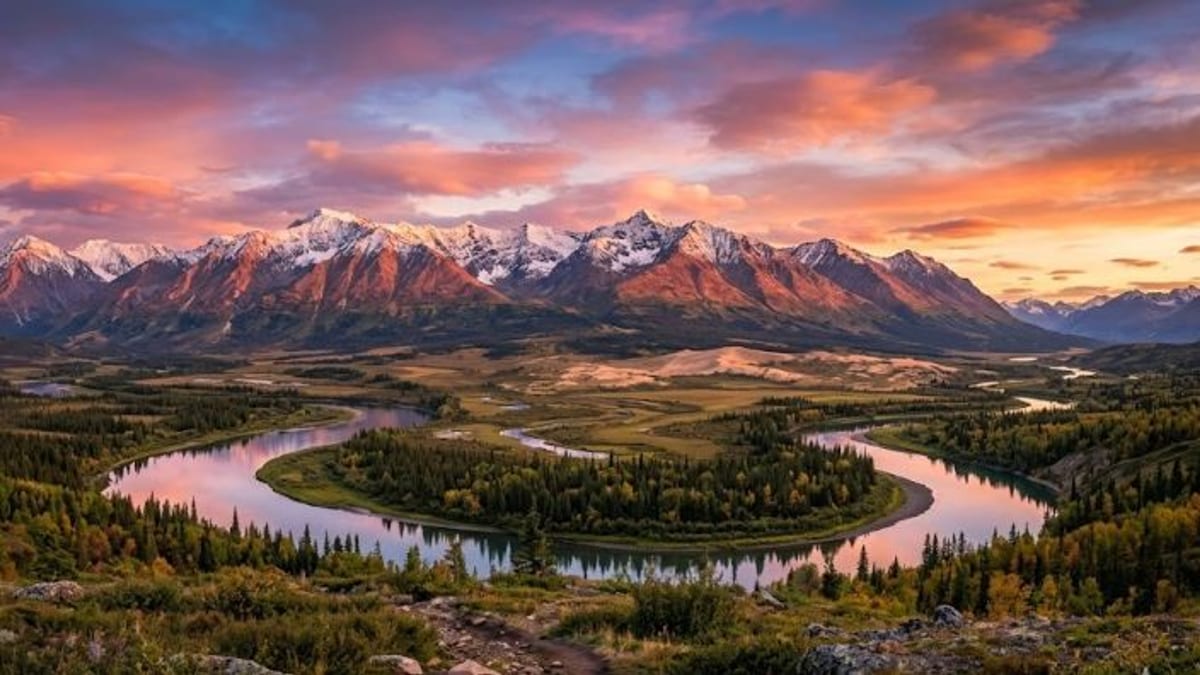
Image by Latest International / Global Travel News, Breaking World Travel News
America’s Least-Known National Park Steps Into the Spotlight
Kobuk Valley National Park sits in northwest Alaska, about 35 miles north of the Arctic Circle, and covers more than 1.7 million acres of tundra, boreal forest and braided river. Established in 1980 under the Alaska National Interest Lands Conservation Act to protect the region’s caribou migration routes and unusual dune fields, it remains one of the country’s most inaccessible national parks. Publicly available information shows there are no roads, no official trails and no permanent visitor facilities.
Travel coverage and national park statistics indicate that Kobuk Valley consistently ranks among the least-visited U.S. national parks, with annual recreational visits measured in the tens of thousands at most, compared with millions in marquee destinations in the Lower 48. For years that obscurity kept it off mainstream travel itineraries. Now, however, its combination of true wilderness, climate-sensitive landscapes and logistical challenge is turning the park into a touchstone for a new wave of U.S. adventure seekers.
Tourism analysts note a broader shift toward lesser-known parks as crowding and reservation systems reshape travel patterns in popular destinations. In that context, Kobuk Valley’s reputation as a park where visitors are more likely to see migrating caribou than another human is becoming part of its appeal. Travel writers increasingly frame it as a “last frontier” experience, attracting highly prepared backcountry travelers and national park completionists willing to invest significant time and money to reach it.
The park’s growing profile does not yet translate into high visitor volumes, but it has elevated Kobuk Valley from obscurity to aspiration. In online trip reports and guidebooks, reaching the park is frequently described as the culmination of a quest to visit every U.S. national park, underscoring its emerging status as a benchmark for serious adventure travelers.
Great Kobuk Sand Dunes: A Desert in the Arctic
At the center of this fascination lies one of the most unlikely landscapes in American conservation: the Great Kobuk Sand Dunes. Rising up to roughly 100 feet above the surrounding terrain, these shifting dunes stretch for miles across the valley floor, backed by the Baird and Waring mountain ranges and bordered by the winding Kobuk River. Geologists describe them as remnants of glacial outwash from the last Ice Age, reworked by wind into an arctic desert set inside the boreal north.
Travel features describe summer temperatures on the dunes that can climb to levels more commonly associated with the American Southwest, even as snow-capped peaks linger on the horizon. Hikers who reach the dunes encounter a stark juxtaposition: hot, soft sand underfoot surrounded by tundra, spruce and permafrost. Photographs of travelers in T-shirts on sunlit ridges, taken at latitudes where winter darkness can last for weeks, have helped propel Kobuk Valley into adventure media and social channels.
The dunes are also a living laboratory for environmental change. Scientific reporting on the region notes that parts of the arctic dune fields, including the Great Kobuk Sand Dunes, have been steadily colonized by vegetation. Warmer temperatures and shifting precipitation patterns are encouraging grasses and shrubs to stabilize portions of the sand, subtly changing the open desert-like vistas that first drew attention to the park. For travelers, that dynamic landscape adds another layer of urgency, suggesting that the Kobuk dunes of coming decades may look different from those seen today.
Despite such global significance, there are no maintained routes across the dunes and no interpretive infrastructure in the field. Access is typically by small charter aircraft landing on sand or nearby gravel bars, or by multiday float trips along the Kobuk River followed by a hike inland. This level of self-reliance and the absence of built viewpoints reinforce the park’s growing identity as an unfiltered wilderness destination.
How Getting to Kobuk Valley Is Redefining the Journey
Reaching Kobuk Valley is as central to the experience as setting foot on its dunes. Travel resources explain that most trips begin in Fairbanks or Anchorage, then continue by commercial flight to the regional hub of Kotzebue on Alaska’s northwest coast. From there, visitors typically charter small aircraft into the park or into neighboring communities along the Kobuk River, timing arrivals to weather and river conditions.
The absence of roads and services has turned logistics into part of the adventure. Adventure tour operators and bush pilots market custom itineraries that may combine Kobuk Valley with nearby protected areas such as Gates of the Arctic National Park and Noatak National Preserve. Multi-park air safaris, packrafting expeditions and remote base camps are increasingly presented as alternatives to the road-accessible lodge model familiar in other national parks.
This style of travel is reshaping expectations around what it means to “visit” a national park. Instead of scenic drives and day hikes from a central gateway town, Kobuk Valley visitors plan for self-supported camping on gravel bars, carry bear-resistant food storage and rely on satellite communication devices for safety. For some travelers, published trip accounts suggest that simply overflying the dunes or landing briefly during a longer Arctic air circuit still counts as a meaningful encounter with the park.
Industry observers say this shift aligns with a broader trend in adventure tourism toward experiences that emphasize remoteness, personal responsibility and low infrastructure. In that sense, Kobuk Valley offers a preview of how some of the most remote corners of the U.S. park system may be experienced in the decades to come, particularly as other destinations reach capacity during peak seasons.
Balancing Wilderness, Culture and New Demand
Kobuk Valley does not exist in isolation. The park lies within the traditional homeland of the Iñupiat people, and the Kobuk River corridor has supported Indigenous communities for thousands of years. Archaeological sites such as Onion Portage, where caribou have historically crossed the river during migration, highlight the long relationship between people and wildlife in this landscape. Public information from conservation organizations stresses that subsistence hunting, fishing and gathering remain vital to local livelihoods.
As interest in remote adventure travel grows, Kobuk Valley is emerging as an example of the delicate balance between welcoming visitors and protecting subsistence practices. Planning documents and independent analyses point to potential pressures on wildlife, noise impacts from aircraft and the risk that increased camping in sensitive areas could interfere with hunts or disturb archaeological sites. Because nearly the entire park is designated wilderness, any infrastructure or new management system must also meet strict standards aimed at preserving natural conditions.
So far, Kobuk Valley’s extreme remoteness has limited those pressures. Guided groups remain small, and self-organized travelers tend to be experienced backcountry visitors who arrive with an awareness of local regulations and etiquette. However, as social media exposure increases and more travelers seek out “last frontier” destinations, stakeholders across Alaska’s Arctic parks are watching Kobuk Valley as a test case for how quickly visitation can change and what safeguards may be needed.
Emerging initiatives, such as seasonal artist residencies and interpretive programming in regional hubs, are seeking to channel interest in ways that highlight both natural and cultural values. These efforts aim to connect visitors with contemporary Iñupiat communities and to encourage travel patterns that respect subsistence activities, while still allowing Kobuk Valley to serve as a powerful symbol of intact Arctic wilderness within the national park system.
A Bellwether for the Future of U.S. Adventure Travel
Within the broader landscape of U.S. tourism, Kobuk Valley stands apart as an extreme. There are no entrance gates, no campgrounds, no roadside overlooks and no cell coverage. Yet this very absence of infrastructure has become central to its allure among a subset of travelers seeking solitude, resilience and direct engagement with climate-sensitive environments.
Analysts tracking park visitation trends note that while Kobuk Valley’s numbers remain small, the park occupies an outsized place in discussions about the future of wilderness travel. It demonstrates that U.S. adventure tourism is no longer limited to strenuous hikes on well-marked trails in heavily visited parks. Instead, it increasingly includes fly-in expeditions to places where travelers are responsible for their own safety and environmental impact.
As other parks confront crowding, seasonal closures and resource strain, Kobuk Valley’s model of minimal infrastructure and strict self-reliance is drawing attention from planners and operators. Some see it as a blueprint for preserving wild character in especially fragile areas, while others warn that any rapid growth in visitation could outpace the current light-touch management approach. For now, Kobuk Valley remains what many travel writers describe as America’s best-kept national park secret, a place where the idea of adventure is being quietly, but decisively, redefined.