

More news on this day
In the heart of the Democratic Republic of the Congo’s copper belt, Kolwezi International Airport has emerged from a major upgrade as a new focal point for regional air travel, signaling both rising economic ambition and a changing experience for Congolese passengers.
A New Terminal Signaling a New Era
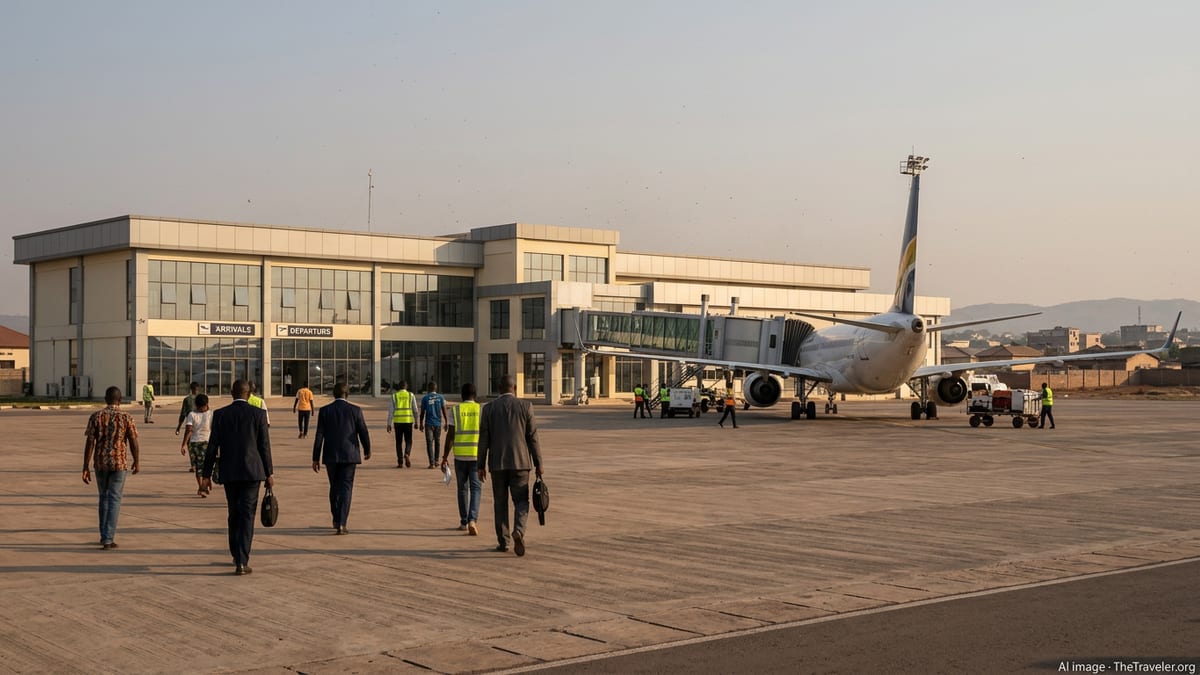
The recent inauguration of Kolwezi International Airport’s new passenger terminal has transformed what was once a modest regional facility into a modern gateway designed to handle the demands of a booming mining economy. President Félix-Antoine Tshisekedi presided over the opening, framing the project as proof that long-promised infrastructure upgrades are finally materializing in Lualaba province.
The terminal, with a footprint of around 10,000 square meters across two levels, introduces clearly separated flows for domestic and international passengers, as well as a dedicated VIP area to receive government delegations and corporate executives. Local authorities describe it as a symbol of Kolwezi’s opening to the world, underscoring the city’s evolution from remote mining outpost to strategic logistics hub.
Crucially, the facility has been built to comply with International Civil Aviation Organization standards, with new boarding satellites and passenger-boarding infrastructure that bring Kolwezi closer to the experience travelers expect at larger African airports. The upgrade is intended not only to improve comfort, but to make the airport more attractive for airlines considering new routes into the region.
The project’s political narrative is also significant. Provincial leaders have emphasized that the terminal was delivered using local financial resources rather than foreign loans, positioning the airport as a flagship of self-financed infrastructure in a country still wrestling with debt and external dependence.
Supporting a Mining-Driven Economy
Kolwezi sits in one of the world’s richest copper and cobalt belts, a region drawing intense interest from global automotive and technology supply chains. For years, the city’s air links lagged behind its strategic importance, forcing many business travelers and technical teams to route through Lubumbashi or even neighboring countries before making long onward journeys by road.
The upgraded airport is meant to change that equation. By offering a modern terminal closer to mine sites and processing plants, the authorities aim to shorten travel times for engineers, contractors and investors and to reduce the logistics costs associated with frequent corporate traffic. Mining companies, which already contribute to local transport projects, are expected to benefit from tighter scheduling and more reliable access to senior staff and specialized equipment.
Beyond corporate passengers, the airport is poised to play a greater role in humanitarian and inspection flights tied to safety and environmental oversight in the mining sector. Recent incidents in nearby mines, which prompted emergency charter operations into Kolwezi, have highlighted both the critical role of air access and the need for infrastructure that can safely handle increased and more complex traffic.
The new facilities are also being presented as a tool for diversifying the local economy. Lualaba’s leadership has repeatedly argued that better connectivity can attract conference tourism, training missions and service industries that are less dependent on mineral prices, even if mining remains the dominant economic driver for the foreseeable future.
Redefining Passenger Experience and Safety
For ordinary Congolese travelers, the most immediate impact of Kolwezi’s upgrade is felt in the passenger experience. The terminal now offers more organized security and border-control zones, expanded check-in areas and additional waiting lounges, easing what was previously a congested and sometimes chaotic process. Air conditioning, improved lighting and more systematic signage bring the building closer to the standards of regional peers.
The redesign is also intended to support higher safety margins. The separation of domestic and international flows, together with updated security screening and surveillance systems, aligns the airport with stricter aviation requirements at a time when regulators and insurers are scrutinizing African infrastructure more closely. The modernization of traffic-control facilities and closer integration between tower operations and terminal processes are viewed as key to managing rising aircraft movements.
Recent runway incidents involving chartered aircraft have sharpened public attention on safety at Kolwezi and similar regional airports. While investigations have focused on a range of operational factors, the authorities have pointed to ongoing work to enhance runway conditions, signage and emergency response capabilities as part of a broader commitment to safer air operations across the country.
Travelers and crew are already reporting a visibly more professional environment on the ground. For airlines, these changes can be decisive when weighing whether to launch or expand services in secondary Congolese cities, where infrastructure quality still varies widely.
A Cornerstone of Congo’s Wider Aviation Strategy
The Kolwezi upgrade does not stand alone. It is part of a wider national push to modernize key airports, with works also under way or recently completed in cities such as Kisangani and Lubumbashi. Kinshasa has framed these investments as essential to aligning the Democratic Republic of the Congo with continental aviation initiatives and to unlocking the economic potential of its vast territory.
Regional aviation experts note that better-equipped secondary airports are critical if Central Africa is to benefit fully from efforts to liberalize air services and improve cross-border connectivity. In that context, Kolwezi’s new terminal is seen as a strategic link in a chain of emerging hubs, improving east-west and north-south flows across the copper and cobalt belt and beyond.
The project also reflects shifting expectations from multilateral lenders and investors, who increasingly tie infrastructure financing to governance, transparency and long-term maintenance plans. Although Kolwezi’s terminal has been pitched as locally funded, it is likely to serve as a reference point for future partnerships involving development banks and private operators looking for viable aviation projects in high-growth regions.
For the central government, each successful airport upgrade helps build credibility ahead of further tenders and policy reforms in the transport sector, from air-traffic management modernization to the long-discussed liberalization of ground-handling and airport-services concessions.
Connecting Communities and the Copper Belt
While the headline story around Kolwezi International Airport focuses on minerals and markets, the social dimension is no less important. For residents of Lualaba and neighboring provinces, improved air links offer faster access to specialized medical care, educational opportunities and administrative services that are often concentrated in Kinshasa or Lubumbashi.
Local business owners, particularly in hospitality and ground transport, are positioning themselves to capture new demand as the airport attracts more regular traffic and higher-spending visitors. Guesthouses, vehicle-rental firms and tour operators are adapting offerings for business travelers who may now consider short stays in Kolwezi instead of immediate onward travel to larger cities.
Community leaders, however, stress that the benefits of the airport upgrade must be broadly shared. They are calling for improved public transport links between the terminal and surrounding districts, as well as initiatives to ensure local workers gain access to jobs generated by rising passenger flows, from retail and security to maintenance and catering.
In many ways, Kolwezi’s modernized airport has become a litmus test for what infrastructure renewal can deliver in the Democratic Republic of the Congo. If the new terminal succeeds in making travel easier and safer while anchoring wider social and economic gains, it may offer a template for other regional cities seeking to turn strategic geography into sustainable development.