

More news on this day
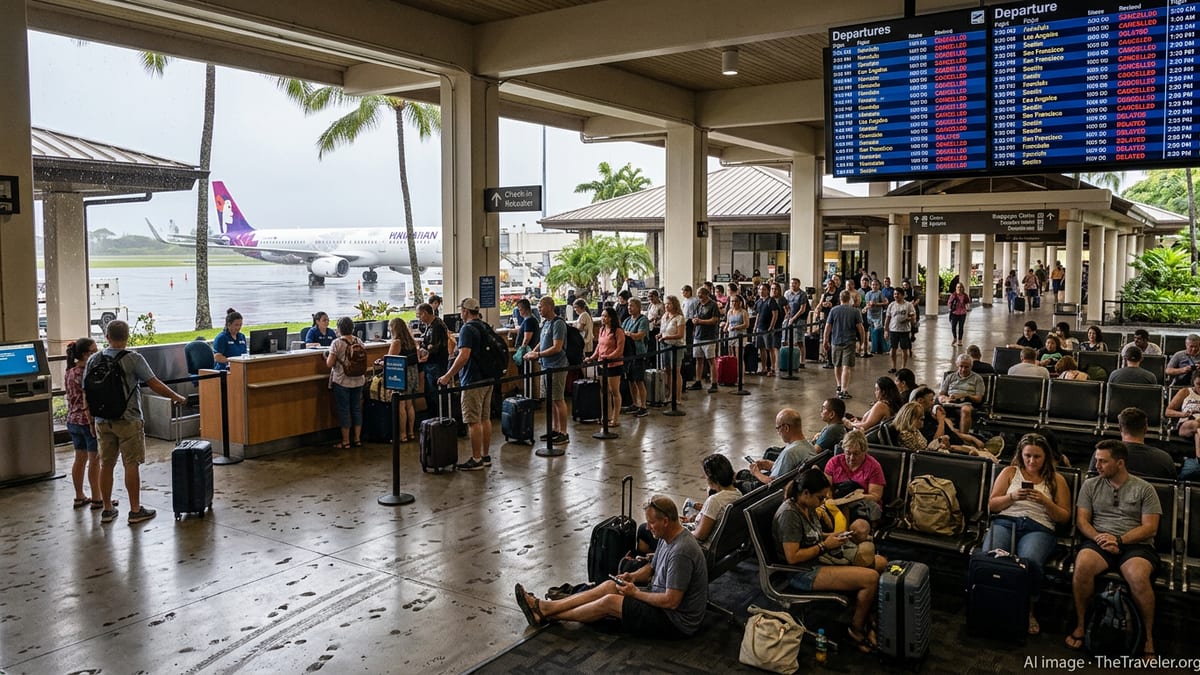
Travelers passing through Ellison Onizuka Kona International Airport on Hawaiʻi Island faced major disruption as more than forty flights were canceled over several days, severing key links to mainland U.S. hubs and select international gateways and leaving many passengers scrambling for scarce alternatives.
Get the latest news straight to your inbox!
Wave of Cancellations Hits a Key Hawaiʻi Gateway
The disruption unfolded in mid-March amid unsettled weather across the Hawaiian Islands and a tight West Coast airline schedule, according to published coverage and real-time flight tracking data. Over several days, more than forty departures and arrivals at Kona were marked canceled, significantly reducing capacity on some of the island’s most heavily used routes.
Ellison Onizuka Kona International Airport, commonly referred to by its IATA code KOA, is a primary gateway for visitors headed to the Kona and Kohala Coast resort areas on the Island of Hawaiʻi. The airport relies on a mix of interisland services and nonstop flights from large mainland hubs, meaning each lost frequency can quickly create bottlenecks for both residents and visitors.
Reports from airline schedule trackers show clusters of cancellations on routes linking Kona with Honolulu and other neighbor islands, as well as with West Coast cities such as Los Angeles, San Francisco and Seattle. With limited daily frequencies on several of these routes, a series of cancellations can effectively wipe out same-day options for affected travelers.
The ripple effects were amplified by high seasonal demand, as March is typically a busy month for Hawaiʻi tourism. Publicly available visitor data for recent years indicates that Kona has been handling more than a million passengers annually, leaving little slack when schedules suddenly contract.
Major U.S. Hubs and International Links Affected
The cancellations were felt far beyond Hawaiʻi Island. Flight tracking logs and airline network information show that several of the scrapped services were operated to and from major U.S. hubs, including Los Angeles International, San Francisco International, Seattle-Tacoma International and Phoenix Sky Harbor. Disruptions on these routes can affect passengers who never planned to set foot in Kona but were relying on through connections.
For example, travelers originating in cities such as Denver, Chicago or Dallas and connecting onward to Kona via West Coast hubs saw itineraries unravel when the final leg was canceled. In many cases, rebooking required retiming the entire journey, as earlier or later connections into the hub were already full or similarly disrupted.
International connectivity also came under strain. While Kona’s nonstop overseas network is comparatively limited, the airport depends heavily on one-stop itineraries via hubs like Honolulu, Los Angeles, San Francisco and Seattle for access to markets in Canada, Japan, Oceania and Europe. When Kona legs on those hub routes are pulled from the schedule, onward international segments can be rendered unusable for affected passengers.
According to airline schedule data and tourism statistics, carrier consolidation and route adjustments over the past year have already reduced some direct international options into Kona. The latest wave of cancellations briefly tightened that funnel even further, limiting choices for visitors holding complex multi-leg tickets that routed through KOA.
Stranded Passengers Confront Limited Rebooking Options
Passengers caught in the disruption reported long waits for rebooking and difficulty finding open seats on alternative flights serving Kona. With the island’s air service heavily concentrated among a few carriers and key routes operating only a handful of times per day, replacement options quickly became scarce once cancellations mounted.
Public discussion on traveler forums highlighted a recurring theme: when a Kona flight is canceled, the next available confirmed seat can be more than a day away, especially for larger groups or those tied to specific cabin classes. Some travelers described being offered routings that added extra connections or required overnight stops on another island or on the mainland.
Travel waiver policies helped some passengers adjust plans without additional fees, particularly those willing to depart earlier or later than planned or to switch to nearby airports such as Honolulu or Kahului. However, others indicated that inventory constraints and the cost of last-minute hotel stays made these choices difficult.
Travel planning advice widely shared during the disruption emphasized booking flexible fares when possible, allowing sufficient buffer time before cruises, weddings or major events, and considering travel insurance products that include coverage for significant delays and cancellations at island airports like Kona.
Operational Pressures Behind the Kona Chaos
While specific reasons for each canceled flight vary, aviation operations reports point to a combination of weather exposure, tight fleet utilization and network knock-on effects as key factors. Kona’s coastal location and open-air terminal facilities make it vulnerable to strong winds, heavy showers and visibility issues that can interrupt operations even when conditions remain safe elsewhere in the islands.
At the same time, airlines serving Hawaiʻi have been operating with finely tuned schedules as they adjust capacity following the pandemic era and more recent economic shifts. Industry analysis notes that when one aircraft goes out of position due to a mechanical inspection or earlier weather disruption, the domino effect can reach distant points in the network, including Hawaiʻi.
According to publicly available timetables, several Kona services are operated as long out-and-back runs from mainland bases. If a delay or cancellation occurs at the mainland end, the paired Kona segment often cannot be operated as planned. When multiple such pairings are disrupted over a short window, the result can be a rapid accumulation of cancellations at KOA.
Airline schedule data from recent seasons also shows that some carriers have trimmed or reshaped their West Coast to Hawaiʻi flying, concentrating demand into fewer departures. This can improve load factors in normal conditions but leaves less resilience when irregular operations strike, because there are fewer nearby flights to absorb displaced passengers.
What Travelers Should Know Before Flying Through Kona
The recent wave of cancellations at Kona underscores several practical considerations for travelers planning trips to or through the airport in the coming weeks. Travel industry guidance suggests checking flight status frequently in the 24 hours before departure, particularly during periods of unsettled weather in the central Pacific or major storms affecting West Coast hubs.
Passengers with time-sensitive plans on Hawaiʻi Island may wish to build in additional margin by arriving at least a full day before key events or cruise departures. For those connecting from smaller mainland cities, allowing longer layovers at hubs and avoiding the final flight of the day into Kona can improve the odds of reaching the island on schedule if earlier legs are delayed.
Travel experts also point to the value of diversifying routing options when possible. Some visitors choose to arrive in Honolulu or Maui and continue to Kona on a separate interisland ticket, creating a backup path if one segment is canceled. However, this strategy requires careful planning around baggage rules, minimum connection times and the possibility of weather-related interruptions on interisland services as well.
As airlines continue to refine their Hawaiʻi networks and as seasonal weather patterns shift, observers expect that occasional periods of disruption at Kona will remain a fact of life for island-bound travelers. The recent episode of more than forty cancellations serves as a reminder that even a relatively small Pacific gateway can become a critical pressure point in the wider U.S. and international air travel system when conditions align against it.